● Lifestyle & Prevention
Carotid Artery Stenting: A Complete Guide to Carotid Artery Treatment and Stroke-Risk Reduction
Table of Contents
- Introduction
- What Is Carotid Artery Stenosis?
- What Is Carotid Artery Stenting?
- Why Might Carotid Stenting Be Recommended?
- Who May Be Considered for Carotid Artery Stenting?
- What Tests May Be Performed Before Carotid Stenting?
- How Should a Patient Prepare?
- What Happens During Carotid Artery Stenting?
- How Long Does the Procedure Take?
- What Happens Immediately After the Procedure?
- What Are the Potential Benefits?
- What Are the Risks and Possible Complications?
- Carotid Stenting Versus Carotid Endarterectomy
- Is Carotid Stenting Safe?
- What Is Recovery Like at Home?
- Medicines After Carotid Stenting
- Lifestyle and Risk-Factor Management
- Follow-Up After Carotid Stenting
- When Is Emergency Medical Care Required?
- Actionable Checklist: What Should Patients Ask Their Healthcare Team?
- Cardiovascular Guidance at CANES Clinic
- FAQs
Book a Consultation
Prevention is better than cure. Talk to our specialists today.
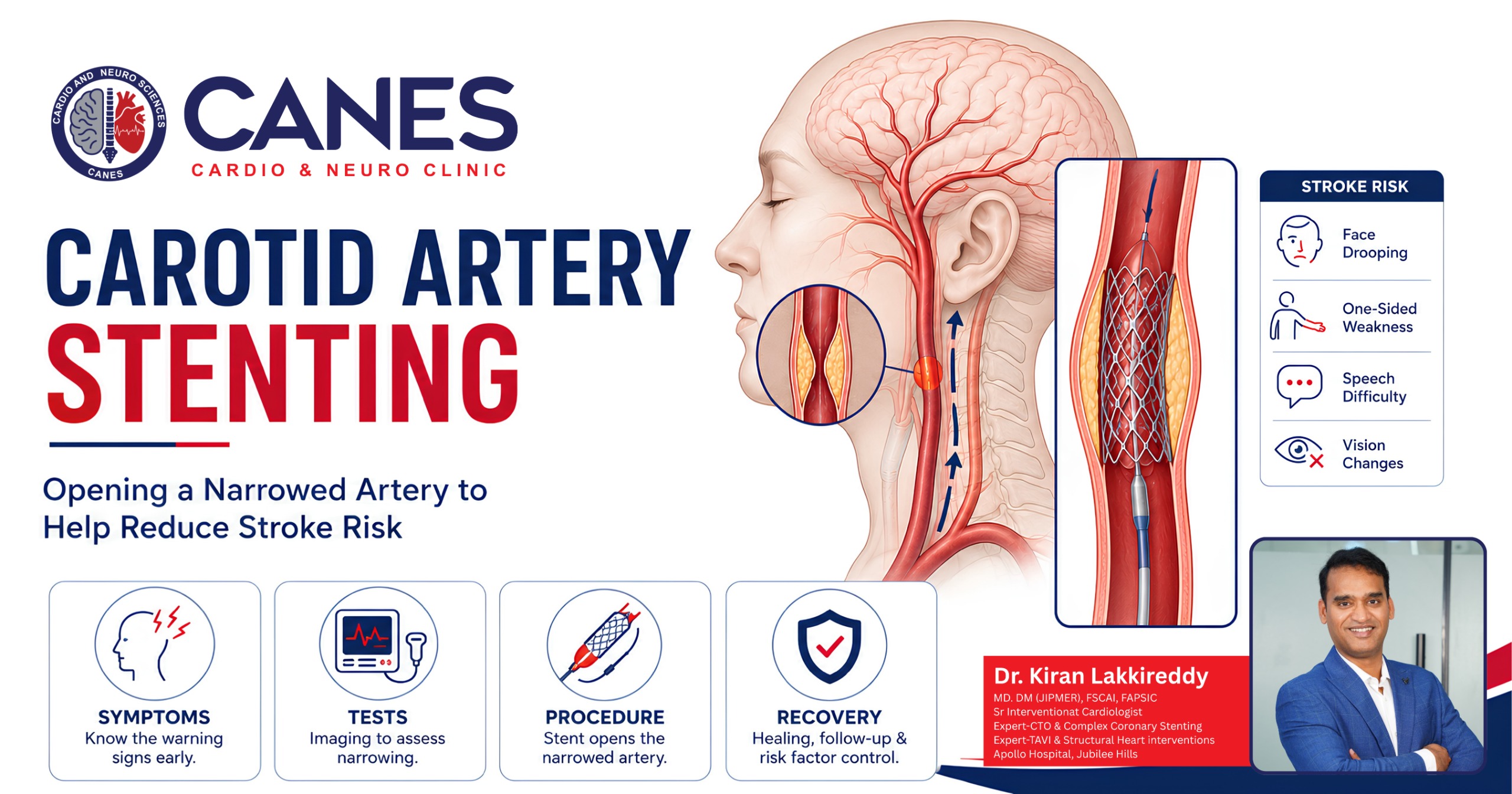
The carotid arteries are major blood vessels located on either side of the neck. They carry oxygen-rich blood to the brain. When fatty deposits called plaque build up inside these arteries, the passage for blood can become narrow. This condition is known as carotid artery stenosis or carotid artery disease.
Significant carotid narrowing can increase the risk of a transient ischaemic attack, commonly called a TIA or mini-stroke, and an ischaemic stroke. A stroke may occur when blood flow to part of the brain is reduced or when material from a carotid plaque breaks away and blocks a smaller artery in the brain.
Carotid artery stenting, commonly abbreviated as CAS, is a minimally invasive procedure used to open a narrowed carotid artery. During the procedure, a catheter is guided through the blood vessels to the affected artery. A small mesh tube called a stent is then placed across the narrowed section to help keep the artery open.
Carotid artery stenting is not required for every person with significant carotid narrowing. Some patients may be treated with medicines and cardiovascular risk-factor control, while others may benefit from carotid endarterectomy, an operation in which plaque is removed directly from the artery.
The appropriate treatment depends on several factors, including whether the patient has experienced stroke-related symptoms, the severity and location of the narrowing, age, general health, neck anatomy, previous procedures and the risks associated with surgery.
At CANES Cardio & Neuro Clinic, a specialised cardiovascular care centre in Hyderabad, the approach emphasises detailed cardiovascular assessment, understandable patient education and shared decision-making. Guided by Dr. Kiran Lakkireddy, an experienced interventional cardiologist specialising in complex cardiology, the clinic helps patients and families understand cardiovascular conditions, available treatment pathways and the importance of appropriate follow-up care.
Quick Answer
Carotid artery stenting is a minimally invasive procedure used to widen a narrowed carotid artery and help maintain blood flow to the brain.
The procedure generally involves:
- Passing a catheter through an artery, commonly from the groin
- Guiding the catheter to the narrowed carotid artery using imaging
- Using a protection device when appropriate to help reduce the movement of plaque debris toward the brain
- Widening the narrowed area with a balloon
- Placing a metal mesh stent inside the artery
- Checking blood flow after the stent has been expanded
- Monitoring the patient for neurological, blood-pressure or access-site complications
Carotid stenting may be considered for selected patients who require carotid revascularisation, particularly when conventional carotid surgery may be difficult or carry increased risk. The procedure can reduce future stroke risk in appropriately selected patients, but it also has potential complications, including stroke during or shortly after the procedure. Careful patient selection is therefore essential.
Carotid Artery Stenting at a Glance
Aspect | What It Involves | Why It Matters |
|---|---|---|
Carotid stenosis | Plaque narrows an artery supplying the brain | May increase the risk of TIA or stroke |
Catheter access | A catheter is inserted through an artery, commonly in the groin | Provides a minimally invasive route to the carotid artery |
Angiography | Contrast dye and X-ray imaging show the artery | Helps identify and treat the narrowed area accurately |
Embolic protection | A filter or another protection method may be used | Helps reduce the movement of plaque particles toward the brain |
Balloon angioplasty | A small balloon widens the narrowed section | Improves the space available for blood flow |
Stent placement | A metal mesh tube is expanded inside the artery | Helps keep the treated artery open |
Medical monitoring | Heart rate, blood pressure and neurological function are observed | Helps identify complications promptly |
Antiplatelet treatment | Medicines reduce unwanted clot formation | Helps prevent clotting within or around the stent |
Follow-up | Clinical assessment and carotid imaging may be advised | Checks stent function and detects recurrent narrowing |
What Is Carotid Artery Stenosis?
Carotid artery stenosis is a condition where one or both carotid arteries become narrowed, most commonly caused by a gradual buildup of cholesterol and inflammatory material known as atherosclerosis. Carotid artery disease is one manifestation of systemic atherosclerosis, meaning patients often require evaluation for heart disease and disease affecting other arteries as well.
Key takeaway: Carotid artery stenosis is not simply a plumbing problem. Stroke risk depends on the severity of narrowing, plaque characteristics, symptoms, blood-clot formation and the patient’s wider cardiovascular health.
Detailed Explanation
As the plaque grows, it can:
- Narrow the space through which blood flows
- Reduce blood supply to the brain
- Develop an irregular or unstable surface
- Release small particles into the bloodstream
- Encourage blood-clot formation
- Contribute to a TIA or stroke
Carotid artery disease may develop gradually and cause no symptoms until a TIA or stroke occurs. This is why some patients are diagnosed only after imaging is performed for a neck bruit, stroke-related symptoms or another medical reason.
What is the difference between symptomatic and asymptomatic stenosis?
Symptomatic carotid stenosis means that the narrowing has been associated with recent neurological symptoms affecting the part of the brain supplied by that artery.
These symptoms may include:
- Sudden weakness or numbness on one side of the body
- Facial drooping
- Difficulty speaking or understanding speech
- Sudden loss or disturbance of vision
- Sudden loss of coordination
- A ΤΙΑ
- An ischaemic stroke
Asymptomatic carotid stenosis means significant narrowing is present but has not caused recent symptoms attributable to that artery. The distinction is important because the expected benefit of a procedure and the urgency of treatment may differ between symptomatic and asymptomatic patients.
What Is Carotid Artery Stenting?
Carotid artery stenting is an image-guided endovascular procedure where a small, expandable mesh tube is placed inside the artery to press plaque against the wall, maintaining an open channel for blood flow without a large neck incision.
Key takeaway: Carotid artery stenting is an endovascular approach, meaning the treatment is performed completely from the inside of the blood vessel using advanced catheters.
Detailed Explanation
“Endovascular” means that treatment is performed from inside the blood vessel. Instead of making a larger incision in the neck to remove plaque, the treating specialist reaches the narrowing using catheters and guidewires.
A stent is a small, expandable mesh tube. Once placed inside the carotid artery, it presses the plaque against the artery wall and acts as a scaffold to help maintain an open channel for blood flow. The stent remains permanently in the artery. Over time, tissue may grow over its surface as it becomes incorporated into the vessel.
Carotid stenting is commonly performed under local anaesthesia. Sedation may be provided when appropriate. Keeping the patient responsive can allow the medical team to monitor speech, movement and neurological function during parts of the procedure. The exact anaesthetic plan depends on the patient, treatment approach and hospital protocol.
Why Might Carotid Stenting Be Recommended?
Carotid artery stenting is primarily recommended to reduce the risk of a future stroke by actively treating clinically significant arterial narrowing, particularly when traditional open surgery poses a high risk.
Key takeaway: Carotid endarterectomy remains an established treatment and is often preferred for suitable patients at standard surgical risk. Carotid stenting is an alternative for carefully selected individuals rather than a universally superior replacement for surgery.
Detailed Explanation
It may be considered when:
- The carotid artery has significant narrowing
- The patient has experienced a TIA or stroke related to the affected artery
- Revascularisation is considered appropriate after specialist assessment
- Carotid endarterectomy would be technically difficult
- Previous neck surgery has altered the anatomy
- The patient has previously undergone radiation treatment to the neck
- Significant narrowing has returned after carotid endarterectomy
- The narrowing is located in an area that is difficult to reach surgically
- Medical conditions may increase the risks associated with open surgery
- The treating team considers stenting appropriate after comparing all available options
Who May Be Considered for Carotid Artery Stenting?
The decision to proceed with carotid artery stenting is highly individualised. Decisions regarding carotid revascularisation are often made by a multidisciplinary team that may include vascular surgeons, neurologists, stroke physicians, and interventional specialists.
Key takeaway: A percentage reported on an ultrasound or scan should not be interpreted in isolation. Measurement methods can differ, and treatment decisions require clinical interpretation by an experienced team.
Detailed Explanation
The healthcare team may consider:
- Whether the patient has experienced a TIA or stroke
- How recently the symptoms occurred
- The degree of carotid narrowing
- The location and length of the narrowing
- The appearance and stability of the plaque
- The anatomy of the aortic arch and carotid arteries
- The presence of tortuous, calcified or difficult blood vessels
- The patient’s age
- Heart and lung health
- Kidney function
- Bleeding risk
- Previous surgery or radiation to the neck
- Previous carotid endarterectomy
- The ability to take antiplatelet medicines
- The treating centre’s experience and outcomes
- The expected benefit over the patient’s lifetime
- The patient’s values and preferences
Does every significant narrowing need a stent? No. Some patients may receive medical treatment and imaging surveillance without an immediate procedure. Others may be better suited to carotid endarterectomy. The decision depends on whether the expected stroke-prevention benefit is greater than the immediate risks of treatment.
What Tests May Be Performed Before Carotid Stenting?
Before recommending carotid artery stenting, the healthcare team will evaluate your arteries using duplex ultrasound, CT angiography (CTA), MRI, or catheter angiography, alongside comprehensive blood and heart assessments.
Key takeaway: Duplex ultrasound is generally a first-line imaging test, while CTA is particularly useful for evaluating anatomy before carotid stenting.
Detailed Explanation
Carotid duplex ultrasound A carotid duplex ultrasound uses sound waves to assess blood flow through the artery, the location of narrowing, the estimated severity of stenosis, plaque characteristics, and blood-flow speed. It is commonly used as an initial test because it is non-invasive and does not involve radiation or contrast dye.
CT angiography CT angiography, or CTA, uses X-rays and contrast dye to produce detailed images of the arteries. It can help the team examine the aortic arch, blood vessels leading to the neck, the carotid narrowing, calcification, vessel tortuosity, intracranial circulation, and the route that catheters would need to follow.
Magnetic resonance angiography Magnetic resonance angiography, or MRA, uses magnetic resonance imaging to evaluate blood vessels. It may be useful when CTA is unsuitable, although its appropriateness depends on the patient and clinical question.
Catheter angiography Catheter angiography provides detailed real-time images of the arteries after contrast dye is injected through a catheter. It may be performed as part of the stenting procedure or when other tests do not provide sufficient information.
Brain imaging A CT or MRI scan of the brain may be required, especially when the patient has experienced a TIA or stroke. Brain imaging can help identify a recent or previous stroke, bleeding, the size and location of affected brain tissue, and other possible explanations for neurological symptoms.
Blood tests and general assessment The team may also evaluate blood count, kidney function, blood-clotting measurements, blood sugar, cholesterol, heart rhythm, blood pressure, current medicines, allergies, previous reactions to contrast dye, and other medical conditions.
How Should a Patient Prepare?
Patients preparing for carotid artery stenting must strictly follow their hospital’s instructions regarding fasting and medication adjustments, particularly concerning antiplatelet medicines and anticoagulants.
Key takeaway: Failure to take prescribed antiplatelet medicine may increase the risk of stent thrombosis and stroke. At the same time, these medicines can increase bleeding risk, so the plan must be personalised.
Detailed Explanation
Before the procedure, patients should tell the team about:
- All prescription medicines
- Aspirin or other antiplatelet medicines
- Anticoagulants such as warfarin or direct oral anticoagulants
- Diabetes medicines
- Over-the-counter medicines
- Vitamins, herbal products and supplements
- Kidney disease
- Bleeding problems
- Contrast-dye allergy
- Metal allergy
- Previous reactions to anaesthesia or sedation
- Pregnancy or possible pregnancy
- Recent infection, fever or illness
Antiplatelet medicines Antiplatelet therapy is an important part of carotid stenting. Patients are often prescribed aspirin together with another antiplatelet medicine before and after the procedure. The exact medicines, doses and duration must be determined by the treating specialist. These medicines help reduce the likelihood of platelets collecting on the stent and forming a clot.
Patients should not:
- Skip prescribed doses
- Stop antiplatelet treatment independently
- Change the dose without medical advice
- Assume that another blood thinner is an equivalent substitute
- Begin non-prescription painkillers or supplements without checking for interactions
Eating and drinking / Medicine adjustments Patients may be asked not to eat or drink for a specified period before the procedure. Some medicines may need to be continued, withheld or modified. This is particularly important for anticoagulants and diabetes medicines. No medicine should be stopped solely on the basis of general online information.
What Happens During Carotid Artery Stenting?
During carotid artery stenting, a catheter is guided from an access artery to the neck, an embolic protection filter is deployed, a balloon widens the narrowing, and a permanent mesh stent is placed to keep the artery open.
Key takeaway: The procedure involves multiple safety steps, including the use of contrast dye for precise visual guidance and embolic protection devices to capture potentially dangerous plaque debris.
Detailed Explanation
Although procedural details differ, carotid artery stenting generally follows several stages:
1. Preparation and monitoring: The patient is positioned, an IV line is inserted, and local anaesthetic or mild sedation is administered. Heart rhythm, blood pressure, oxygen level, and neurological function are monitored continuously. 2. Artery access: A small puncture is made into an artery, commonly the femoral artery in the groin, and a vascular sheath is inserted to provide a controlled entry point. 3. Catheter guidance: A thin, flexible catheter is advanced through the blood vessels using real-time X-ray imaging (fluoroscopy) and contrast dye to visualise the anatomy. 4. Cerebral or embolic protection: Manipulating a carotid plaque can release small particles that may cause a stroke. A protection system, such as a small filter placed beyond the narrowed area, is designed to capture debris while allowing blood to flow. 5. Balloon angioplasty: A small balloon catheter is inflated carefully to widen the artery and press the plaque toward the artery wall. 6. Stent placement: The compressed stent is delivered, released, and expands against the artery wall to create a wider channel for blood flow. It remains in place permanently. 7. Additional balloon expansion: A balloon may be inflated inside the deployed stent to improve expansion, avoiding excessive force that could damage the artery. 8. Final evaluation: Contrast dye is injected again to assess the stent position, blood flow, and ensure there is no vessel injury. 9. Closing the access site: The protection system and catheters are removed, and pressure or a closure device seals the artery puncture before the patient transfers to recovery.
How Long Does the Procedure Take?
The entire period in the procedure area may take longer than the actual stent placement due to required preparation, imaging, and monitoring, with the exact duration varying based on anatomical complexity.
Key takeaway: Patients should ask their own treating team about the expected schedule rather than relying on a fixed general estimate.
Detailed Explanation
The duration varies according to the patient’s anatomy, the location of the narrowing, the access route, the stenting technique, the complexity of the lesion, and whether unexpected difficulties occur.
What Happens Immediately After the Procedure?
Immediately after carotid artery stenting, patients are closely monitored for changes in blood pressure, heart rate, access-site stability, and vital neurological functions like speech, vision, and limb strength.
Key takeaway: Very high blood pressure after the artery has been opened may place stress on the brain circulation. Persistent headache, confusion, seizures or neurological symptoms require urgent assessment.
Detailed Explanation
The team may regularly assess blood pressure, heart rate, oxygen level, speech, facial movement, arm and leg strength, vision, alertness, headache, chest symptoms, the catheter access site, and circulation in the arm or leg used for access.
The patient may need to remain flat for a period, particularly when the femoral artery has been used. An overnight hospital stay is common, although the exact length of stay depends on the patient, procedure, recovery and hospital protocol.
Why is blood pressure monitored carefully? The carotid artery contains structures that help regulate blood pressure and heart rate. Balloon inflation and stent expansion can stimulate these structures. Some patients may develop low blood pressure, a slow heart rate, high blood pressure, headache, or dizziness. These changes are usually managed with monitoring, fluids or medicines, but they require careful observation.
What Are the Potential Benefits?
When appropriately selected and successfully performed, carotid artery stenting may safely maintain blood flow, reduce future stroke risk, and provide a vital alternative when open neck surgery is considered too difficult or risky.
Key takeaway: A technically successful stent does not guarantee that a patient will never experience a stroke. Long-term protection also depends on medicines, blood-pressure control, cholesterol management, diabetes care, smoking cessation and follow-up.
Detailed Explanation
The main objective is stroke prevention. The procedure is not intended primarily to improve energy, concentration, dizziness or general well-being unless those symptoms were directly related to the treated artery. It also cannot reverse brain injury that has already occurred because of a previous stroke.
What Are the Risks and Possible Complications?
Carotid artery stenting involves inherent risks because it treats the primary blood supply to the brain; the most significant complication is a stroke or TIA occurring during or shortly after the procedure.
Key takeaway: MedlinePlus and NHS patient guidance identify stroke, bleeding, artery damage, contrast reaction, kidney injury, heart complications and recurrent narrowing among the recognised risks of carotid stenting.
Detailed Explanation
The likelihood and significance of complications vary according to the patient’s symptoms, age, anatomy, plaque, medical conditions, operator experience and type of procedure.
- Stroke or TIA: Can occur if plaque debris travels to the brain, a blood clot forms, the stent becomes blocked, the artery is injured, blood flow is temporarily inadequate, or bleeding occurs in the brain.
- Bleeding or bruising: May occur at the catheter insertion site causing bruising, a haematoma, or a false aneurysm.
- Artery injury: Catheters, guidewires, or balloons can cause dissection, tearing, or perforation of the blood vessel.
- Contrast-dye reaction: May cause nausea, rash, or breathing difficulty.
- Kidney injury: Contrast dye can affect kidney function, especially in patients with existing kidney disease or diabetes.
- Heart-related complications: Includes abnormal heart rhythms, low or high blood pressure, chest pain, or heart attack.
- Stent thrombosis: A clot may form inside the stent and block blood flow, which is why prescribed antiplatelet medicines must be taken consistently.
- Restenosis: The artery can gradually narrow again inside or near the stent.
- Other complications: Headache, seizures, radiation exposure, or reduced circulation to the access limb.
Carotid Stenting Versus Carotid Endarterectomy
While both procedures aim to reduce stroke risk, carotid artery stenting is a catheter-based treatment from inside the vessel, whereas carotid endarterectomy requires a surgical incision in the neck to manually remove the plaque.
Large clinical studies, including the CREST trial, have shown that both carotid artery stenting and carotid endarterectomy can effectively reduce stroke risk in appropriately selected patients, although the balance of risks differs between individuals.
Key takeaway: Current vascular guidelines support carotid endarterectomy as first-line treatment for many suitable, low-surgical-risk patients while recognising a role for carotid stenting in selected cases.
Detailed Explanation
The choice should not be based only on which procedure appears less invasive. A minimally invasive procedure may still be less suitable when the blood vessels are highly tortuous, heavily calcified or difficult to reach safely. Similarly, previous neck surgery, radiation, a high carotid lesion or restenosis after endarterectomy may make stenting more attractive.
Feature | Carotid Artery Stenting | Carotid Endarterectomy |
|---|---|---|
Basic approach | Catheter-based treatment from inside the artery | Open operation through an incision in the neck |
Treatment | A stent supports the narrowed artery | Plaque is surgically removed |
Anaesthesia | Often local anaesthesia with sedation; varies | Local or general anaesthesia may be used |
Neck incision | Usually not required for transfemoral stenting | Required |
Cranial nerve injury | Less directly associated with catheter-based treatment | Recognised surgical risk |
Catheter-access complications | Possible | Not generally related to femoral catheter access |
Periprocedural stroke risk | Depends on patient selection, age, anatomy and technique | Also carries stroke risk |
Suitability | May be favoured when surgery is difficult or higher risk | Often preferred in suitable standard-risk patients |
Recovery | Frequently shorter after uncomplicated treatment | Depends on operation and recovery |
Long-term medical therapy | Still required | Still required |
Is Carotid Stenting Safe?
Carotid stenting safety depends heavily on choosing the right patient, accurate diagnosis, and performing the procedure in an experienced setting using suitable stent and protection technology.
Key takeaway: Patients should ask the treating team about its experience, complication rates and why stenting is being recommended over other options.
Detailed Explanation
Carotid stenting is performed specifically to prevent stroke, but the procedure itself can cause a stroke. Important safety factors include accurate diagnosis, appropriate indication, careful review of imaging, assessment of surgical options, experienced operators, correct antiplatelet treatment, blood-pressure control, monitoring during and after the procedure, and prompt recognition of neurological symptoms.
What Is Recovery Like at Home?
Recovery involves a gradual return to light activities within a few days, keeping the access site clean, strictly avoiding heavy lifting, and adhering to all prescribed medicines, especially antiplatelets.
Key takeaway: MedlinePlus advises patients to take activity gradually, care for the catheter site and continue prescribed antiplatelet medicines unless the treating healthcare professional changes them.
Detailed Explanation
Patients may be advised to:
- Rest after returning home
- Walk short distances
- Avoid heavy lifting temporarily
- Avoid strenuous exercise until cleared
- Keep the access site clean and dry
- Follow dressing instructions
- Drink fluids if medically appropriate
- Take all prescribed medicines
- Attend follow-up appointments
- Report new symptoms promptly
Mild bruising or tenderness at the access site may occur. Patients should not drive until the treating team considers it safe, particularly after sedation or if neurological symptoms were present.
Medicines After Carotid Stenting
Long-term medical therapy after carotid stenting is essential and includes strict adherence to antiplatelet medicines to prevent stent clots, alongside cholesterol, blood pressure, and diabetes medications to manage the underlying disease.
Key takeaway: No dentist, surgeon or other healthcare professional should discontinue antiplatelet therapy without coordination with the clinician responsible for the carotid stent.
Detailed Explanation
Why are antiplatelet medicines important? The surface of a newly placed stent can encourage platelets to collect until healing occurs. Antiplatelet medicines reduce this response and help prevent stent thrombosis.
The patient should know:
- Which antiplatelet medicines to take
- When to take them
- How long combination therapy is required
- What to do after a missed dose
- Which bleeding symptoms require medical advice
- Whether other medicines or supplements are safe
- What instructions apply before dental or surgical procedures
Does the procedure replace cholesterol or blood-pressure treatment? No. Even after successful stenting, patients may continue to develop plaque elsewhere in the circulation. Medical management remains essential for reducing the risk of stroke, heart attack and other vascular complications.
Lifestyle and Risk-Factor Management
To protect the newly stented artery and overall cardiovascular health, patients must actively manage their blood pressure, control cholesterol, treat diabetes, quit smoking, and adopt a healthy diet.
Key takeaway: Stopping smoking is an essential part of carotid disease treatment, even after a successful procedure, as smoking damages blood vessels and increases clotting and stroke risk.
Detailed Explanation
Blood-pressure control: Take medicines consistently, monitor readings, reduce dietary salt, and report unusually high or low readings.
Cholesterol management: Often involves statins, heart-healthy eating, physical activity, weight management, and follow-up blood tests.
Diabetes care: Requires blood-glucose monitoring, nutrition planning, and kidney assessment.
Physical activity: Regular activity supports overall control; exercise should be resumed according to medical advice.
Nutrition: A sustainable vascular-health eating plan generally emphasises vegetables, fruits, whole grains, appropriate proteins, and limits added sugar and unhealthy fats.
Follow-Up After Carotid Stenting
Regular follow-up, frequently including carotid duplex ultrasounds, is necessary to assess neurological health, monitor the access site, check medicine adherence, and ensure blood flows freely through the stent without recurrent narrowing.
Key takeaway: Patients should continue follow-up even when they feel well because restenosis may not cause early symptoms.
Detailed Explanation
The timing of imaging depends on hospital protocol, initial findings, stent appearance, symptoms, previous restenosis, and the patient’s vascular risk.
When Is Emergency Medical Care Required?
Any potential stroke symptom, such as sudden facial drooping, speech difficulty, or limb weakness, must be treated as an absolute medical emergency, even if the symptoms disappear within minutes.
Key takeaway: Do not wait for a routine appointment. A TIA can be an important warning of a future stroke.
Detailed Explanation
Seek immediate emergency medical care for:
- Sudden facial drooping
- Sudden weakness or numbness in an arm or leg
- Sudden difficulty speaking
- Sudden inability to understand speech
- Sudden loss or blurring of vision
- Sudden severe imbalance or loss of coordination
- Sudden confusion
- A new severe headache
- Loss of consciousness
- A seizure
- New neurological symptoms, even if they improve within minutes
Emergency assessment is also required for severe or uncontrolled bleeding from the catheter site, rapidly increasing groin swelling, a pale or painful limb, severe chest pain, marked breathlessness, fainting, or severe allergic symptoms.
Myth Versus Fact: Carotid Artery Stenting
Common Myth | Medical Fact |
|---|---|
Every carotid blockage requires a stent. | Many patients are managed with medicines and risk-factor control. A procedure is recommended only when the expected benefit outweighs the risk. |
A stent removes the plaque. | The stent usually presses the plaque against the artery wall and supports the vessel. It does not remove plaque in the same way as endarterectomy. |
Carotid stenting has no stroke risk. | Stroke is one of the most important possible complications during or shortly after the procedure. |
A protection filter makes stroke impossible. | Protection devices can reduce risk but cannot capture every particle or prevent every cause of stroke. |
Carotid stenting is always safer because it is minimally invasive. | Safety depends on age, symptoms, anatomy, medical conditions, operator experience and the alternative treatment. |
Carotid endarterectomy is outdated. | It remains an established and frequently preferred treatment for many suitable patients. |
Feeling well means follow-up is unnecessary. | Recurrent narrowing or stent-related problems may initially cause no symptoms. |
Antiplatelet medicines can be stopped once the patient leaves hospital. | These medicines must be continued exactly as prescribed to reduce the risk of clotting in the stent. |
A successful stent cures vascular disease. | The underlying atherosclerotic process still requires long-term treatment and lifestyle management. |
A TIA is harmless because symptoms disappear. | A TIA is a medical emergency and may warn of an impending stroke. |
Actionable Checklist: What Should Patients Ask Their Healthcare Team?
Before undergoing carotid artery stenting, use this checklist to ensure you fully understand your procedure and recovery plan:
- Diagnosis: How severe is my carotid artery narrowing, and has it caused my recent symptoms?
- Options: Do I need a procedure, or can I continue medical treatment? Would carotid endarterectomy be another option for me?
- Risks: What is my estimated risk of stroke without a procedure, and what are my individual procedural risks?
- The Procedure: Which access route will be used, what type of anaesthesia will I receive, and will an embolic protection system be used?
- Medicines: Which medicines should I take before the procedure, and how long will I need combination antiplatelet treatment afterward?
- Recovery: How long will I remain in hospital, what activity restrictions will apply, and which symptoms require emergency care?
- Follow-up: When will my first follow-up ultrasound be performed, and who should I contact if I develop a problem after discharge?
Cardiovascular Guidance at CANES Clinic
Carotid artery disease requires an individualised approach. The appropriate management plan depends on whether neurological symptoms have occurred, the degree and location of narrowing, vascular anatomy, previous treatment, cardiovascular risk factors, and the expected long-term benefit.
At CANES Cardio & Neuro Clinic, patients can receive structured cardiovascular evaluation and understandable guidance regarding vascular risk, medical management and appropriate follow-up planning. The clinic is guided by Dr. Kiran Lakkireddy, an experienced interventional cardiologist specialising in complex cardiology. The focus is on detailed assessment, patient education, shared decision-making and appropriate coordination with relevant hospital-based specialists when required.
A clinic consultation should not be treated as a substitute for emergency stroke care. Patients with sudden facial weakness, one-sided limb weakness, speech disturbance, acute vision loss, confusion or another possible stroke symptom require immediate emergency medical attention.
Location: 3rd Floor, Tapasavi Commercial Complex, Hi-Tension Road, Kondapur, Hyderabad
Contact: +91 9014944654
Appointment Booking: Visit CANES Clinic Official Portal
Specialist Profile: Dr. Kiran Lakkireddy Official Website
Key Points to Remember
- Carotid stenosis can increase stroke risk: Plaque can narrow the artery or release material that blocks blood flow in the brain.
- Carotid stenting is minimally invasive: A catheter, balloon and mesh stent are used to widen and support the artery.
- Not every patient needs a stent: Medicines, monitoring or carotid endarterectomy may be more appropriate.
- Selection is individualised: Symptoms, age, anatomy, medical conditions and surgical risk all influence the decision.
- Stroke is an important procedural risk: Protection devices reduce but do not eliminate the possibility.
- Antiplatelet medicines are essential: They should not be stopped without direct medical instructions.
- The procedure does not cure atherosclerosis: Blood pressure, cholesterol, diabetes, smoking and lifestyle still require attention.
- Monitoring continues after discharge: Follow-up examinations and carotid ultrasound may be required.
- New neurological symptoms are emergencies: Even symptoms lasting only a few minutes require immediate medical assessment.
(Disclaimer: This article is intended for general patient education. It does not replace individual medical assessment, diagnosis, emergency care or treatment advice from a qualified healthcare professional.)
Frequently Asked Questions (FAQs)
What does carotid artery stenting mean?
It is a catheter-based procedure in which a mesh tube is placed inside a narrowed carotid artery to support the vessel and help maintain blood flow toward the brain.
Is carotid stenting brain surgery?
No. The stent is placed inside an artery in the neck using catheters. The procedure does not involve opening the skull. However, because the carotid artery supplies the brain, neurological monitoring and stroke prevention are central parts of the procedure.
Is carotid stenting the same as angioplasty?
Angioplasty refers to widening an artery with a balloon. Carotid stenting generally combines angioplasty with placement of a stent to help keep the artery open.
Does the stent remove plaque?
No. The stent supports the artery and usually presses the plaque toward the vessel wall. Carotid endarterectomy, by comparison, removes plaque surgically.
Is the stent permanent?
Yes. The carotid stent is intended to remain permanently inside the artery.
Can I feel the stent in my neck?
Patients generally cannot feel the stent once it is in place. Temporary neck discomfort or headache may occur, but persistent or severe symptoms should be reported.
Will I be awake during the procedure?
Many carotid stenting procedures are performed under local anaesthesia with sedation as needed. The exact plan depends on the patient and hospital.
Is the procedure painful?
The local anaesthetic injection may sting briefly. Patients may feel pressure at the access site or temporary neck pressure during balloon inflation. The team should be informed immediately about pain, weakness, vision changes, speech problems or other unusual symptoms.
Why is a filter used?
A filter or another protection system may help capture or redirect plaque debris released during the procedure, reducing the chance that it reaches the brain. It cannot remove all procedural risk.
Can carotid stenting cause a stroke?
Yes. Stroke is a recognised complication during or shortly after carotid stenting. The procedure is recommended only when the healthcare team believes the longer-term benefit is likely to justify the immediate risk.
Is carotid stenting safer than carotid endarterectomy?
Neither procedure is best for every patient. Carotid endarterectomy may be preferred for many suitable patients, while stenting may be advantageous when surgery carries increased medical or anatomical risk.
Can an elderly patient undergo carotid stenting?
Age is one of several factors considered. Older age may influence the balance between stenting and endarterectomy, but the decision also depends on symptoms, anatomy, health and procedural risk.
Why do I need aspirin or another antiplatelet medicine?
These medicines reduce the likelihood of a clot forming inside or around the stent. Stopping them without medical advice can be dangerous.
Can I have an MRI after carotid stenting?
Many modern carotid stents are compatible with MRI under specified conditions. Patients should keep their stent information card and tell the imaging team about the implant. The MRI department must confirm the conditions for the specific stent.
Can carotid artery disease return after treatment?
Yes. Even after successful carotid stenting, plaque can continue developing elsewhere or the treated artery may narrow again over time. Long-term medicines, risk-factor control and follow-up imaging remain important.
Does carotid stenting prevent every future stroke?
No. A stroke can have several causes, including disease in other arteries, heart-rhythm disorders, small-vessel disease and uncontrolled cardiovascular risk factors. The stent treats a specific carotid narrowing.
Expert Care
Hyderabad's leading Cardio & Neuro specialists.