TRIPLE VESSEL DISEASE STENTING
Home > Services > Triple vessel disease stenting
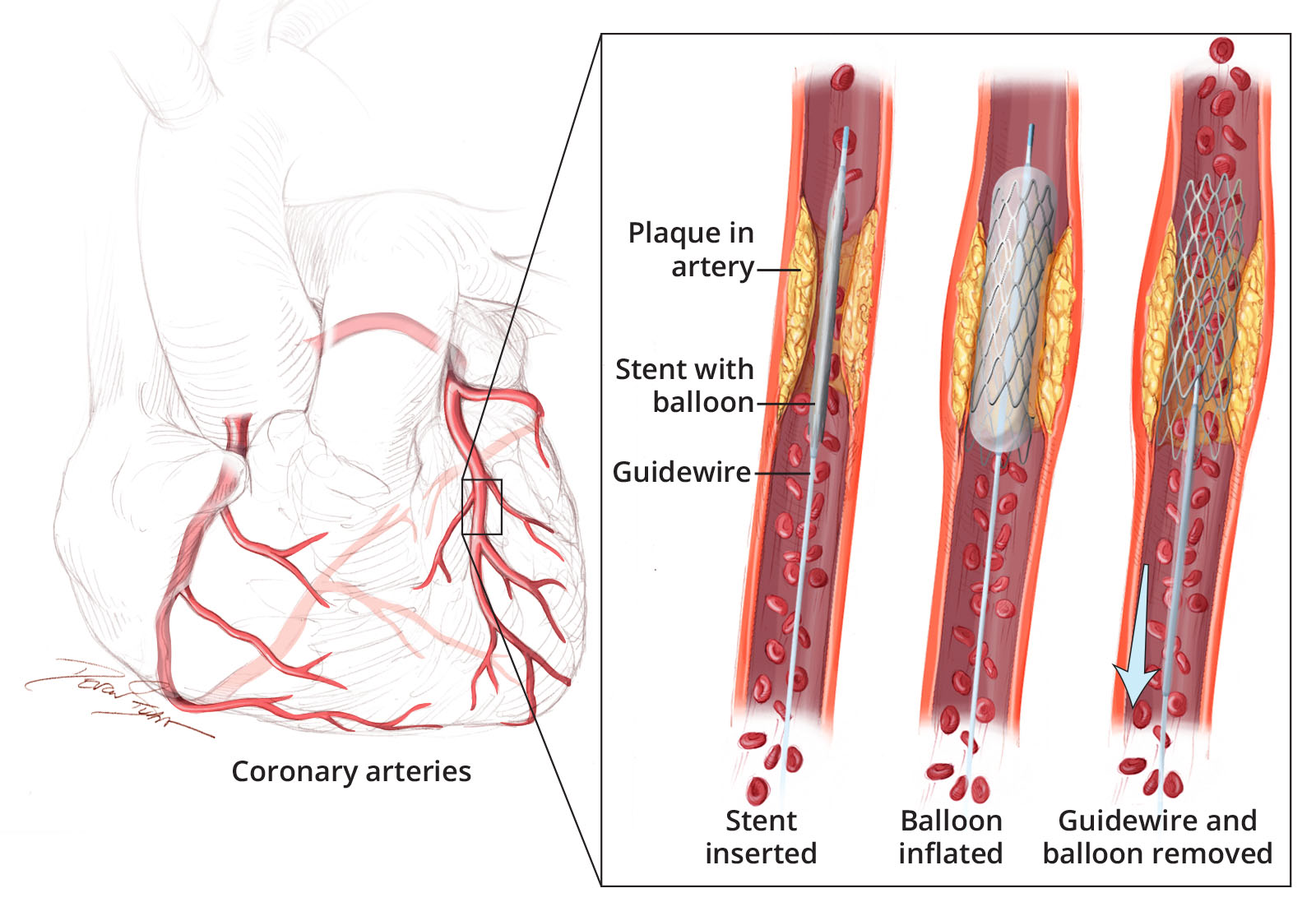
Triple vessel disease is a severe form of coronary artery disease where all three major arteries supplying blood to the heart muscle become significantly narrowed or blocked by cholesterol plaque. Historically, the standard treatment for this condition was open-heart bypass surgery (CABG). Today, thanks to advancements in interventional cardiology, many patients can be treated with complex, multi-vessel stenting. This minimally invasive approach safely opens multiple blockages using balloons and drug-coated stents, restoring optimal blood flow to the entire heart, relieving severe symptoms, and improving long-term survival without the need for a major surgical incision.
1. Indications:
Triple vessel stenting is a highly specialized procedure recommended for patients with extensive arterial blockages. Common indications include:
- Confirmed severe blockages in all three primary coronary arteries (LAD, LCx, and RCA)
- Severe, frequent, or unstable chest pain (angina) that cannot be controlled with medication
- Significant shortness of breath and extreme fatigue due to restricted heart circulation
- A major heart attack involving multiple compromised blood vessels
- Decreased heart pumping function (low ejection fraction) caused by chronic poor blood supply
- Patients who are considered high-risk candidates for traditional open-heart bypass surgery due to advanced age, lung disease, or other medical conditions
- Patients who strongly prefer a minimally invasive alternative to open-heart surgery, following a thorough medical evaluation.
Treating multi-vessel disease promptly is vital to preventing massive heart attacks, heart failure, and improving the overall quality and length of your life.
2. Procedure:
Triple vessel stenting is performed in an advanced cath lab under local anesthesia with strict sterile precautions. You will remain awake but comfortably sedated. Access is typically obtained through a small puncture in the wrist (radial artery) or sometimes the groin (femoral artery).
Through this small access point, a catheter is guided to the heart using continuous X-ray imaging. Because treating three vessels is complex, the doctor often utilizes state-of-the-art imaging tools from inside the artery, such as Intravascular Ultrasound (IVUS) or Optical Coherence Tomography (OCT), to precisely measure the blockages. A special pressure wire (FFR) may also be used to determine exactly which blockages are severe enough to require a stent.
Guided by this precision technology, balloons are inflated to compress the hard plaque, and multiple drug-eluting stents are meticulously placed to hold the treated arteries open. Depending on the complexity and the amount of contrast dye required, the procedure may be completed in a single session lasting 1.5 to 3 hours, or it may be “staged” across two separate sessions a few weeks apart to ensure patient safety and protect kidney function.
3. Safety:
Multi-vessel stenting is a highly sophisticated procedure that is safe and effective when performed by an expert interventional cardiologist. Continuous, rigorous monitoring of your vital signs, heart rhythm, and oxygen levels is maintained throughout the entire procedure.
While it is significantly less invasive than bypass surgery, it carries slightly higher risks than simple single-stent procedures due to its complexity. Possible but uncommon risks include:
- Bleeding, bruising, or hematoma at the puncture site
- Temporary decline in kidney function due to the higher volume of contrast dye required (preventative IV fluids are administered to protect the kidneys)
- Allergic reaction to the contrast dye
- Injury, tearing, or dissection of the coronary arteries
- Irregular heart rhythms (arrhythmias)
- Blood clot formation within a new stent (stent thrombosis)
- A very rare need for emergency bypass surgery if a blockage cannot be safely opened with stents