
BAV – BALLOON AORTIC VALVOTOMY
Home > Services > Balloon Aortic Valvotomy
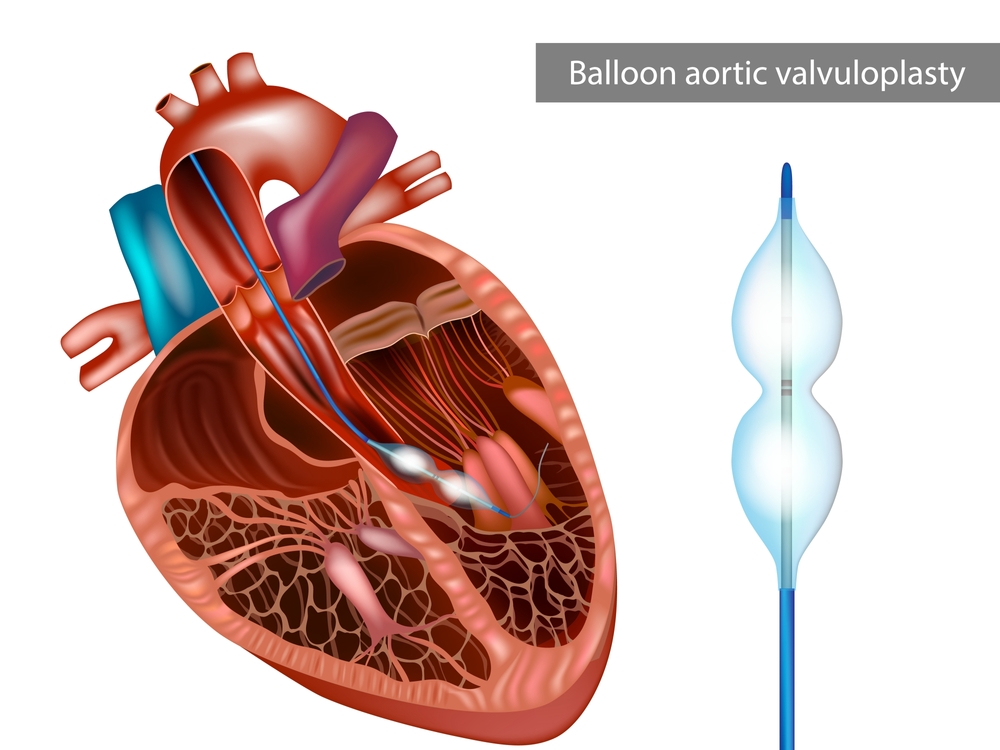
Balloon Aortic Valvotomy (BAV) is a minimally invasive catheter procedure used to treat severe aortic stenosis a condition where the heart’s main pumping valve becomes thick, stiff, and heavily calcified. When the aortic valve cannot open fully, the heart must work overtime to push blood out to the rest of the body, leading to chest pain, sudden fainting spells, and heart failure. During a BAV, a specialized balloon is temporarily inflated inside the narrowed valve to crack the hardened calcium and stretch the leaflets open. While often used as a long-term treatment for congenital valve issues in younger patients, in older adults, BAV is typically used as a critical, life-saving “bridge” to quickly stabilize a frail patient before they undergo a permanent valve replacement (like TAVR or open-heart surgery).
1. Indications:
BAV is recommended for specific patients with severe narrowing of the aortic valve who require urgent symptom relief. Common indications include:
- Severe aortic stenosis causing critical symptoms such as chest pain (angina), shortness of breath, or unexplained fainting (syncope)
- Serving as a temporary, stabilizing “bridge to therapy” for critically ill patients who need to recover their strength before undergoing a permanent valve replacement (TAVR or SAVR)
- Palliative care for elderly or highly frail patients who are not candidates for any permanent valve replacement surgery, providing them with temporary relief and improved quality of life
- Urgent treatment for cardiogenic shock or severe heart failure triggered by a blocked aortic valve
- Treatment of congenital aortic stenosis in younger patients, where the balloon can successfully open the valve without needing immediate surgery
- Patients requiring urgent, non-cardiac surgery who have severe aortic stenosis that makes general anesthesia too dangerous
By safely stretching the aortic valve, the procedure quickly reduces the intense pressure inside the heart and dramatically improves blood flow to the body.
2. Procedure:
A BAV is performed in a high-tech cardiac cath lab under local anesthesia and mild sedation. You will remain relaxed and comfortable throughout the procedure. A small puncture is made in a major artery in the groin (the femoral artery).
Through this small access point, a thin, flexible catheter is carefully navigated up the aorta and guided directly to the heart using continuous X-ray imaging (fluoroscopy). The cardiologist carefully passes a microscopic guidewire through the tiny, stiff opening of the narrowed aortic valve.
A specialized catheter fitted with a deflated, heavy-duty balloon is then advanced over the wire and positioned exactly across the diseased valve. The balloon is inflated rapidly for just a few seconds. This powerful outward expansion cracks the rigid calcium deposits and forces the stiff valve leaflets apart, widening the opening. The balloon is instantly deflated and removed to restore blood flow. The entire procedure usually takes about 1 to 2 hours, and patients typically experience a very rapid improvement in their symptoms.
3. Safety:
Balloon Aortic Valvotomy is a safe and effective minimally invasive procedure when performed by an expert interventional cardiologist. It completely avoids a major chest incision and provides immediate relief for patients who are often too sick for open-heart surgery.
Because this procedure is frequently performed on elderly, frail, or critically ill patients, continuous and rigorous monitoring of vital signs is maintained by the cardiac care team. Possible but uncommon risks include:
Bleeding, bruising, or a hematoma at the catheter insertion site in the groin
Creation of a severe valve leak (aortic regurgitation) if the stretched leaflets fail to close properly, which may require emergency valve replacement
Irregular heartbeats (arrhythmias) during the balloon inflation, sometimes requiring a temporary pacemaker
A small risk of stroke caused by calcium debris breaking off the valve
Injury, tearing, or dissection of the blood vessels in the leg or the aorta
Restenosis (re-narrowing) of the valve over time, which is why BAV is often used as a temporary bridge rather than a permanent cure in adults