
Rheumatic Heart Disease and Endocarditis Treatment in Hyderabad
Home > Services > Rheumatic Heart Disease and Endocarditis Treatment in Hyderabad
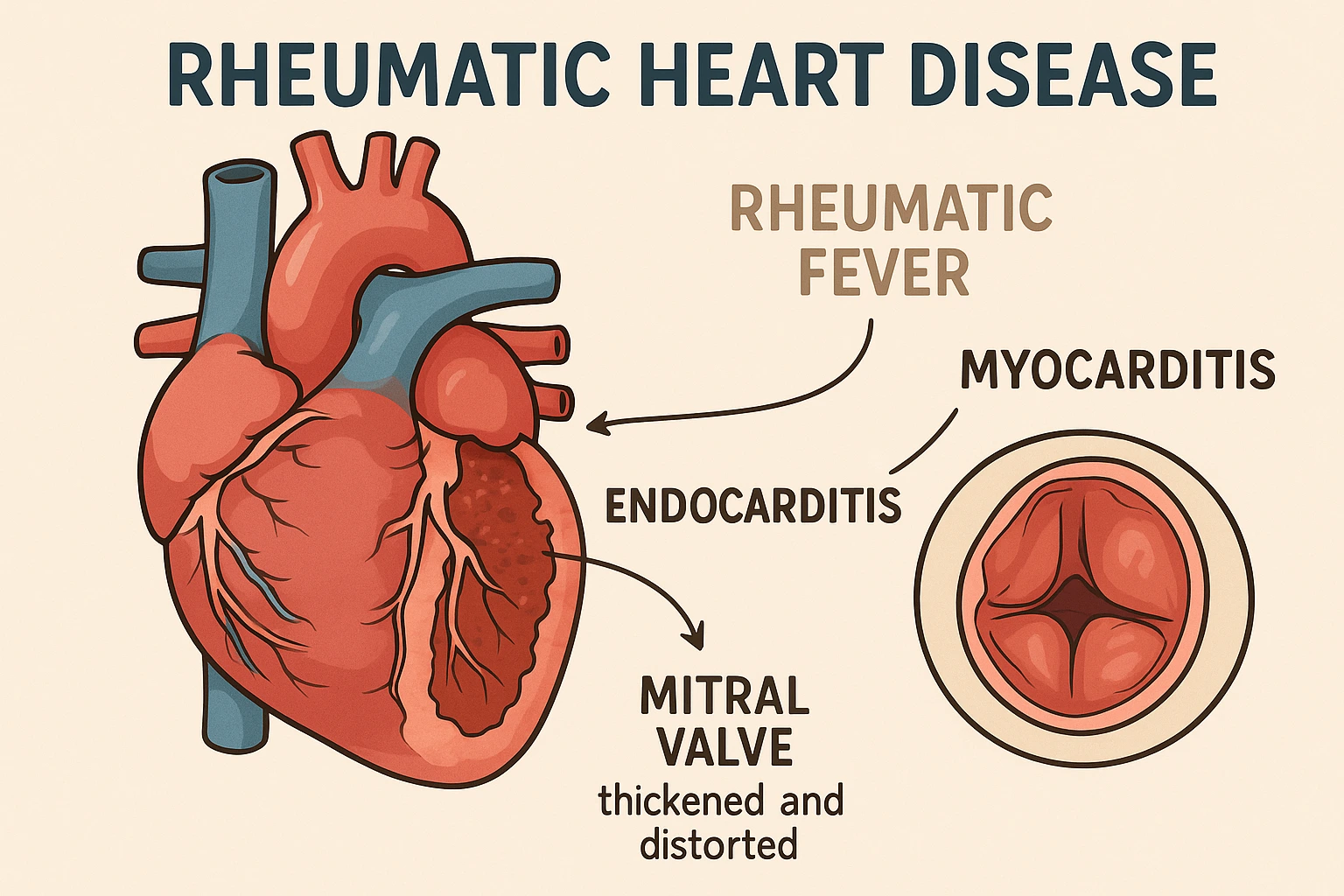
Rheumatic heart disease and infective endocarditis are two different conditions that can damage the heart valves. Rheumatic heart disease, or RHD, develops after one or more episodes of acute rheumatic fever, an immune reaction that can follow infection with group A Streptococcus. Over time, inflammation and scarring can permanently deform the heart valves. Infective endocarditis, or IE, is an infection of the inner lining of the heart, most often involving a heart valve.
The conditions are linked because damaged or abnormal valves can be more vulnerable to infection. A person with rheumatic valve disease therefore needs long-term valve monitoring and attention to symptoms such as persistent fever.
What Is Rheumatic Heart Disease?
Rheumatic heart disease is permanent structural or functional damage to the heart caused by rheumatic fever. Acute rheumatic fever can occur after group A streptococcal infection, particularly in children and young people. During rheumatic fever, inflammation can involve the heart valves. Healing may leave scarring that interferes with normal valve opening or closure.
The mitral valve is most commonly affected, although the aortic valve can also be involved. Valve damage may cause stenosis, in which the valve becomes narrowed, regurgitation, in which blood leaks backward, or a combination of both. Significant disease can eventually lead to atrial fibrillation, pulmonary hypertension or heart failure.
What Symptoms Can Rheumatic Heart Disease Cause?
Mild rheumatic valve disease may cause no symptoms for years. As the valve abnormality becomes more significant, patients may notice breathlessness during activity, reduced exercise capacity, fatigue, palpitations, chest discomfort or swelling of the feet and legs.
Mitral stenosis can raise pressure in the left atrium and lungs, leading to breathlessness and sometimes atrial fibrillation. Significant mitral or aortic regurgitation may gradually enlarge the heart and reduce pumping efficiency. Advanced disease can produce breathlessness at rest, difficulty lying flat, abdominal swelling or symptoms of heart failure.
Because symptoms may develop slowly, echocardiographic follow-up is important.
How Is Rheumatic Heart Disease Diagnosed?
Evaluation begins with medical history, symptoms and physical examination. A heart murmur may suggest valve disease, but an echocardiogram is needed to define the abnormality and its severity.
A 2D Echocardiogram with Doppler can identify valve thickening, restricted movement, stenosis and regurgitation. It also assesses heart chamber size, pumping function and pulmonary pressures. ECG may identify atrial fibrillation or other rhythm abnormalities. In selected patients, Transesophageal Echocardiography or other imaging may provide additional information.
How Is Rheumatic Heart Disease Treated?
Treatment depends on the valve affected, severity of damage, symptoms and whether complications have developed. Mild disease may require regular clinical and echocardiographic monitoring. Medicines can help manage fluid retention, heart failure, high heart rate or atrial fibrillation, but they cannot reverse established mechanical valve scarring.
Preventing recurrent rheumatic fever is an important part of long-term care. Patients with previous rheumatic fever or established RHD may need secondary antibiotic prophylaxis based on age, valve involvement and recurrence risk. This helps reduce the chance of recurrent rheumatic fever and further valve damage.
When valve disease becomes severe, procedures may be required. Selected patients with suitable rheumatic mitral stenosis may undergo balloon mitral valvotomy. Others may need surgical valve repair or replacement depending on valve anatomy and the overall condition of the heart.
What Is Infective Endocarditis?
Infective endocarditis is an infection involving the endocardium, usually one or more heart valves. It most often occurs when bacteria enter the bloodstream and attach to susceptible heart tissue, although fungi and other microorganisms can occasionally be responsible.
Risk is higher with certain valve abnormalities, prosthetic valves, previous infective endocarditis, some congenital heart conditions or cardiac devices. Rheumatic heart disease can create damaged valve surfaces and is associated with increased susceptibility to infective endocarditis.
IE can damage a valve rapidly, create infected masses called vegetations and spread infection to other parts of the body. It is a serious condition requiring hospital-based assessment and treatment.
What Are the Symptoms of Infective Endocarditis?
Symptoms can develop suddenly or over several weeks. Persistent fever is common, often accompanied by chills, sweating, tiredness, loss of appetite or unexplained weight loss. Patients may also experience breathlessness, chest discomfort, muscle or joint aches or worsening symptoms of an existing heart condition.
In some cases, fragments from infected vegetations can break away and travel through the bloodstream. This can lead to stroke, organ injury or circulation problems in the limbs. Severe valve destruction may cause acute heart failure.
A person with known valve disease and persistent unexplained fever should seek medical assessment, especially with breathlessness, weakness or neurological symptoms.
How Is Infective Endocarditis Diagnosed?
Blood cultures are central to diagnosis because they can identify the microorganism causing the infection and help select the appropriate antibiotic. When the patient is clinically stable, cultures are usually collected before antibiotics are started so that the chance of identifying the organism is not reduced.
Echocardiography is another key investigation. A transthoracic 2D Echocardiogram may show vegetations, valve damage or complications. Transesophageal Echocardiography, or TEE, provides more detailed images and is particularly useful when the initial study is inconclusive, when suspicion remains high, or when prosthetic valves or cardiac devices are involved.
Additional blood tests assess inflammation, anemia and kidney function. CT, PET/CT or other imaging may be used in selected complicated cases.
How Is Infective Endocarditis Treated?
Treatment usually requires prolonged antimicrobial therapy directed at the organism identified in blood cultures. The exact antibiotic, route and duration depend on the microorganism, whether a native or prosthetic valve is involved, antibiotic susceptibility and whether complications are present.
Some patients also require heart surgery. Surgery may be considered when infection causes severe valve dysfunction and heart failure, when infection cannot be controlled with antimicrobial treatment, when an abscess or another structural complication develops, or when the risk of embolic complications is high.
Management often requires coordinated cardiology, infectious-disease, imaging and cardiac-surgery input.
Can Infective Endocarditis Be Prevented?
Good oral and dental hygiene is important. Regular dental care and prompt treatment of infections are sensible preventive measures for people with valve disease.
Antibiotics before dental procedures are not recommended for every person with rheumatic heart disease or every heart murmur. Prophylaxis is reserved for patients considered at particularly high risk of serious outcomes from infective endocarditis and for specific procedures, according to current guidelines. Patients should ask their cardiologist or dentist whether prophylaxis applies to them rather than taking antibiotics on their own.
Frequently Asked Questions:-
Is rheumatic heart disease the same as rheumatic fever?
No. Rheumatic fever is the inflammatory illness that can occur after group A streptococcal infection. Rheumatic heart disease refers to the lasting heart-valve damage that may remain after one or repeated episodes.
Which valve is commonly affected in rheumatic heart disease?
The mitral valve is most commonly involved. The aortic valve can also be affected, and some patients have disease involving more than one valve.
Is infective endocarditis contagious?
Infective endocarditis itself is not usually spread from one person to another. It develops when microorganisms enter the bloodstream and infect susceptible heart tissue.
Does every patient with RHD need antibiotics before dental treatment?
No. Dental antibiotic prophylaxis is recommended only for selected high-risk cardiac conditions and procedures. The decision should be based on the patient’s specific heart condition and current guideline recommendations.
Can infective endocarditis damage a previously normal valve?
Yes. Although risk is higher with certain abnormal valves and cardiac conditions, infective endocarditis can sometimes occur without previously known valve disease.
When should urgent medical care be sought?
Persistent fever with severe breathlessness, fainting, confusion, new weakness on one side, difficulty speaking, severe chest symptoms or rapidly worsening heart failure requires urgent hospital assessment.
Rheumatic Heart Disease & Infective Endocarditis Treatment in Hyderabad
Patients with rheumatic valve disease need follow-up to assess valve severity, heart function, rhythm and pulmonary pressure. New persistent fever in a patient with valve disease requires prompt assessment for possible infective endocarditis rather than routine observation at home.
Dr. Kiran Lakkireddy’s cardiac practice in Hyderabad provides evaluation of rheumatic heart disease and suspected valve complications using ECG, 2D Echocardiography, TEE and additional cardiac investigations when appropriate. Treatment may include medical management, prevention of recurrent rheumatic fever, evaluation for valve intervention and coordination of specialist hospital care when infective endocarditis is suspected. Acute infective endocarditis requires hospital-based diagnosis and treatment.