
Endovascular Aortic Repair (EVAR)
Home > Services > Endovascular Aortic Repair (EVAR)
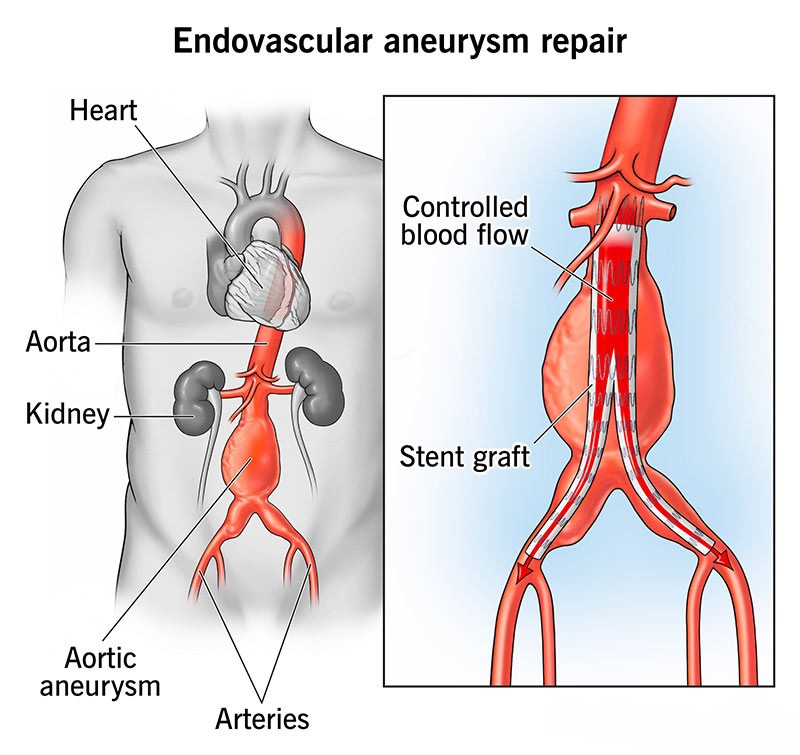
Endovascular Aortic Repair (EVAR) is a minimally invasive, life-saving procedure used to treat dangerous conditions of the aorta, the body’s main and largest blood vessel. When the wall of the aorta weakens over time due to high blood pressure or plaque buildup, it can balloon outward (an aneurysm) or tear (a dissection). If left untreated, these weakened areas can rupture, leading to life-threatening internal bleeding. EVAR involves placing a fabric-covered metallic stent (stent graft) inside the diseased section of the aorta to reinforce the weak wall, seal the tear, and safely redirect blood flow without the need for major open-abdominal or open-chest surgery.
1. Indications:
EVAR is recommended for patients diagnosed with significant aortic abnormalities that pose a high risk of rupture or severe complications. Common indications include:
- Abdominal Aortic Aneurysm (AAA) that has reached a critical size (typically larger than 5 to 5.5 cm) or is expanding rapidly
- Thoracic Aortic Aneurysm (TAA) requiring intervention (a variation of the procedure known as TEVAR)
- Aortic dissection (a dangerous tear in the inner layer of the aortic wall)
- Leaking or ruptured aortic aneurysms requiring emergency life-saving treatment
- Penetrating atherosclerotic ulcers or aortic hematomas
- Patients with aortic disease who are considered high-risk for traditional open surgery due to advanced age or other medical conditions
Timely intervention through EVAR is critical to prevent a catastrophic aortic rupture and preserve life.
2. Procedure:
EVAR is performed in a highly equipped cath lab or hybrid operating room, usually under regional or general anesthesia with strict sterile precautions. Instead of a large, invasive incision in the abdomen or chest, small punctures or tiny incisions are made in the arteries of the groin (femoral arteries).
Through these small access points, a catheter carrying a compressed stent graft—a durable fabric tube supported by a metal wire mesh—is gently advanced into the aorta. Using real-time X-ray imaging and contrast dye, the specialist precisely positions the stent graft directly across the aneurysm or dissection tear. Once perfectly aligned, the stent graft is deployed and expands to fit snugly against the healthy aortic walls above and below the diseased segment.
Blood now flows safely through the new stent graft channel, entirely bypassing the weakened aneurysm sac or sealing the false channel of a dissection. The procedure typically takes 1 to 3 hours, offering significantly less pain, a shorter hospital stay (often just a few days), and a much faster overall recovery compared to traditional open surgery.
3. Safety:
EVAR is a safe and highly effective alternative to open aortic surgery when performed by experienced endovascular specialists. Continuous monitoring of your heart rate, blood pressure, and oxygen levels is strictly maintained throughout the procedure and during your post-operative recovery.
While the risk of complications is substantially lower than open surgery, possible but uncommon risks include:
- Endoleak (blood continuing to seep into the aneurysm sac around the edges of the stent, which may require monitoring or a minor secondary procedure)
- Bleeding, bruising, or hematoma at the groin puncture sites
- Vessel injury or dissection during catheter insertion
- Kidney function changes related to the contrast dye
- Stent graft movement (migration) over time
- Clot formation in the legs or stent
- Infection of the stent graft (very rare)