
LEFT MAIN STENTING
Home > Services > Left Main Stenting
The Left Main Coronary Artery is the most critical blood vessel in the heart, responsible for supplying oxygen-rich blood to over 70% of the heart muscle. A narrowing or blockage in this artery is extremely dangerous and was traditionally treated almost exclusively with open-heart bypass surgery (CABG). Today, highly skilled interventional cardiologists can treat many of these critical blockages using minimally invasive Left Main Stenting. Using specialized techniques and advanced drug-coated stents, this procedure safely restores vital blood flow, relieves symptoms, and prevents massive heart attacks without the need for a major surgical incision.
1. Indications:
Left main stenting is a highly specialized, life-saving procedure recommended for patients with a significant narrowing in their primary coronary artery. Common indications include:
- Confirmed severe narrowing or blockage in the Left Main Coronary Artery
- Severe, unstable angina (chest pain) or shortness of breath that limits daily life
- Patients experiencing an acute heart attack caused by a left main blockage
- Patients who are considered high-risk candidates for traditional open-heart bypass surgery due to advanced age, lung disease, or other medical conditions
- Carefully selected patients who prefer a minimally invasive alternative to bypass surgery, following a thorough evaluation by a cardiac “Heart Team”
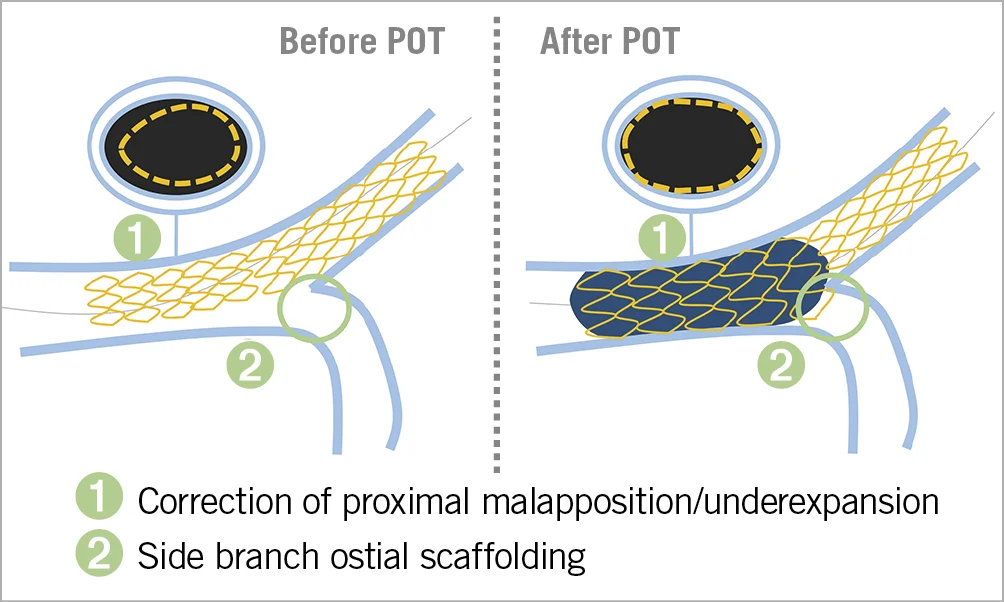
- Blockages that involve the “bifurcation” (where the left main artery splits into two smaller arteries)
Treating a left main blockage promptly is absolutely critical to preserving heart function and preventing life-threatening cardiac events.
2. Procedure:
Left main stenting is a complex and precise intervention performed in an advanced cath lab under local anesthesia with strict sterile precautions. You will remain awake but comfortably sedated. The doctor makes a small puncture in an artery, usually in the wrist (radial artery) or sometimes the groin (femoral artery).
Through this access point, a flexible catheter is guided up to the heart. Because treating the left main artery requires absolute millimeter precision, the cardiologist relies on state-of-the-art internal imaging, such as Intravascular Ultrasound (IVUS) or Optical Coherence Tomography (OCT). These tiny cameras allow the doctor to see the inside of the artery in high definition, accurately measure the vessel size, and ensure the stent is flawlessly placed and fully expanded.
Once the blockage is crossed with a microscopic guidewire, a balloon is used to open the narrowed space. One or more advanced drug-eluting stents are then meticulously implanted to reinforce the artery walls and keep the vessel permanently open. The procedure typically takes 1 to 2 hours, offering a much faster recovery and a significantly shorter hospital stay compared to open-heart surgery.
3. Safety:
Left main stenting is a high-stakes but highly successful procedure when performed by an expert interventional cardiologist with specialized training in complex coronary interventions. Continuous, rigorous monitoring of your vital signs, heart rhythm, and oxygen levels is strictly maintained throughout the procedure.
While it is minimally invasive, the critical nature of the artery means there are associated risks, which are carefully managed by the medical team. Possible but uncommon risks include:
- Bleeding, bruising, or a hematoma at the catheter insertion site
- Injury, tearing, or dissection of the left main coronary artery
- Temporary decline in kidney function due to the contrast dye
- Allergic reaction to the contrast dye used for X-ray imaging
- Blood clot formation within the new stent (stent thrombosis)
- Irregular heart rhythms (arrhythmias) during the procedure
- A rare need for emergency open-heart bypass surgery if the blockage cannot be safely stented