

PDA DEVICE CLOSURE
Home > Services > PDA Device Closure
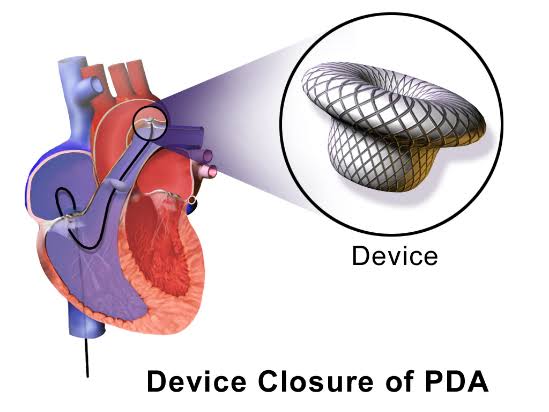
A Patent Ductus Arteriosus (PDA) is a congenital heart defect involving a persistent opening between the two major blood vessels leading from the heart the aorta and the pulmonary artery. Before a baby is born, this opening (the ductus arteriosus) is essential for fetal circulation, but it is supposed to close naturally shortly after birth. When it fails to close, it remains “patent,” allowing oxygen-rich blood from the aorta to mix back into the oxygen-poor blood in the pulmonary artery. This forces the heart and lungs to work significantly harder. In the past, correcting a PDA required open-chest surgery. Today, interventional cardiologists can permanently seal this extra blood vessel using a minimally invasive, catheter-based device closure. This advanced procedure safely plugs the PDA from the inside, restoring normal circulation instantly with a very rapid recovery time.
1. Indications:
PDA device closure is the gold-standard treatment for both children and adults diagnosed with this condition whose anatomy is suitable for a catheter-based approach. Common indications include:
- A confirmed PDA causing a significant volume of blood to flow abnormally into the lungs (a left-to-right shunt)
- Echocardiogram results showing enlargement or strain on the left side of the heart
- Symptoms such as unexplained fatigue, rapid breathing, or shortness of breath during physical activity
- Poor weight gain, difficulty feeding, or frequent respiratory infections in infants and children
- A continuous “machinery-like” heart murmur detected by a doctor using a stethoscope
- Prevention of severe long-term complications, such as irreversible high blood pressure in the lungs (pulmonary hypertension) or heart infections (endocarditis)
Closing a PDA early relieves the excess workload on the heart, ensuring normal growth in children and preventing heart failure in adults.
2. Procedure:
A PDA device closure is performed in an advanced cardiac cath lab. Depending on the patient’s age, it is done under general anesthesia (common for infants and children) or local anesthesia with deep sedation (for older children and adults). A small puncture is made in a blood vessel in the groin (the femoral vein or artery).
Through this small access point, a thin, flexible catheter is gently navigated up to the heart and into the PDA. The cardiologist uses continuous X-ray imaging (fluoroscopy) and contrast dye (an angiogram) to precisely measure the length, width, and shape of the ductus arteriosus.
Based on these exact measurements, a specialized, collapsible closure device is selected. For a very small PDA, a tiny metallic coil may be used. For a larger PDA, a flexible wire mesh plug (often shaped like a mushroom) is used. The device is pushed through the catheter, and as it exits into the PDA, it expands to tightly plug the blood vessel, instantly stopping the abnormal blood flow. Once the doctor confirms the device is secure and perfectly positioned, it is released, and the catheter is removed. The procedure typically takes 1 to 2 hours, and most patients go home the same day or the next morning.
3. Safety:
Catheter-based PDA closure is an extremely successful, safe, and routine procedure. It completely avoids the need for a surgical incision in the chest, offering a much faster, less painful recovery and no surgical scarring.
While complications are very rare, continuous monitoring is strictly maintained throughout the procedure. Possible risks include:
- Bleeding, bruising, or a hematoma at the catheter insertion site in the groin
- Dislodgment or movement of the device (embolization) after it is deployed, which is rare but may require retrieval by catheter or surgery
- A tiny residual leak around the closure device, which typically seals on its own as the body’s natural tissue grows over the plug within a few months
- A rare risk of blood clots or infection on the device (patients are given preventative antibiotics for dental procedures for six months following the closure)
- Temporary disruption of the pulse in the leg used for catheter access (especially in very small infants)