

RENAL ARTERY STENTING
Home > Services > Renal Artery Stenting
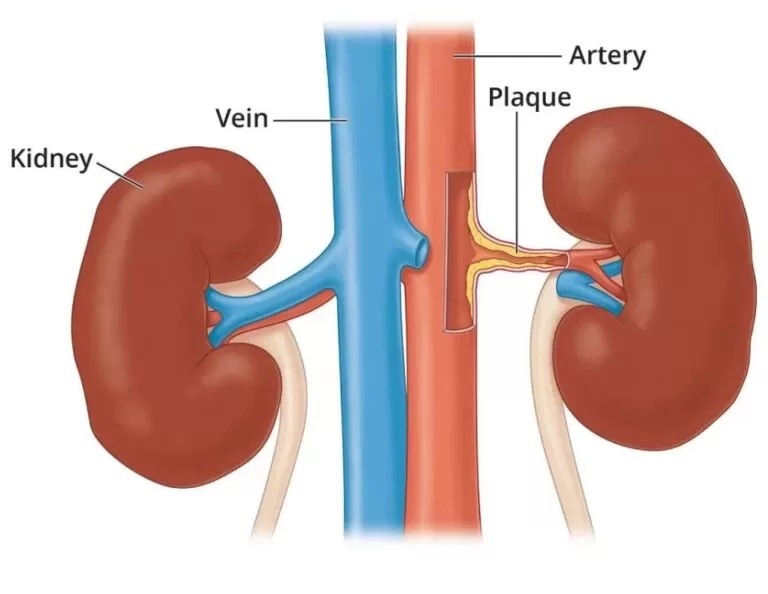
Renal artery stenting is a minimally invasive, catheter-based procedure used to treat severe narrowing or blockages in the renal arteries—the vital blood vessels that supply oxygen-rich blood to your kidneys. When cholesterol plaque builds up in these arteries (renal artery stenosis), the kidneys falsely sense a drop in overall blood pressure and release hormones that cause your actual blood pressure to dangerously spike. This condition, known as renovascular hypertension, can lead to kidney failure and increase the risk of heart attacks and strokes. During this procedure, an interventional cardiologist uses a tiny balloon and a permanent metal mesh tube (stent) to safely widen the narrowed artery, restoring healthy blood flow to protect kidney function and help bring severe high blood pressure under control without the need for major surgery.
1. Indications:
Renal artery stenting is recommended for specific patients whose narrowed kidney arteries are causing severe health issues that cannot be managed with medication alone. Common indications include:
Uncontrolled, severe high blood pressure (hypertension) that does not improve even when taking three or more blood pressure medications
A sudden, unexplained worsening of kidney function
Episodes of sudden fluid buildup in the lungs (flash pulmonary edema) related to poor kidney circulation
Diagnostic tests (such as a Renal Doppler ultrasound, CT angiogram, or MR angiogram) confirming a severe blockage in one or both renal arteries
A noticeable shrinking (atrophy) of one kidney due to a chronic lack of blood supply
Progressive kidney failure caused directly by restricted arterial blood flow
Successfully stenting the renal artery can preserve the remaining kidney function, prevent the need for dialysis, and make severe blood pressure much easier to manage.
2. Procedure:
A renal artery stenting procedure is performed in an advanced cardiac cath lab under local anesthesia with mild sedation. You will remain awake and completely relaxed throughout the process. A small puncture is made in an artery, usually in the groin (femoral artery) or sometimes the wrist (radial artery).
Through this small access point, a thin, flexible catheter is gently navigated up to the narrowed kidney artery using continuous X-ray imaging (fluoroscopy). Once the catheter reaches the blockage, contrast dye is injected to perfectly map the narrowing. A microscopic guidewire is then carefully passed through the blockage.
First, a tiny deflated balloon is advanced over the wire and inflated to safely compress the hardened plaque against the artery wall. Next, a compressed stent—a tiny metal scaffold—is moved into position and expanded. The stent locks firmly into place, keeping the artery wide open. The balloon and catheters are then completely removed, leaving only the permanent stent behind. The procedure typically takes 1 to 2 hours, and most patients are able to go home the following day.
3. Safety:
Renal artery stenting is a highly safe and routine procedure when performed by an expert interventional cardiologist. It completely avoids the large incisions and long recovery times associated with traditional open vascular surgery.
Continuous monitoring of your vital signs and kidney function is maintained throughout the procedure. While complications are uncommon, possible risks include:
- Bleeding, bruising, or a hematoma at the catheter insertion site (groin or wrist)
- Temporary decline in kidney function due to the contrast dye used for X-ray imaging (preventative IV fluids are strictly administered to flush the kidneys and protect them)
- Allergic reaction to the contrast dye
- Injury, tearing, or dissection of the renal artery, which the doctor can usually repair immediately with another stent
- A small piece of plaque breaking loose and traveling deeper into the kidney (atheroembolism)
- Re-narrowing of the stented artery over time (restenosis)