

TACE – TRANSARTERIAL CHEMOEMBOLISATION
Home > Services > Transarterial Chemoembolisation
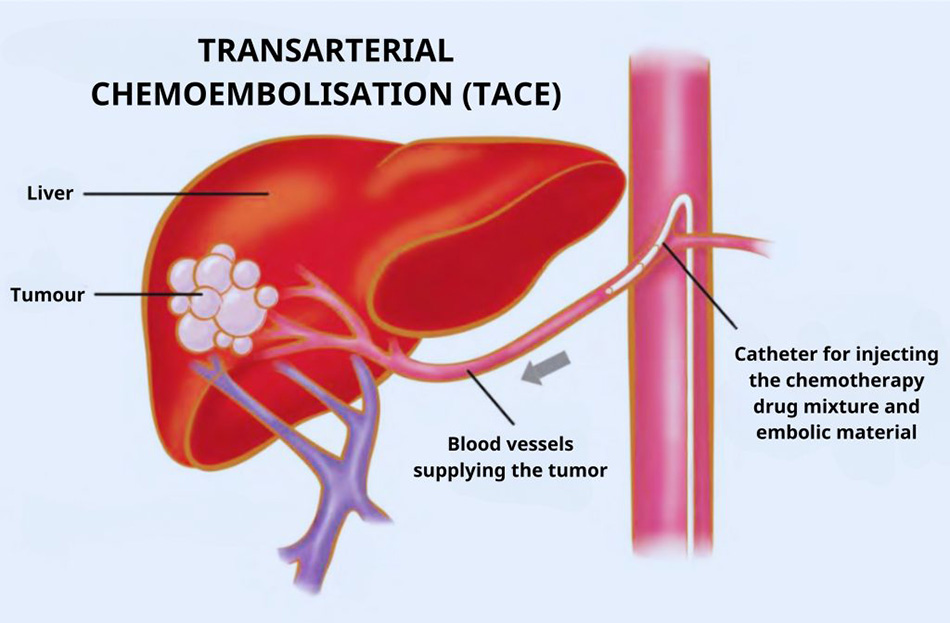
Transarterial Chemoembolisation (TACE) is a highly targeted, minimally invasive treatment primarily used for liver cancer, such as Hepatocellular Carcinoma (HCC). The liver is unique because it receives its blood supply from two main sources: healthy liver tissue gets most of its blood from the portal vein, while liver tumors draw almost all their blood from the hepatic artery. TACE exploits this anatomy. During the procedure, an interventional radiologist navigates a tiny catheter directly into the specific artery feeding the tumor. A highly concentrated dose of chemotherapy is injected directly into the cancer, followed immediately by synthetic particles that permanently block (embolize) the blood vessel. This powerful “one-two punch” traps the chemotherapy inside the tumor for maximum effect while simultaneously starving the cancer of the oxygen and nutrients it needs to survive.
1. Indications:
TACE is a standard-of-care treatment for patients with liver cancer that cannot be surgically removed, but who still have relatively good underlying liver function. Common indications include:
- Hepatocellular Carcinoma (HCC) tumors that are too large, too numerous, or located in areas that make surgical removal (resection) impossible
- Serving as a “bridge to transplant” for patients waiting for a liver transplant, keeping the tumor size small enough to ensure they remain eligible on the transplant list
- Shrinking large tumors to make them small enough to be surgically removed later (downstaging)
- Treating certain types of cancer that have spread (metastasized) to the liver from other organs, such as colorectal cancer or neuroendocrine tumors
- Patients who cannot tolerate systemic (whole-body) chemotherapy, as TACE confines the toxic drugs almost entirely to the liver, sparing the rest of the body
By directly attacking the tumor, TACE can significantly slow cancer growth, relieve symptoms, and extend survival.
2. Procedure:
A TACE procedure is performed in an advanced interventional radiology suite or cath lab. It is typically done under local anesthesia with conscious sedation, keeping you relaxed and sleepy but awake.
A small puncture is made in a major artery, usually in the groin (femoral artery) or the wrist (radial artery). Through this access point, a thin, flexible catheter is gently navigated up through the arterial system and into the hepatic artery feeding the liver. The doctor uses continuous X-ray imaging (fluoroscopy) and contrast dye (an angiogram) to precisely map the intricate blood vessels and pinpoint exactly which branches are feeding the tumor.
Once the catheter is positioned perfectly within the tumor’s specific blood supply, the doctor injects a specialized mixture. This consists of high-dose chemotherapy drugs (often mixed with an oil-based contrast agent to help it stick to the tumor cells) followed by tiny, sand-like embolic particles. Alternatively, the doctor may use “drug-eluting beads”—microscopic spheres pre-loaded with chemotherapy that slowly release the drug over several days while blocking the vessel. Once the blood supply is successfully blocked, the catheter is removed. The procedure takes about 1 to 2 hours, and patients typically stay in the hospital overnight for observation.
3. Safety:
TACE is a highly effective, targeted therapy that avoids the major incisions of open surgery and drastically reduces the severe side effects associated with traditional, whole-body chemotherapy (like hair loss and extreme nausea).
Most patients experience “post-embolization syndrome” for a few days after the procedure, which is a normal reaction as the tumor tissue dies. Symptoms include a low-grade fever, fatigue, right-sided abdominal pain, and nausea, which are managed with standard medications in the hospital. While generally safe, possible risks include:
- Bleeding, bruising, or a hematoma at the catheter insertion site (groin or wrist)
- A temporary decline in liver function, which usually recovers within a few weeks (this is why TACE is not recommended for patients with severe liver failure)
- Infection or the formation of an abscess inside the treated tumor
- Damage to the blood vessels in the liver or unintended blockage of blood vessels feeding healthy organs like the gallbladder or stomach (non-target embolization)
- Temporary decline in kidney function due to the contrast dye used for X-ray imaging