
Dobutamine Stress Echocardiography in Hyderabad
Home > Services > Dobutamine Stress Echocardiography in Hyderabad
Dobutamine Stress Echocardiography, commonly called DSE or a Dobutamine Stress Echo, is a non-invasive cardiac imaging test used to assess how the heart muscle responds when it is made to work harder. Instead of using treadmill exercise, the test uses a medicine called dobutamine to gradually increase the heart rate and pumping activity while echocardiographic images are recorded.
DSE is especially useful for patients who cannot exercise adequately because of joint problems, neurological conditions, poor mobility, or other physical limitations. It may help evaluate suspected coronary artery disease, assess whether weakened heart muscle is still viable, and answer selected questions about heart function or valve disease. In Hyderabad, DSE may be considered when a cardiologist needs stress information but a standard treadmill test is unsuitable.
What Is Dobutamine Stress Echocardiography?
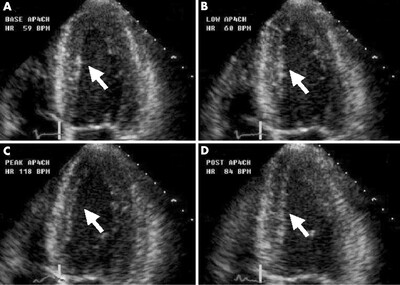
A standard echocardiogram shows the heart at rest. DSE adds controlled cardiac stress so that the cardiologist can compare how different areas of the heart muscle move before, during, and after the heart rate increases.
Dobutamine is given through a small intravenous cannula in gradually increasing doses. The medicine makes the heart beat faster and more strongly, producing an effect similar to exercise. Ultrasound images are taken at several stages while the ECG, heart rate, blood pressure, and symptoms are monitored.
The cardiologist pays particular attention to movement of the left ventricular walls. If a segment moves normally at rest but becomes weaker during stress, this may suggest that the area is not receiving enough blood when demand increases. DSE does not directly photograph a coronary blockage; it looks for the functional effect that reduced blood flow may have on the heart muscle.
Why Is a Dobutamine Stress Echo Recommended?
DSE is commonly considered when information about the heart under stress is needed but the patient cannot exercise enough for a treadmill-based test. A person with arthritis, a neurological condition, severe mobility limitation, or poor exercise capacity may not be able to reach the workload required for a useful exercise stress test. In such situations, medication can create a controlled increase in cardiac workload while the patient remains lying down.
The test may also be recommended when symptoms such as chest discomfort or unexplained breathlessness raise concern about coronary artery disease and stress imaging is clinically appropriate. In selected patients with reduced heart pumping function, a lower-dose dobutamine protocol may be used to assess myocardial viability, meaning whether poorly contracting heart muscle may still improve if blood supply is restored. DSE may also be used in selected cases of low-flow, low-gradient aortic stenosis to assess how the valve and heart respond when cardiac output increases.
What Can DSE Show?
One of the main purposes of DSE is to look for stress-induced wall-motion abnormalities. The left ventricle is assessed in different segments, and the cardiologist compares how each segment contracts at rest and at higher levels of stress. A new reduction in movement during stress may suggest inducible ischemia.
The test can also provide information about overall left ventricular function, heart-rate response, blood-pressure response, and rhythm changes during stress. In viability studies, improvement in contraction at lower doses of dobutamine may suggest that weakened heart muscle is still alive and capable of functional recovery.
DSE findings are interpreted together with symptoms, ECG changes, blood pressure, medical history, previous heart attacks, angiography or stenting, and other investigations.
How Should You Prepare?
Preparation depends on why the test has been requested, so instructions from the cardiology team should take priority. You may be advised to avoid a heavy meal beforehand. Wear comfortable clothing and bring your previous cardiac reports and current medicine list.
Some medicines, especially those that slow the heart rate, can influence the response to dobutamine. However, do not stop beta blockers or any other prescribed medicine on your own. Your cardiologist will tell you whether a medicine should be continued or temporarily withheld.
Tell the team about significant arrhythmias, very high blood pressure, severe valve disease, recent heart problems, glaucoma, asthma, or previous medicine reactions.
What Happens During the Test?
At the start, ECG electrodes are placed on the chest and a blood-pressure cuff is fitted. A small intravenous cannula is inserted, and baseline echocardiographic images are recorded while the heart is at rest.
Dobutamine is then infused in gradually increasing doses. As the dose rises, the heart usually beats faster and contracts more strongly. Ultrasound images are taken at different stages so the cardiologist can compare wall motion as cardiac workload increases.
In some patients, the target heart rate may not be reached with dobutamine alone. An additional medicine such as atropine may sometimes be used when clinically appropriate. Throughout the test, ECG, heart rate, blood pressure, symptoms, and echo images are monitored closely.
The infusion is stopped when enough diagnostic information has been obtained, the target stress level is reached, or there is a medical reason to stop. Monitoring continues during recovery until the heart rate and blood pressure move toward baseline.
What Will You Feel During DSE?
Because dobutamine makes the heart work harder, you may feel your heartbeat becoming faster or stronger. Some patients notice warmth, flushing, mild headache, tremor, nausea, chest awareness, or temporary breathlessness. These effects usually settle after the infusion is reduced or stopped.
Tell the medical team immediately if you develop chest pain, marked breathlessness, dizziness, severe palpitations, or another unusual symptom. The test is performed under continuous monitoring so the infusion can be stopped if necessary.
Understanding Your DSE Results
The final interpretation is based mainly on how the heart muscle moves at rest compared with higher levels of stress. If all segments continue to contract normally as the heart works harder, the study may be reassuring for the clinical question being investigated. If a segment develops reduced movement during stress, the cardiologist may consider this evidence of inducible ischemia.
In a viability study, the interpretation is different. Heart muscle that contracts poorly at rest but improves with low-dose dobutamine may have preserved viability.
An abnormal result does not automatically mean angioplasty or bypass surgery is required, and a normal DSE does not exclude every form of coronary artery disease. If the study is inconclusive or concerning, the next investigation may include CT coronary angiography, myocardial perfusion imaging, Cardiac MRI, or invasive coronary angiography.
Safety and Limitations
Dobutamine Stress Echocardiography is generally considered safe when performed in appropriately selected patients by a trained team with continuous monitoring. Temporary palpitations, headache, flushing, tremor, nausea, or chest discomfort can occur because the medicine intentionally increases cardiac workload.
More significant complications are uncommon but can include important arrhythmias, marked blood-pressure changes, persistent chest pain, or, rarely, a serious cardiac event. This is why the patient is assessed before testing and monitored throughout the infusion and recovery period.
DSE also has limitations. Image quality may be reduced in some patients, and baseline wall-motion abnormalities can make interpretation more complex. The test shows the functional response of the heart to stress rather than directly visualising the coronary arteries.
Frequently Asked Questions:-
Is Dobutamine Stress Echocardiography painful?
The echocardiogram itself is not painful. You may feel the IV cannula and notice a faster or stronger heartbeat as dobutamine is given.
Why would I have DSE instead of a treadmill test?
DSE is often used when a patient cannot exercise adequately or when stress imaging is preferred for the clinical question.
How long does the test take?
The complete appointment often takes around 45 to 60 minutes, including preparation, imaging, and recovery.
Can DSE detect a coronary artery blockage?
DSE does not directly show the artery itself. It can detect heart-wall movement changes during stress that may suggest reduced blood flow.
Do I need to stop my medicines?
Possibly, depending on the medicine and the reason for testing. Never stop heart medicines without specific instructions from your cardiologist.
What happens if the test is abnormal?
Your cardiologist will interpret the result together with your symptoms and other investigations. Additional testing may be recommended before treatment decisions are made.
Can I go home after the test?
Most patients can leave after a short recovery period once heart rate, blood pressure, and symptoms are stable.
Dobutamine Stress Echocardiography in Hyderabad
If you need cardiac stress assessment but cannot exercise adequately, or if your cardiologist wants detailed information about heart-wall motion, myocardial viability, or selected valve conditions, Dobutamine Stress Echocardiography may be appropriate.
Dr. Kiran Lakkireddy’s cardiac practice in Hyderabad provides evaluation of heart-related symptoms and guidance on suitable diagnostic testing. The decision to perform DSE should be based on your symptoms, medical history, previous investigations, exercise capacity, and the specific clinical question that needs to be answered.