ROTABLATION, ORBITAL ATHERECTOMY, AND INTRAVASCULAR LITHOTRIPSY FOR CALCIFIC LESIONS
Home > Services > Rotablation, Orbital and Atherectomy, or Intravascular Lithotripsy for Calcific Lesion
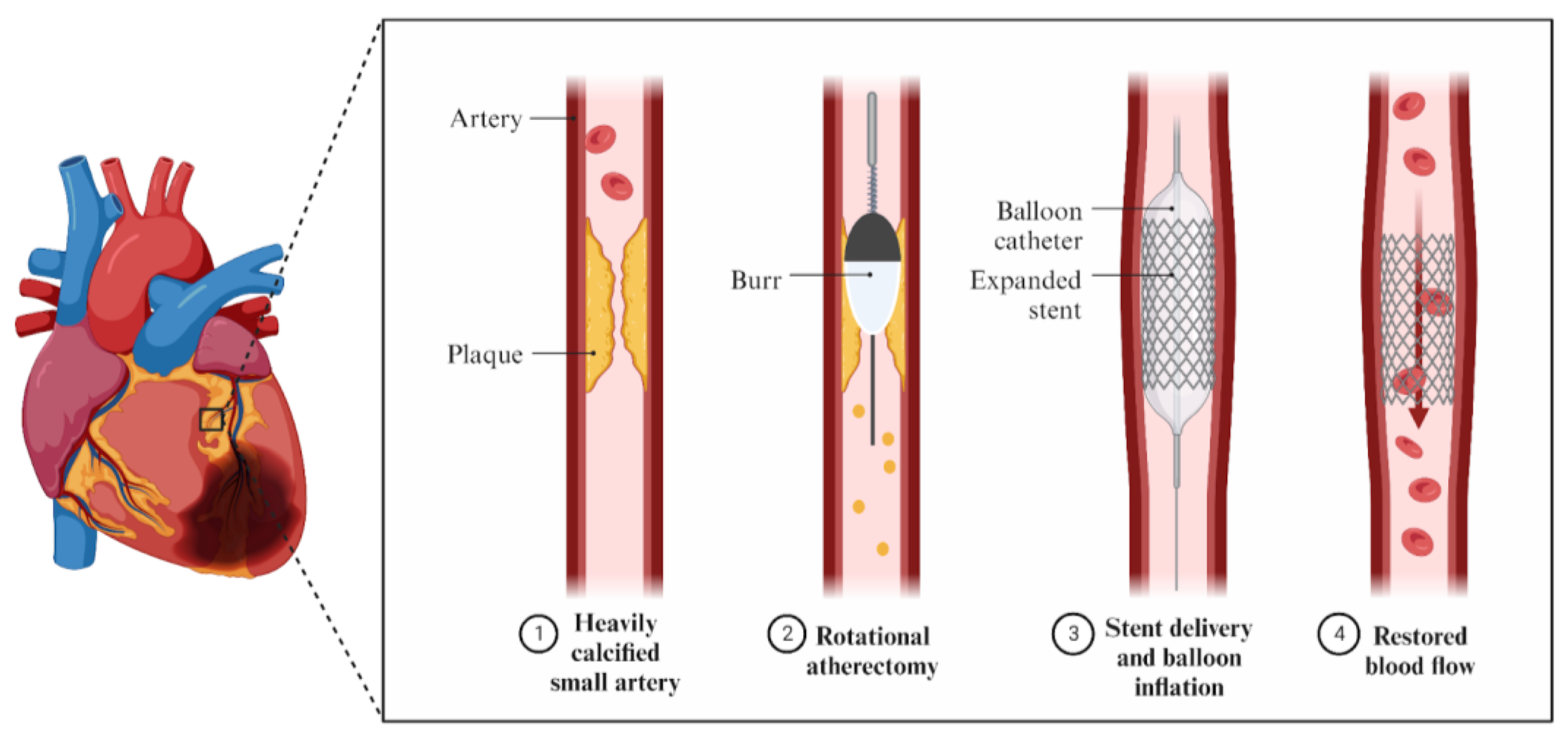
Over time, cholesterol plaque inside the coronary arteries can harden and turn into solid calcium, becoming almost like bone. When arteries become heavily calcified, standard balloons and stents are simply not strong enough to crack the plaque and fully expand to open the blockage. To safely treat these “rock-hard” blockages, expert interventional cardiologists use state-of-the-art technologies like Rotablation, Orbital Atherectomy, or Intravascular Lithotripsy (IVL). These specialized tools are designed to crack, grind, or shatter the calcium from the inside, allowing a stent to be safely and flawlessly deployed to restore vital blood flow without the need for open-heart bypass surgery.
1. Indications:
These advanced calcium-modification procedures are recommended for patients with severely hardened arterial blockages. Common indications include:
- Severe, heavily calcified coronary blockages identified on an angiogram or through internal imaging (IVUS/OCT)
- Blockages where a standard angioplasty balloon fails to inflate or a previously placed stent cannot fully expand
- Patients suffering from severe chest pain (angina) or shortness of breath caused by hardened, chronic plaque
- High-risk or elderly patients who are not suitable candidates for traditional open-heart bypass surgery (CABG)
- Preparation of a rigid, calcified artery to ensure a new stent can open perfectly, preventing future stent failure
Properly treating calcified lesions is crucial, as an under-expanded stent is one of the leading causes of future blood clots and heart attacks.
2. Procedure:
These procedures are performed in an advanced cath lab under local anesthesia with strict sterile precautions. You will remain awake and comfortable. Access is typically gained through a small puncture in the wrist (radial artery) or the groin (femoral artery).
Because treating calcium requires absolute precision, the cardiologist relies on advanced internal imaging, such as Intravascular Ultrasound (IVUS) or Optical Coherence Tomography (OCT), to analyze the thickness and location of the calcium. Based on this imaging, the doctor will choose one of three specialized tools:
- Rotablation (Rotational Atherectomy): A microscopic, diamond-coated burr is advanced to the blockage and spins at an incredibly high speed (up to 190,000 RPM). It acts like a tiny sander, safely grinding the hard calcium into harmless, microscopic particles smaller than red blood cells, which safely wash away in the bloodstream.
- Orbital Atherectomy: Similar to rotablation, this tool uses a diamond-coated crown that spins in an eccentric, expanding circular orbit. It sands away the surface calcium while preserving the healthy tissue and allowing continuous blood flow during the treatment.
- Intravascular Lithotripsy (IVL): Often called “Shockwave” therapy, this relies on a specialized balloon that emits localized sonic pressure waves. These pulses safely fracture and crack the rigid calcium deep within the artery wall without damaging the surrounding soft tissue—using the exact same technology doctors use to break apart kidney stones.
Once the calcium is successfully modified or removed, the artery becomes flexible again. The doctor then implants a drug-eluting stent to hold the vessel permanently open. The procedure typically takes 1.5 to 2.5 hours.
3. Safety:
Treating severe calcific lesions requires high-level expertise, and these procedures are safe and highly effective when performed by a specially trained interventional cardiologist. Continuous, rigorous monitoring of your vital signs, heart rhythm, and oxygen levels is strictly maintained throughout the procedure.
Because dealing with hardened arteries is complex, these advanced tools carry slightly higher risks than standard stenting, which are carefully managed by the medical team. Possible but uncommon risks include:
- A temporary “slow flow” of blood as the microscopic calcium particles wash down the artery (managed with medications)
- Temporary, irregular heartbeats (arrhythmias) during the grinding process (a temporary pacemaker is sometimes used as a brief precaution)
- Bleeding, bruising, or hematoma at the catheter insertion site
- Temporary decline in kidney function due to the contrast dye
- Injury, micro-tears, or perforation of the coronary artery
- A rare need for emergency bypass surgery if the heavily calcified artery cannot be safely stented