

Temporary Pacemaker
Home > Services > Temporary Pacemaker
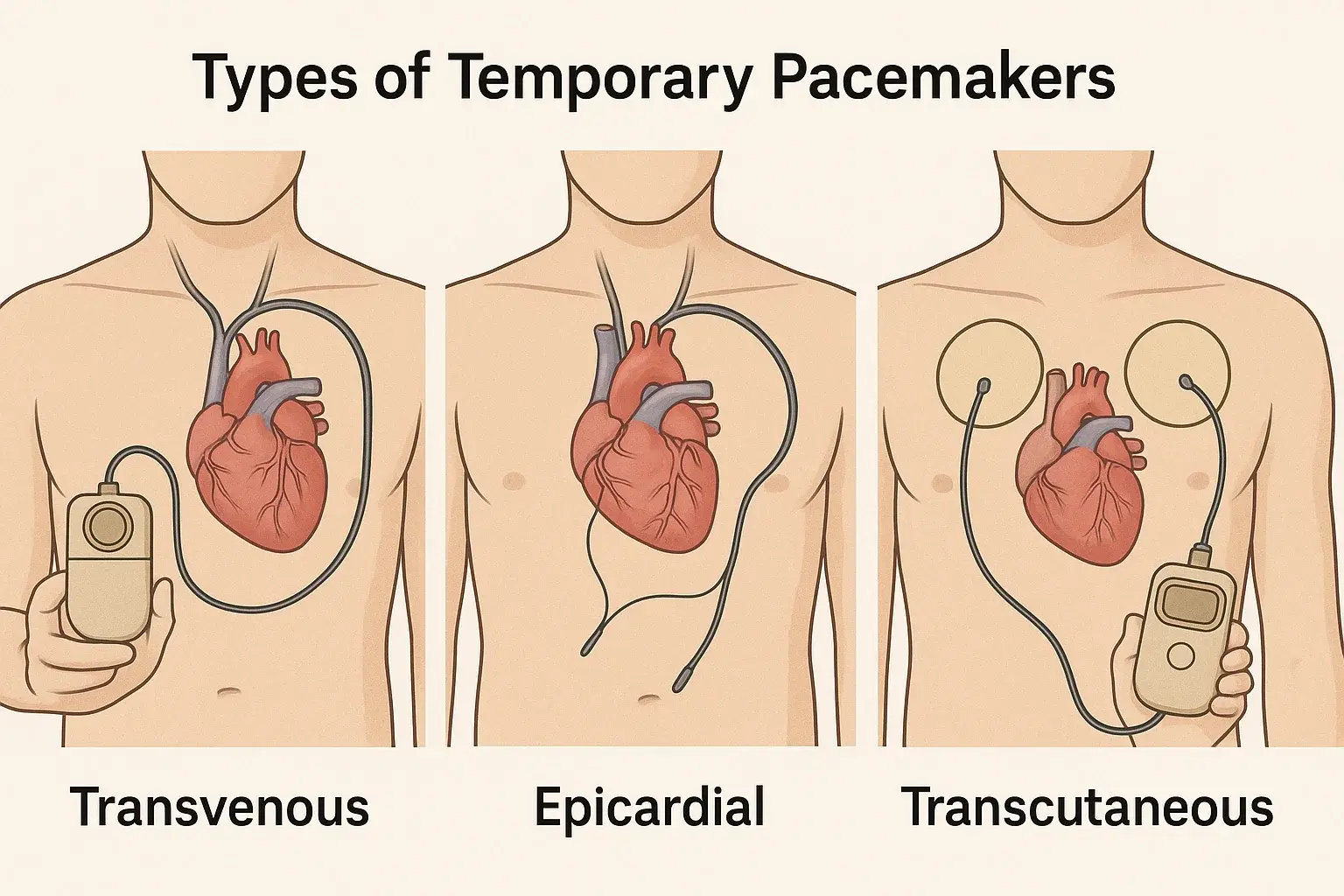
A temporary pacemaker is a life-saving medical device used to urgently regulate a dangerously slow or irregular heartbeat in an emergency or intensive care setting. Unlike a permanent pacemaker, which is surgically implanted inside the chest, a temporary system utilizes an external control box (pulse generator) connected to wires that are temporarily guided into the heart. This device acts as a crucial safety net, providing immediate electrical stimulation to keep the heart pumping effectively. It serves as a “bridge” to recovery—supporting the patient until the heart’s natural electrical system heals, the underlying cause is resolved, or a permanent pacemaker can be safely implanted.
1. Indications:
A temporary pacemaker is strictly an emergency or short-term intervention. It is recommended for patients experiencing sudden, severe electrical disturbances in the heart. Common indications include:
- Symptomatic bradycardia (an abnormally slow heart rate causing dizziness, fainting, or low blood pressure) that does not respond to medications
- Complete (third-degree) heart block, where electrical signals fail to pass from the top to the bottom chambers of the heart
- Electrical failure or severe heart block triggered by an acute heart attack (Myocardial Infarction)
- Support during and immediately after open-heart surgery, as the heart’s electrical system can temporarily swell and slow down
- Temporary heart rhythm issues caused by severe electrolyte imbalances, infections (like Lyme disease), or drug toxicities
- Providing a safe bridge for patients who require a permanent pacemaker but have an active infection or need to wait for a surgical slot
By instantly stabilizing the heart rate, a temporary pacemaker prevents fainting, heart failure, and sudden cardiac arrest.
2. Procedure:
The insertion of a temporary pacemaker (specifically transvenous pacing) is performed in a cath lab or Intensive Care Unit (ICU) under local anesthesia. You will remain awake but comfortable, and your vital signs will be continuously monitored.
The doctor numbs a small area of skin, usually in the neck (internal jugular vein) or the groin (femoral vein). Through a small puncture, a thin, flexible pacing wire is carefully advanced through the blood vessels and guided directly into the right lower chamber of the heart (the right ventricle) using X-ray imaging (fluoroscopy).
Once the tip of the wire is resting safely against the heart muscle, the other end is connected to the external pacemaker control box. The doctor programs this external computer to the exact heart rate you need. The device then continuously senses your natural heartbeat; if your heart beats too slowly or misses a beat, the pacemaker instantly delivers a tiny, painless electrical impulse to trigger a heartbeat. Once the wire is secured, you will remain in bed in a monitored unit until the device is no longer needed.
3. Safety:
Temporary pacemakers are critical, life-saving devices that are highly safe when managed by an expert cardiac care team. Because the device is temporary and relies on an external box, you will be closely monitored 24/7 in an ICU or specialized cardiac ward to ensure the wires remain in the perfect position.
While it is a routine emergency procedure, possible but uncommon risks include:
Bleeding, bruising, or a hematoma at the catheter insertion site (neck or groin)
Dislodgment or movement of the pacing wire, which may require the doctor to reposition it
Irregular heartbeats (arrhythmias) caused by the wire irritating the heart muscle
Infection at the puncture site (the risk increases the longer the temporary wire is left in place)
A rare risk of lung puncture (pneumothorax) if the vein in the neck or upper chest is used for access
Injury or micro-tearing of the heart muscle or blood vessels