

CATHETER DIRECTED THROMBOLYSIS
Home > Services > Catheter Directed Thrombolysis
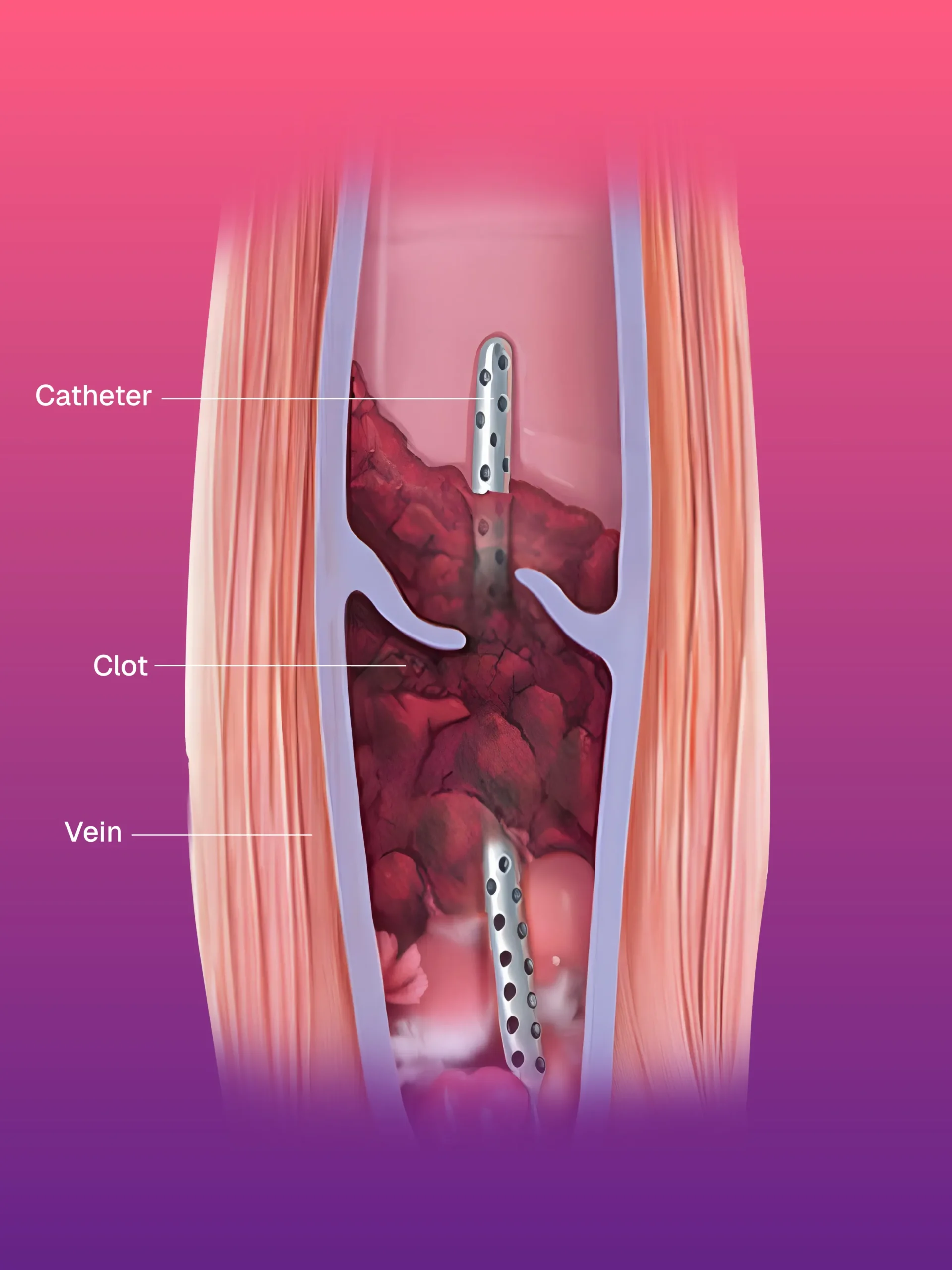
Catheter-directed thrombolysis (CDT) is a highly targeted, minimally invasive procedure used to rapidly dissolve large, dangerous blood clots blocking major blood vessels, most commonly in the legs (Deep Vein Thrombosis, or DVT) or the lungs (Pulmonary Embolism, or PE). Standard blood-thinning medications only prevent new clots from forming; they do not dissolve existing ones. While systemic “clot-busting” drugs can be given through a standard IV, they circulate through the entire body and carry a very high risk of severe bleeding. CDT solves this by delivering powerful thrombolytic medication directly into the core of the clot. By using a specialized catheter, an interventional specialist can slowly and safely melt the clot away, instantly restoring healthy blood flow and preventing permanent, debilitating damage to the blood vessels and organs.
1. Indications:
Catheter-directed thrombolysis is typically recommended for severe, acute blood clots that threaten an organ, a limb, or the patient’s life. Common indications include:
- Extensive Deep Vein Thrombosis (DVT): Particularly clots involving the large veins in the pelvis and upper thigh (iliofemoral DVT) that cause severe pain, extreme swelling, and a change in leg color.
- Massive or Submassive Pulmonary Embolism (PE): Large blood clots in the lungs that are actively causing strain on the right side of the heart, dangerously low blood pressure, or severe shortness of breath.
- Acute Limb Ischemia: A sudden, critical blockage in an artery of the arm or leg that threatens the immediate survival of the limb.
- Prevention of Post-Thrombotic Syndrome (PTS): A chronic, debilitating condition causing permanent leg swelling, pain, and skin ulcers, which occurs when a severe DVT damages the delicate one-way valves inside the leg veins.
- Blocked surgical bypass grafts or clotted dialysis access fistulas.
By actively removing the clot rather than just waiting for the body to absorb it, CDT preserves the long-term health and function of the veins.
2. Procedure:
A CDT procedure is initiated in an advanced interventional radiology suite or cardiac cath lab. It is performed under local anesthesia with conscious sedation, meaning you are awake but deeply relaxed and pain-free.
Depending on the location of the clot, a small puncture is made in a blood vessel often behind the knee, in the groin, or in the neck. Through this tiny access point, a thin, flexible catheter is gently navigated directly into the center of the blood clot using continuous X-ray imaging (fluoroscopy) and ultrasound guidance. Contrast dye (an angiogram or venogram) is injected to precisely map the size and boundaries of the blockage.
The doctor uses a highly specialized infusion catheter equipped with dozens of microscopic side holes along its tip. Once perfectly embedded inside the clot, a slow, continuous drip of a powerful thrombolytic medication (such as tPA) is started.
Because the clot takes time to dissolve, you are transferred to the Intensive Care Unit (ICU) with the catheter left safely in place. The medication continuously drips directly into the clot for anywhere from 12 to 24 hours. The doctor will periodically bring you back to the cath lab to inject contrast dye and monitor the progress. Once the clot is completely dissolved, the doctor checks for any underlying narrowings in the vein that may have caused the clot in the first place, often treating them immediately with balloon angioplasty or a stent. The catheter is then completely removed.
3. Safety:
Catheter-directed thrombolysis is a highly effective, limb-saving, and life-saving procedure. By concentrating the medication exactly where it is needed, the overall dose is significantly lower than systemic IV therapy, reducing the overall risk to the patient.
However, because the medication aggressively breaks down clots, you are monitored continuously in the ICU. Possible risks include:
- Bleeding or bruising at the catheter insertion site (the most common side effect)
- Major bleeding complications, such as gastrointestinal bleeding, or a rare but severe risk of bleeding in the brain (intracranial hemorrhage)
- A piece of the clot breaking loose and traveling deeper into the lungs or limbs (embolization) during the dissolving process
- Temporary decline in kidney function due to the contrast dye used for X-ray mapping (preventative IV fluids are strictly administered)
- Allergic reaction to the thrombolytic medication or the contrast dye