Holter Monitoring in Hyderabad
Home > Services > Holter Monitoring in Hyderabad
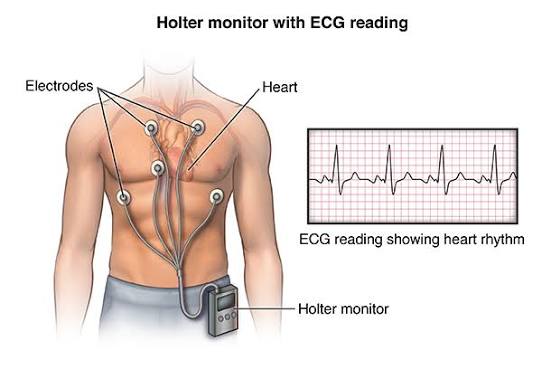
Holter Monitoring is a non-invasive cardiac test that records the heart’s electrical activity continuously while a person goes about normal daily activities. Unlike a standard ECG, which records only a brief snapshot of the heartbeat, a Holter monitor can record for 24 to 48 hours or longer, depending on the device and clinical question. This longer recording period makes it useful for detecting rhythm problems that may come and go and therefore may not appear during a short ECG.
In Hyderabad, Holter Monitoring may be advised when symptoms such as palpitations, dizziness, unexplained fainting, episodes of a fast or slow heartbeat, or intermittent chest discomfort need to be correlated with the actual heart rhythm. It may also be used to assess whether treatment for an arrhythmia is working or to review the rhythm in patients with known heart disease.
What Is Holter Monitoring?
A Holter monitor is a small portable ECG recorder worn during everyday activities. Adhesive electrodes are attached to the chest and connected to the recording device. These electrodes detect the electrical signals produced by each heartbeat and store them for later analysis.
The main advantage of Holter Monitoring is duration. A resting ECG may be entirely normal if the abnormal rhythm is not happening at that moment. By recording continuously for many hours, a Holter monitor creates a much longer record of the heart’s electrical activity and increases the chance of capturing intermittent rhythm changes. The test does not treat an abnormal rhythm; its purpose is to collect information that can help the cardiologist understand what the heart was doing when symptoms occurred.
Why Is Holter Monitoring Recommended?
A cardiologist may recommend Holter Monitoring when symptoms are intermittent and a routine ECG has not provided an explanation. Palpitations are a common reason for testing. Patients may describe a racing heartbeat, fluttering, pounding, skipped beats, or an irregular sensation in the chest. Because these episodes can be brief or unpredictable, they may not be present during a clinic visit.
Dizziness, light-headedness, near-fainting, and unexplained fainting can also lead to rhythm monitoring when an arrhythmia is one possible cause. In some patients, Holter Monitoring is used to investigate episodes of an unusually fast or slow pulse, unexplained weakness, or breathlessness. It can also be useful after an arrhythmia has already been diagnosed, for example to assess how frequently episodes occur or whether treatment is controlling them.
What Can a Holter Monitor Detect?
Holter Monitoring can record a wide range of rhythm patterns. It may identify premature atrial or ventricular beats, episodes of atrial fibrillation, supraventricular tachycardia, significant bradycardia, pauses, or other rhythm abnormalities. The importance of these findings depends on how often they occur, how long they last, the patient’s symptoms, and the presence of underlying heart disease.
The monitor also provides information about the fastest, slowest, and average heart rates during the recording period. One of its most useful features is symptom correlation. If a patient records that palpitations occurred at a particular time, the cardiologist can examine the rhythm recorded at that exact moment. Sometimes symptoms correspond to an arrhythmia; in other cases the rhythm remains normal, which is also clinically useful information.
How Should You Prepare for Holter Monitoring?
Holter Monitoring usually requires very little preparation. The chest area needs to be clean and dry so the electrodes can remain attached. Creams, oils, and lotions on the chest can interfere with the adhesive. In some patients, a small amount of chest hair may need to be trimmed or shaved to improve electrode contact.
Continue your usual medicines unless your doctor gives different instructions. The aim is often to record the heart during a normal day, so patients are generally encouraged to follow their usual routine rather than deliberately changing their activity. Wear comfortable clothing that allows the monitor and wires to remain secure.
What Happens While You Wear the Monitor?
After the electrodes are placed, the device begins recording continuously. You can usually return to normal daily activities such as walking, working, eating, and sleeping. The monitor must generally be kept dry unless you have specifically been given a water-resistant device. With many traditional Holter systems, this means avoiding bathing, showering, and swimming until the recording period is complete.
The technician may ask you to keep a symptom and activity diary. If you experience palpitations, dizziness, chest discomfort, breathlessness, weakness, or another symptom, note the time, what you felt, and what you were doing. Accurate timing helps the cardiologist compare symptoms with the ECG recording.
Understanding Your Holter Report
After the monitoring period is complete, the recorded information is analysed and reviewed. The report may describe the total number of heartbeats recorded, average heart rate, minimum and maximum heart rates, premature beats, pauses, episodes of fast or slow rhythm, atrial fibrillation, and other findings where present.
The most important part of interpretation is not simply whether the report contains an “abnormal” beat. Occasional premature beats can occur even in people without significant heart disease. Their importance depends on frequency, pattern, symptoms, and the patient’s overall cardiac condition.
The cardiologist will also look at symptom correlation. If dizziness occurred while the heart rhythm was very slow, or palpitations occurred during an episode of rapid rhythm, that relationship may help explain the symptom. If symptoms occurred during normal rhythm, the doctor may consider whether another cause should also be investigated.
Holter Monitoring vs a Standard ECG
A standard ECG and Holter Monitoring both record the electrical activity of the heart, but they answer different questions. A resting ECG is performed over a short period and can immediately show rhythm and electrical changes present at that moment. Holter Monitoring is more useful when the suspected problem is intermittent.
If symptoms happen several times a day or are likely to occur during a 24- or 48-hour period, continuous recording may capture them. However, if symptoms occur only once every few weeks or months, a short Holter recording may miss the episode. In that situation, a longer event monitor, patch monitor, or another form of ambulatory rhythm monitoring may be more appropriate.
Safety and Limitations
Holter Monitoring is considered a very safe test. It does not send electricity into the heart, and there is no radiation exposure. The most common inconvenience is mild skin irritation from the adhesive electrodes.
The main limitation is that the monitor can only record during the period in which it is worn. If an abnormal rhythm does not occur during that time, the test may be normal even though the patient genuinely experiences intermittent symptoms.
A Holter monitor is also a diagnostic recorder, not an emergency treatment device. Severe or persistent chest pain, severe breathlessness, fainting, or new neurological symptoms require urgent medical assessment rather than waiting for the monitor to record the event.
Frequently Asked Questions:-
Is Holter Monitoring painful?
No. The test is non-invasive and should not be painful. Some patients may experience minor skin irritation where the adhesive electrodes are attached.
How long do I need to wear the monitor?
Traditional Holter Monitoring commonly lasts 24 to 48 hours, although some devices can record for longer. The duration depends on your symptoms and the type of monitoring required.
Can I work while wearing a Holter monitor?
Most patients can continue normal work and daily activities. Maintaining your usual routine can actually help the cardiologist understand how your heart behaves during everyday activities.
Can I sleep with the monitor on?
Yes. The monitor is designed to continue recording while you sleep. Keep the device and wires secure according to the instructions provided by the technician.
Can I shower while wearing it?
Many traditional Holter monitors must remain dry, so showering, bathing, and swimming are usually avoided. Follow the instructions provided for your specific device.
Can Holter Monitoring detect atrial fibrillation?
Yes. If atrial fibrillation occurs during the recording period, the monitor may capture the abnormal rhythm and help show how long the episode lasted.
What if I do not have symptoms during the test?
The recording may still provide useful information about your heart rate and rhythm. If symptoms occur very infrequently, your cardiologist may recommend longer-term monitoring.
Does a normal Holter report mean there is no rhythm problem?
Not necessarily. A normal recording means that a significant rhythm problem was not captured during that particular monitoring period. Intermittent symptoms may require longer monitoring when episodes are infrequent.
Holter Monitoring in Hyderabad
If you experience recurrent palpitations, unexplained dizziness, fainting, episodes of a racing or unusually slow heartbeat, or symptoms that have not been explained by a routine ECG, Holter Monitoring may provide a longer and more useful view of your heart rhythm.
Dr. Kiran Lakkireddy’s cardiac practice in Hyderabad provides evaluation of rhythm-related symptoms and guidance on appropriate cardiac investigations. The choice between Holter Monitoring and longer event monitoring should be based on how often symptoms occur, the patient’s medical history, and the clinical question that needs to be answered.