

SINGLE AND DUAL CHAMBER PACEMAKER
Home > Services > Single and Dual Chamber Pacemaker
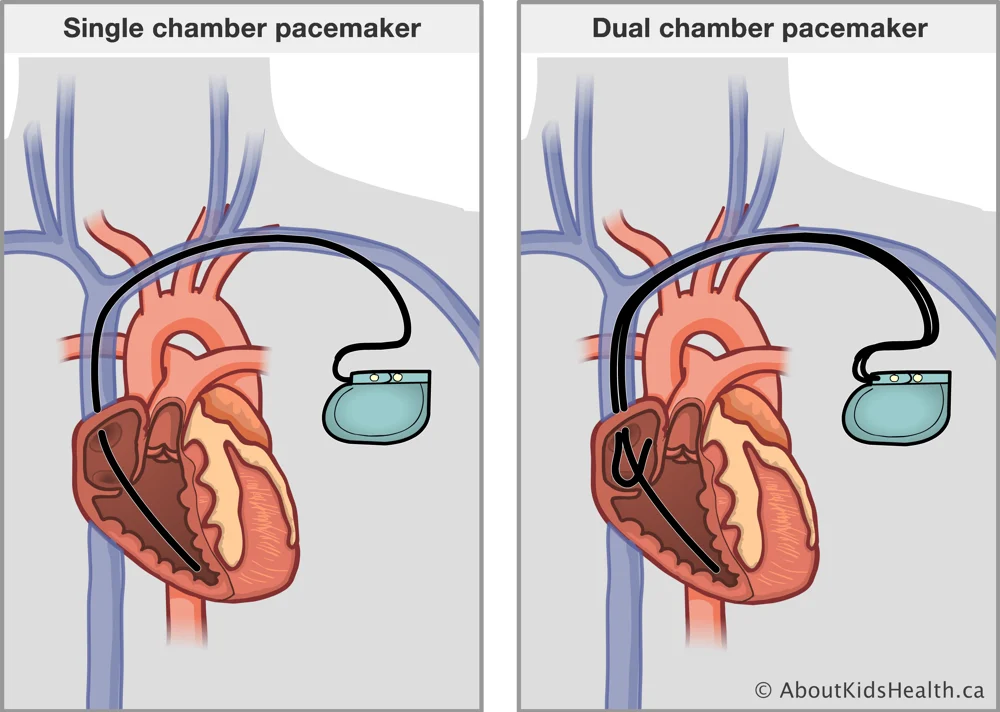
A permanent pacemaker is a small, highly advanced medical device implanted under the skin to continuously monitor and regulate your heart rhythm. It is primarily used to treat bradycardia—a condition where the heart beats too slowly to pump enough oxygen-rich blood to the body. A single-chamber pacemaker uses one wire (lead) attached to either the upper chamber (atrium) or the lower chamber (ventricle) of the right side of the heart. A dual-chamber pacemaker uses two wires one in the right atrium and one in the right ventricle to ensure the top and bottom chambers beat in perfect, synchronized harmony. By delivering tiny, painless electrical impulses whenever the heart pauses or beats too slowly, a permanent pacemaker relieves debilitating symptoms and allows patients to return to a full, active life.
1. Indications:
Single and dual-chamber pacemakers are recommended for patients suffering from chronic, symptomatic electrical disturbances in the heart. Common indications include:
- Sick Sinus Syndrome, where the heart’s natural pacemaker (the sinus node) fails to fire properly, causing a dangerously slow heart rate
- Heart Block (Atrioventricular or AV Block), where the electrical signals are delayed or completely blocked between the top and bottom chambers of the heart
- Chronotropic Incompetence, a condition where the heart rate fails to increase normally during physical exercise, causing extreme fatigue and shortness of breath
- Unexplained fainting spells (syncope) caused by sudden, severe drops in heart rate
- Atrial fibrillation with a slow ventricular response (often treated with a single-chamber pacemaker)
Restoring a normal, reliable heart rate eliminates dizziness, fatigue, and the risk of sudden fainting, significantly improving your quality of life.
2. Procedure:
The implantation of a permanent pacemaker is a minor surgical procedure performed in a cath lab or operating room. You will be given local anesthesia to numb the chest area and a mild sedative to keep you relaxed, but you will remain awake.
The cardiologist makes a small incision (about 2 inches long) in the upper chest, just below the collarbone. Through a nearby vein, one or two thin, insulated wires (leads) are carefully guided directly into the chambers of the right side of your heart using continuous X-ray imaging (fluoroscopy).
Once the tips of the wires are securely attached to the heart muscle, they are tested to ensure they are picking up the heart’s natural signals and delivering energy correctly. The other ends of the wires are then connected to the pacemaker generator—a small, flat metal box containing the battery and a microcomputer. The generator is tucked into a small “pocket” created under the skin of your chest, and the incision is neatly closed with sutures. The procedure typically takes 1 to 2 hours, and most patients go home the next day.
3. Safety:
Pacemaker implantation is one of the most common and safely performed cardiac procedures worldwide. Modern pacemakers are incredibly reliable, with batteries that typically last 8 to 12 years before the generator needs a simple replacement.
While it is a highly safe and routine procedure, possible but uncommon risks include:
- Bleeding, bruising, or a hematoma at the incision site on the chest
- Infection at the implant site or along the wires, which is minimized by strict sterile techniques and antibiotics
- Dislodgment or movement of a pacemaker lead during the first few weeks, which may require a minor procedure to reposition it
- A rare risk of lung puncture (pneumothorax) when the needle is inserted into the vein under the collarbone
- Minor swelling or tenderness around the pacemaker pocket during the initial healing process