● Lifestyle & Prevention
Cardiac Rehabilitation: A Complete Guide to Heart Recovery and Long-Term Cardiovascular Health
Table of Contents
- Introduction
- What Is Cardiac Rehabilitation?
- What Are the Phases of Cardiac Rehabilitation?
- What Are the Main Components of Cardiac Rehabilitation?
- Who May Benefit From Cardiac Rehabilitation?
- What Happens Before Exercise Begins?
- What Happens During a Cardiac Rehabilitation Session?
- Is Cardiac Rehabilitation Safe?
- How Long Does Cardiac Rehabilitation Continue?
- What Are the Benefits of Cardiac Rehabilitation?
- Myth Versus Fact: Cardiac Rehabilitation
- Actionable Checklist: What Should Patients Ask Their Cardiac-Care Team?
- Cardiovascular Recovery Guidance at CANES Clinic
- FAQs
Book a Consultation
Prevention is better than cure. Talk to our specialists today.
Recovering from a heart attack, cardiac procedure or diagnosis of heart failure involves more than simply leaving the hospital and taking medicines. Many patients also need guidance on returning to physical activity, improving cardiovascular fitness, controlling risk factors and managing the emotional impact of living with a heart condition.
Cardiac rehabilitation, commonly called cardiac rehab or CR, is a supervised programme designed to support this recovery. It combines structured exercise, patient education, counselling, risk-factor management and ongoing monitoring.
The programme is adapted to the individual’s heart condition, physical abilities, treatment history and recovery goals. Its purpose is not only to help a person regain strength, but also to improve long-term heart health and reduce the risk of future cardiac events.
At CANES Cardio & Neuro Clinic, a specialised cardiovascular care centre in Hyderabad, the approach emphasises careful cardiovascular assessment, clear patient education and shared decision-making. Guided by Dr. Kiran Lakkireddy, an experienced interventional cardiologist specialising in complex cardiology, the clinic helps patients and families understand heart conditions, recovery requirements and the importance of appropriate follow-up care.
Quick Answer
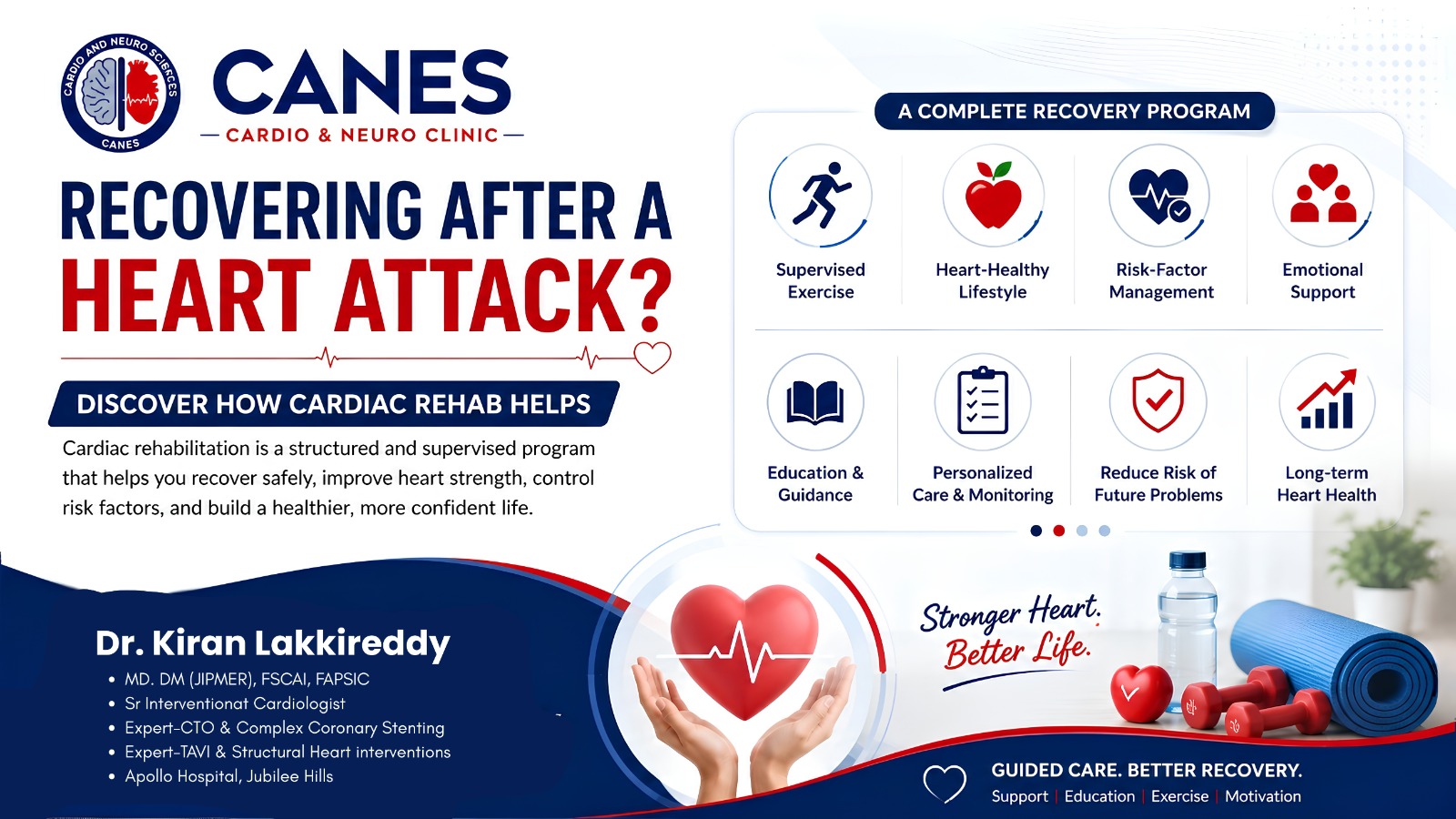
Cardiac rehabilitation is a structured and medically supervised recovery programme for people with certain heart conditions. It usually combines individually planned exercise training, education about heart disease and medicines, heart-healthy nutrition guidance, support for controlling blood pressure, cholesterol, diabetes and weight, smoking-cessation support, stress-management strategies, emotional and psychological support, and regular monitoring and follow-up.
Cardiac rehabilitation may be recommended after a heart attack, angioplasty, coronary artery bypass surgery or diagnosis of heart failure or another eligible heart condition. The programme generally continues through multiple sessions over several weeks or months. Its exact duration and frequency depend on the patient’s condition, physical capacity, medical needs and progress.
Cardiac Rehabilitation at a Glance
Component | What It Involves | Why It Matters |
|---|---|---|
Supervised exercise | Structured aerobic and resistance activities suited to the patient’s abilities | Helps improve cardiovascular fitness, strength and endurance |
Patient education | Information about heart disease, medicines, nutrition and recovery | Helps patients understand and manage their condition |
Risk-factor management | Support for blood pressure, cholesterol, diabetes, weight and smoking cessation | Addresses factors that can contribute to future heart problems |
Emotional support | Counselling and assistance for anxiety, depression or adjustment difficulties | Supports mental well-being and confidence during recovery |
Medical monitoring | Monitoring of heart rate, blood pressure, symptoms and progress | Helps exercise remain appropriate and safe |
Long-term planning | Guidance on maintaining healthy habits after the formal programme | Encourages lasting improvements in heart health |
What Is Cardiac Rehabilitation?
Cardiac rehabilitation is a multidisciplinary programme that helps people recover from certain heart-related illnesses and procedures by combining supervised physical activity with medical, nutritional, and emotional support.
Key takeaway: Cardiac rehabilitation supports the whole recovery process. It combines supervised physical activity with education, counselling, risk-factor management and long-term support.
Detailed Explanation
It is not simply a fitness class. A complete cardiac rehabilitation programme addresses several connected aspects of recovery, including physical fitness, medical risk factors, nutrition, medication use, emotional health and long-term lifestyle habits.
Depending on the programme and the individual’s needs, the care team may include cardiac specialists, nurses, physiotherapists, exercise professionals, dietitians, counsellors and other healthcare professionals.
The rehabilitation plan is personalised because every patient begins recovery from a different point. One person may need help rebuilding endurance after surgery, while another may require support with blood-pressure control, diabetes management, smoking cessation or anxiety about exercising after a heart attack.
What Are the Phases of Cardiac Rehabilitation?
Cardiac rehabilitation is commonly divided into several distinct phases, beginning in the hospital immediately after a cardiac event and transitioning into a long-term, self-managed maintenance plan.
Key takeaway: Recovery is a stepped process; patients gradually transition from close hospital supervision to independent, lifelong heart-healthy habits.
Detailed Explanation
The recovery timeline is typically structured as follows:
Phase I: Begins in the hospital after the cardiac event or procedure and focuses on early mobilisation and education.
Phase II: A structured outpatient programme with supervised exercise, education and risk-factor management.
Phase III: Long-term maintenance where patients continue heart-healthy habits with periodic review.
What Are the Main Components of Cardiac Rehabilitation?
Although individual programmes differ, cardiac rehabilitation generally includes five closely connected components: supervised exercise training, education and counselling, risk-factor modification, psychosocial and emotional support, and continuous medical monitoring and follow-up.
Key takeaway: Cardiac rehabilitation is not limited to recovery from the original heart event. It also addresses factors that may contribute to future heart problems.
1. Supervised Exercise Training
Exercise training is one of the central elements of cardiac rehabilitation. The programme provides structured and monitored exercise sessions based on the individual’s medical condition, current fitness, symptoms and physical abilities.
Common forms of activity may include:
- Walking
- Stationary cycling
- Swimming, when considered appropriate
- Other aerobic exercises
- Light or progressive resistance training
Aerobic activity trains the heart and lungs to support physical activity more efficiently. Resistance exercises may help improve muscle strength and make daily activities easier.
The exercise plan is usually progressed gradually. The objective is not to push every patient to the same level. Instead, healthcare professionals adjust the intensity and duration according to the person’s response. Exercise intensity is often prescribed using heart-rate targets, perceived exertion, symptoms, and the individual’s overall medical condition.
During supervised sessions, the team may monitor:
- Heart rate
- Blood pressure
- Breathing
- Exercise tolerance
- Fatigue
- Chest discomfort
- Other relevant symptoms
This monitoring allows the programme to be modified when necessary.
What are the goals of exercise training? Supervised exercise may help:
- Improve cardiovascular fitness
- Increase physical endurance
- Strengthen the body
- Improve the heart’s ability to support activity
- Reduce fatigue during everyday tasks
- Improve confidence about returning to physical activity
- Enhance overall physical well-being
Exercise is only one part of cardiac rehabilitation. It works best when combined with medication management, healthy nutrition and control of other cardiovascular risk factors.
2. Education and Counselling
Understanding a heart condition is an important part of managing it. Cardiac rehabilitation programmes provide education to help patients understand what happened, what treatments they have received and what changes may be necessary to support recovery.
Educational sessions may cover:
- The patient’s heart condition
- The purpose of prescribed medicines
- How and when medicines should be taken
- Heart-healthy nutrition
- Safe physical activity
- Weight management
- Smoking cessation
- Stress reduction
- Warning symptoms that require medical attention
- Long-term lifestyle changes
Education can also help correct misconceptions. Some patients may become afraid of all physical activity after a heart event, while others may return to strenuous activity too quickly. A supervised programme helps patients develop a more realistic understanding of what they can do, what they should avoid and how activity can be increased gradually.
Why is medication education important? Medicines may be prescribed to control blood pressure, cholesterol, blood sugar, heart rhythm, chest pain or other aspects of cardiovascular health.
Cardiac rehabilitation can help patients understand:
- Why each medicine has been prescribed
- How regular use supports recovery
- Why medicines should not be stopped without medical advice
- What concerns or possible side effects should be discussed with the treating doctor
- How medicines fit into the wider recovery plan
Participation in cardiac rehabilitation does not replace prescribed treatment. Exercise, medicines, nutrition and lifestyle changes generally work together.
3. Risk-Factor Modification
Several modifiable factors can increase the likelihood of heart disease or future cardiac events.
These may include:
- High blood pressure
- High cholesterol
- Diabetes
- Obesity or excess body weight
- Smoking
- Physical inactivity
- An unhealthy diet
- Poor stress management
Cardiac rehabilitation helps patients identify which factors apply to them and develop a realistic plan to address them.
Blood-pressure management High blood pressure places additional strain on the heart and blood vessels. The cardiac-care team may provide guidance regarding:
- Taking prescribed medicines consistently
- Reducing excess salt when advised
- Maintaining regular physical activity
- Managing weight
- Monitoring blood pressure
- Attending follow-up appointments
Cholesterol management High cholesterol can contribute to the development and progression of coronary artery disease. Management may involve:
- Prescribed cholesterol-lowering medicines
- Dietary changes
- Regular exercise
- Weight management
- Follow-up blood tests as advised
Diabetes management Diabetes is an important cardiovascular risk factor. Patients with diabetes may receive guidance on:
- Blood-glucose monitoring
- Medication adherence
- Nutrition
- Physical activity
- Weight control
- Coordination with the relevant healthcare professionals
- Smoking cessation Stopping smoking is one of the most important lifestyle changes for a person with heart disease. A rehabilitation programme may provide:
- Counselling
- Behavioural strategies
- Education about triggers
- Support for managing cravings
- Referral for additional medical help when appropriate
Weight and nutrition Heart-healthy eating is not based on one temporary or highly restrictive diet. It generally requires sustainable choices that support blood-pressure, cholesterol, blood-sugar and weight management.
Nutrition education may help patients understand:
- Appropriate portion sizes
- The importance of vegetables, fruits and other nutritious foods
- How to reduce foods high in excess salt, unhealthy fats or added sugar
- How to plan meals around medical needs
- How to make healthier choices consistently
Dietary advice should be adapted to the individual, particularly when diabetes, kidney disease or another medical condition is present.
4. Psychosocial and Emotional Support
A heart attack, operation or new cardiac diagnosis can affect emotional well-being as much as physical health.
Some patients may experience:
- Anxiety
- Fear of another cardiac event
- Low mood
- Depression
- Sleep disturbance
- Loss of confidence
- Frustration about physical limitations
- Difficulty adjusting to medicines or lifestyle changes
- Concern about work, family responsibilities or finances
These reactions should not be ignored. Cardiac rehabilitation programmes may provide individual counselling, group support or referral to an appropriate mental-health professional. Group sessions can also help patients recognise that they are not alone. Meeting others who are recovering from heart conditions may provide encouragement and practical support.
How can stress affect recovery? Stress can make healthy routines more difficult to maintain. It may affect sleep, eating habits, medication adherence and motivation to exercise.
Stress-management support may include:
- Relaxation techniques
- Breathing exercises
- Counselling
- Better sleep routines
- Time-management strategies
- Identifying sources of emotional pressure
- Developing healthier coping methods
Emotional support does not mean that symptoms are “only psychological”. Physical and emotional recovery are closely connected, and both require appropriate attention.
5. Monitoring and Follow-Up
Cardiac rehabilitation involves regular assessment rather than a fixed exercise plan that remains unchanged.
During supervised sessions, healthcare professionals may monitor:
- Heart rate
- Blood pressure
- Symptoms
- Exercise response
- Physical endurance
- Progress toward agreed goals
- Relevant medical risk factors
The team may adjust the exercise plan when:
- Fitness improves
- Symptoms occur
- Medicines are changed
- Blood pressure is not adequately controlled
- Another medical problem develops
- The current activity level is too easy or too difficult
Follow-up evaluations can help determine whether the patient is improving and whether further changes are needed. Monitoring also gives patients an opportunity to ask questions and discuss difficulties with exercise, medicines, diet or emotional well-being.
Who May Benefit From Cardiac Rehabilitation?
Cardiac rehabilitation is commonly recommended for selected individuals who have experienced a heart attack, undergone an intervention like angioplasty or bypass surgery, or been diagnosed with heart failure.
Key takeaway: Not every patient will begin at the same stage of recovery or follow the same programme. The decision depends on the underlying heart condition, recent treatments, current symptoms, and physical limitations.
Detailed Explanation
Patients should consult their cardiac-care team before beginning a new exercise or rehabilitation plan. Cardiac rehabilitation usually begins after referral by the treating cardiologist or cardiac-care team. The treating doctor’s assessment and the availability of an appropriate programme play a large role in structuring the recovery path.
What Happens Before Exercise Begins?
Before structured exercise is started, the healthcare team comprehensively reviews the patient’s condition, recent procedures, current medicines, and physical strength to determine what level of activity is safe and appropriate.
Key takeaway: A person who is beginning with low endurance may start with short, gentle activity. Exercise may be increased gradually as strength, confidence and cardiovascular fitness improve.
Detailed Explanation
This initial assessment is crucial to tailor the programme. It considers heart rate, blood pressure, existing symptoms, and individual recovery goals. The programme is specifically adjusted to suit the patient’s unique abilities, ensuring safety from day one.
What Happens During a Cardiac Rehabilitation Session?
A supervised session typically involves a brief health review, measurement of vitals, a gradual warm-up, aerobic activity like walking or cycling, possible resistance training, a controlled cool-down, and education or counselling related to heart health.
Key takeaway: Patients should always report symptoms rather than trying to exercise through them.
Detailed Explanation
The exact structure varies between programmes and individuals. However, symptoms such as chest pain, marked breathlessness, dizziness, faintness, unusual palpitations or extreme fatigue require immediate attention from the supervising team.
Is Cardiac Rehabilitation Safe?
Cardiac rehabilitation is generally highly safe because it is designed to provide structured activity in a medically supervised environment where exercise is carefully selected according to the patient’s condition and abilities.
Key takeaway: Safety depends on appropriate medical assessment, individualised exercise planning, honest reporting of symptoms, and gradual progression.
Detailed Explanation
Heart rate, blood pressure and symptoms are monitored so that the activity can be adjusted when necessary. However, no exercise programme is completely free of risk. Patients should strictly follow the instructions of the cardiac-care team and never copy another person’s exercise routine or begin strenuous activity without professional guidance.
How Long Does Cardiac Rehabilitation Continue?
Cardiac rehabilitation generally involves multiple sessions over several weeks or months; there is no single duration that applies to every patient.
Key takeaway: The longer-term objective is to help the patient continue safe exercise, healthy nutrition, medicine adherence and risk-factor control as part of everyday life.
Detailed Explanation
The frequency and duration depend heavily on the heart condition being treated, the current fitness level, medical risk factors, and progress during the programme. Completion of the formal programme does not mark the end of heart-healthy activity.
What Are the Benefits of Cardiac Rehabilitation?
When appropriate for the individual and followed consistently, cardiac rehabilitation provides significant benefits, including improved cardiovascular fitness, reduction in symptoms, better emotional well-being, and a lower risk of future cardiac events.
Key takeaway: The value of cardiac rehabilitation lies in the combination of exercise, education, medical risk-factor control and emotional support-not in any one component alone.
Detailed Explanation
Improved Cardiovascular Fitness: Regular, structured exercise can improve the body’s ability to perform physical activity, helping patients walk longer distances, climb stairs, and return to daily life with greater confidence.
Increased Exercise Capacity and Endurance: A progressive rehabilitation plan helps rebuild endurance in a controlled manner for those feeling weak after a hospital admission.
Reduction in Symptoms: Some patients may experience improvement in fatigue, shortness of breath, and chest discomfort. (New or worsening symptoms still require medical assessment.)
Lower Risk of Future Cardiac Events: By addressing factors like smoking, nutrition, and blood pressure, patients may reduce their risk of another cardiac event or hospitalisation.
Better Management of Risk Factors: Structured follow-up helps control blood pressure, cholesterol, diabetes, body weight, and stress.
Improved Emotional Well-Being: Education and support reduce fear, uncertainty and isolation.
Better Quality of Life: Improved fitness and symptom management help a person return more comfortably to family, social and daily activities.
Greater Knowledge and Self-Management: Patients understand how their choices, medicines and follow-up care affect long-term heart health.
Can Cardiac Rehabilitation Prevent Another Heart Attack?
While cardiac rehabilitation cannot eliminate every possibility of another heart attack, it is highly effective at reducing future risk by helping patients become physically active, take medicines correctly, stop smoking, and manage blood pressure.
The amount of benefit depends partly on how consistently the long-term recommendations are followed.
Does Cardiac Rehabilitation Replace Medicines?
No. Cardiac rehabilitation and medicines serve different but complementary purposes; rehabilitation supports physical recovery and lifestyle change, while medicines actively control blood pressure, cholesterol, and heart rhythm.
Patients should not stop, reduce or change medicines because they feel better during rehabilitation. Medication changes should be made only by the treating healthcare professional.
Can Cardiac Rehabilitation Help With Heart Failure?
Yes, cardiac rehabilitation may be recommended for selected people with heart failure to help improve exercise capacity, endurance, and the ability to perform daily activities.
The programme must be tailored carefully because exercise tolerance can vary considerably. Patients with heart failure should always report worsening breathlessness, rapid weight changes, swelling, or dizziness to their healthcare team.
What Happens After the Formal Programme Ends?
The end of supervised cardiac rehabilitation is a transition rather than the end of recovery; patients are encouraged to continue regular physical activity, heart-healthy eating, and prescribed medicines on their own.
Long-term success depends on turning the skills learned during rehabilitation into sustainable daily habits, including ongoing blood-pressure monitoring, cholesterol follow-up, and stress-management practices.
Myth Versus Fact: Cardiac Rehabilitation
Understanding the true nature of cardiac rehabilitation helps patients approach their recovery with realistic expectations and confidence.
Common Myth | Medical Fact |
|---|---|
Cardiac rehabilitation is only an exercise class. | Exercise is one component. A complete programme also includes education, counselling, risk-factor management and follow-up. |
Rest is always safer after a heart problem. | Appropriate rest is important early in recovery, but medically guided activity may also be essential for rebuilding fitness and confidence. |
Every patient follows the same exercise plan. | Exercise is adjusted according to the person’s condition, symptoms, abilities and progress. |
Cardiac rehabilitation is only for people who have had bypass surgery. | It may be recommended after a heart attack, angioplasty, bypass surgery, heart failure or another suitable heart condition. |
Feeling better means heart medicines are no longer needed. | Medicines should be continued as prescribed unless the treating doctor changes them. |
Cardiac rehabilitation guarantees that another heart attack will not occur. | It can reduce future risk but cannot eliminate it completely. |
Emotional stress is unrelated to heart recovery. | Anxiety, depression and stress can affect recovery, motivation and healthy routines. |
Exercise must be intense to benefit the heart. | Exercise should be appropriate, gradual and tailored to the individual’s medical condition. |
Actionable Checklist: What Should Patients Ask Their Cardiac-Care Team?
Before beginning a programme, use this checklist to ensure you fully understand your recovery plan.
- Suitability: Am I a suitable candidate for cardiac rehabilitation?
- Timing: When can I begin the programme?
- Exercise Type: What type of exercise is appropriate for me?
- Safety Limits: Which symptoms should make me stop exercising?
- Monitoring: How will my heart rate and blood pressure be monitored?
- Schedule: How often should I attend rehabilitation sessions?
- Nutrition: What changes should I make to my diet?
- Medication Impact: Do any of my medicines affect exercise?
- Health Goals: What blood-pressure, cholesterol or blood-sugar goals apply to me?
- Addiction Support: What support is available for stopping smoking?
- Emotional Care: How can I manage anxiety or fear about another heart event?
- Long-term Planning: What activity should I continue after the formal programme ends?
- Follow-up: When should I schedule follow-up cardiac evaluation?
Cardiovascular Recovery Guidance at CANES Clinic
Cardiac rehabilitation requires an individualised approach. The appropriate exercise level, monitoring plan and recovery goals depend on the patient’s heart condition, treatment history, symptoms and overall health.
At CANES Cardio & Neuro Clinic, patients can receive structured cardiovascular evaluation and understandable guidance regarding heart conditions and recovery planning.
The clinic is guided by Dr. Kiran Lakkireddy, an experienced interventional cardiologist specialising in complex cardiology. The focus is on detailed assessment, patient education, shared decision-making and appropriate coordination with other cardiac-care or rehabilitation teams when necessary.
The clinic’s role should not be assumed to replace a hospital-based or dedicated supervised cardiac rehabilitation programme. Patients who require structured rehabilitation can discuss whether referral or coordination with an appropriate service is needed.
Location: 3rd Floor, Tapasavi Commercial Complex, Hi-Tension Road, Kondapur, Hyderabad
Contact: +91 9014944654
Appointment Booking: Visit CANES Clinic Official Portal
Specialist Profile: Dr. Kiran Lakkireddy Official Website
(Note: A person experiencing severe or persistent chest pain, sudden marked breathlessness, fainting, confusion, blue lips, cold sweating, severe weakness or loss of consciousness requires immediate emergency medical care rather than a routine clinic appointment.)
Key Points to Remember
- Cardiac rehabilitation supports recovery: It helps selected patients recover after a heart attack, cardiac procedure, heart failure or another eligible heart condition.
- It is more than exercise: Education, counselling, nutrition, medication support and risk-factor control are also important components.
- Exercise is individualised: The type and intensity of activity should match the patient’s condition and abilities.
- Monitoring improves safety: Heart rate, blood pressure, symptoms and exercise response may be reviewed during supervised sessions.
- Risk-factor management is essential: Blood pressure, cholesterol, diabetes, weight, smoking and physical inactivity all require attention.
- Emotional health matters: Anxiety, depression and fear can affect recovery and should be addressed.
- Medicines should continue as prescribed: Rehabilitation does not replace medical treatment.
- Benefits require long-term commitment: Healthy behaviours should continue after the formal programme ends.
- Not every patient follows the same schedule: The duration and frequency of rehabilitation depend on individual needs.
- Medical guidance is necessary: Patients should consult their cardiac-care team before starting or changing an exercise programme.
Final Perspective
Cardiac rehabilitation can be an important part of recovery after a serious heart condition or cardiac procedure.
Its strength lies in its comprehensive approach. Supervised exercise helps rebuild physical capacity, while education, counselling, risk-factor management and emotional support help patients make informed and sustainable changes.
The objective is not simply to complete a fixed number of sessions. It is to give patients the knowledge, confidence and practical support required to protect their heart health over the long term.
Anyone recovering from a heart attack, angioplasty, coronary artery bypass surgery, heart failure or another cardiac condition should speak with their healthcare professional about whether cardiac rehabilitation is appropriate for their needs.
Frequently Asked Questions (FAQs)
What does cardiac rehabilitation mean?
Cardiac rehabilitation is a structured programme that combines supervised exercise, education, counselling, risk-factor management and follow-up for selected people with heart conditions.
Is cardiac rehabilitation only exercise?
No. Exercise is an important part, but rehabilitation also includes heart-health education, nutrition guidance, medication support, smoking cessation, stress management and emotional support.
Who may need cardiac rehabilitation?
It may be recommended after a heart attack, angioplasty, coronary artery bypass surgery, diagnosis of heart failure or another suitable cardiac condition.
Can older adults participate in cardiac rehabilitation?
Yes. Age alone is not a reason to avoid cardiac rehabilitation. Many older adults benefit from appropriately supervised and individualised programmes that improve mobility, confidence, and quality of life.
Can I join cardiac rehabilitation immediately after leaving the hospital?
The correct starting time depends on the condition, procedure, symptoms and medical assessment. Patients should begin only when their treating cardiac-care team considers it appropriate.
What exercises are included?
Programmes commonly use aerobic activities such as walking or stationary cycling. Resistance training may also be included when appropriate. The exercise plan should be personalised.
Will my heart be monitored during exercise?
Supervised programmes may monitor heart rate, blood pressure, symptoms and exercise response. The exact type of monitoring depends on the patient and programme.
How long does cardiac rehabilitation last?
It generally involves multiple sessions over several weeks or months. The duration varies according to the patient’s condition, goals and progress.
Is cardiac rehabilitation painful?
The programme is not intended to cause pain. Patients should report chest discomfort, dizziness, unusual breathlessness, palpitations or other concerning symptoms immediately.
Can cardiac rehabilitation reduce fatigue?
Improved cardiovascular fitness and endurance may help reduce fatigue and make daily activities easier. Persistent or worsening fatigue should still be discussed with the healthcare team.
Can it help with shortness of breath?
Some patients may experience improved exercise tolerance and less breathlessness as their fitness improves. New or severe shortness of breath requires prompt medical evaluation.
Can I stop my medicines after completing rehabilitation?
No medicine should be stopped or changed without advice from the treating doctor. Cardiac rehabilitation complements medical treatment rather than replacing it.
Can cardiac rehabilitation prevent another heart problem?
It can help reduce future risk by improving exercise capacity and addressing factors such as smoking, blood pressure, cholesterol, diabetes, diet and physical inactivity. It cannot guarantee that another event will never occur.
Can someone with heart failure exercise?
Selected people with heart failure may participate in an appropriately supervised and individualised programme. The decision should be made by the treating healthcare professionals.
What happens if I develop symptoms during a session?
The supervising team should assess the symptoms, stop or modify the exercise and arrange further medical evaluation when necessary.
Can I continue exercising after cardiac rehabilitation ends?
Long-term physical activity is generally an important goal of rehabilitation. The type, frequency and intensity should follow the plan recommended by the patient’s healthcare team.
Do I need medical advice before starting cardiac rehabilitation?
Yes. A healthcare professional should determine whether cardiac rehabilitation is appropriate and what type of programme suits the individual’s condition, abilities and recovery goals.
Expert Care
Hyderabad's leading Cardio & Neuro specialists.