Aortic Disorders Treatment in Hyderabad
Home > Services > Aortic Disorders Treatment in Hyderabad
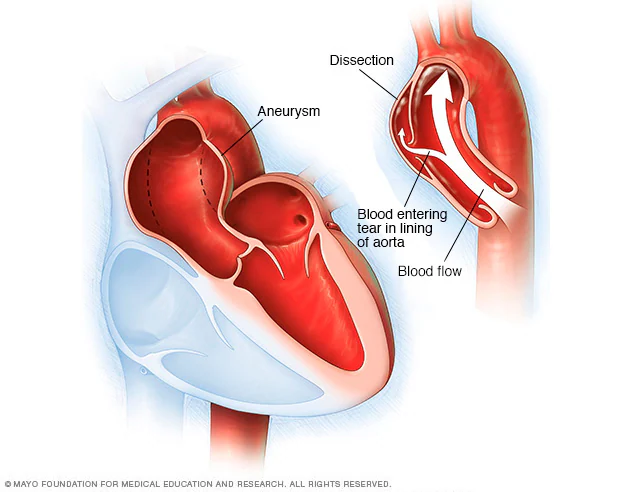
Aortic disorders are conditions affecting the aorta, the main and largest artery that carries oxygen-rich blood from the heart to the rest of the body. Two important aortic disorders are aortic aneurysm and aortic dissection. An aortic aneurysm develops when part of the aortic wall becomes weakened and enlarged or bulges outward. Aortic dissection occurs when a tear develops in the inner layer of the aorta and blood tracks between the layers of the vessel wall.
Some aortic aneurysms remain silent for years and are found during imaging for another reason, while aortic dissection usually presents as an acute medical emergency. Early diagnosis, accurate imaging, blood pressure control and timely intervention can reduce serious complications.
What Is an Aortic Aneurysm?
An aortic aneurysm is an abnormal enlargement of a portion of the aorta. Aneurysms are commonly described according to their location. A thoracic aortic aneurysm affects the part of the aorta within the chest, while an abdominal aortic aneurysm affects the section passing through the abdomen. Some aneurysms involve more than one segment.
An aneurysm may gradually enlarge as the wall weakens. Larger or faster-growing aneurysms carry greater concern for rupture or dissection. Treatment decisions also consider location, growth rate, symptoms, body size, family history, valve disease and inherited aortic conditions.
What Causes an Aortic Aneurysm?
Increasing age, long-standing high blood pressure, smoking, atherosclerosis and family history can increase the risk of aortic aneurysm.
Some people have inherited or structural conditions that affect the strength of the aorta. These include Marfan syndrome, Loeys-Dietz syndrome, vascular Ehlers-Danlos syndrome and certain familial thoracic aortic diseases. A bicuspid aortic valve can also be associated with enlargement of the aortic root or ascending aorta.
Inflammatory disease, infection and major trauma are less common causes. Because family factors matter, first-degree relatives may sometimes need aortic imaging when a patient has an aortic root or ascending aortic aneurysm or aortic dissection.
What Symptoms Can an Aortic Aneurysm Cause?
Many aortic aneurysms cause no symptoms until they become large or develop a complication. A thoracic aneurysm may cause chest or upper-back discomfort, hoarseness, difficulty swallowing or breathing symptoms if it presses on nearby structures. An abdominal aortic aneurysm may cause persistent abdominal or back pain, and some patients notice a pulsating sensation in the abdomen.
Sudden severe chest, back or abdominal pain, fainting, marked weakness, low blood pressure or shock can indicate rupture or dissection. These symptoms require immediate emergency hospital assessment.
What Is Aortic Dissection?
Aortic dissection occurs when a tear in the inner layer allows blood to enter the aortic wall and separate its layers. As the dissection extends, it can obstruct branch arteries and reduce blood flow to important organs.
Aortic dissections are commonly classified as Stanford type A or type B. Type A involves the ascending aorta, the section closest to the heart. Type B begins in the descending aorta and does not involve the ascending aorta. This distinction is important because it strongly influences emergency treatment.
What Are the Symptoms of Aortic Dissection?
The classic symptom is sudden severe chest or back pain that may be described as tearing, ripping, sharp or stabbing, although not every patient uses these descriptions. Pain may move as the dissection extends.
Other symptoms can include fainting, breathlessness, sweating, one-sided weakness, difficulty speaking, abdominal pain or reduced blood flow to a limb. A dissection can also compromise the aortic valve or blood supply to major organs.
Because symptoms can resemble heart attack, stroke or other emergencies, urgent imaging and specialist assessment are necessary when aortic dissection is suspected.
How Are Aortic Disorders Diagnosed?
Imaging is central to diagnosis. A 2D Echocardiogram can assess the aortic root and ascending aorta, the aortic valve and heart function. It is particularly useful when a bicuspid aortic valve or aortic-root enlargement is suspected.
CT angiography provides detailed images of the aorta and is commonly used to assess aneurysm size, location and suspected acute dissection. MRI can also provide detailed measurements and is useful for surveillance in selected patients.
Ultrasound is widely used for screening and monitoring abdominal aortic aneurysms. Transesophageal Echocardiography may be helpful in selected acute situations or when detailed assessment of the proximal aorta is needed.
Patients with known aortic enlargement need repeat imaging to determine whether the aorta is stable or increasing in size. The interval depends on the aortic segment, diameter, rate of growth and individual risk.
How Is an Aortic Aneurysm Treated?
A small, stable aneurysm may not need immediate surgery. Management often includes regular imaging, careful blood pressure control, treatment of cardiovascular risk factors and smoking cessation. Medicines such as beta blockers or angiotensin receptor blockers may be used in appropriate patients to control blood pressure and reduce stress on the aortic wall.
Repair may be recommended when an aneurysm reaches a high-risk size, grows rapidly, causes symptoms or has other high-risk features. Thresholds vary by aortic segment and individual factors, and inherited disease may justify earlier intervention.
Open repair replaces the weakened aorta with a surgical graft. Endovascular repair places a stent graft inside the aorta through the blood vessels. The choice depends on location, anatomy, associated conditions and specialist-team assessment.
How Is Aortic Dissection Treated?
Acute aortic dissection is treated as an emergency. Initial management includes rapid control of heart rate and blood pressure to reduce force on the damaged aortic wall while the patient is evaluated for definitive treatment.
Acute type A dissection generally requires immediate surgical repair because it involves the ascending aorta and can cause rupture, tamponade, valve complications or loss of blood supply to major organs.
Uncomplicated acute type B dissection is often treated initially with intensive medical therapy and close monitoring. Intervention is required when type B dissection is complicated by rupture, reduced blood flow to organs or limbs, progressive enlargement, uncontrolled hypertension, extension of the dissection or persistent severe pain. In suitable anatomy, thoracic endovascular aortic repair, or TEVAR, is an important treatment option.
Why Is Long-Term Follow-Up Important?
Aortic disease requires long-term surveillance even after treatment because the remaining aorta may enlarge or develop other changes. Patients who survive aortic dissection need continued imaging because late aneurysm formation or progression can occur.
Follow-up usually includes blood pressure management, periodic CT, MRI or echocardiographic imaging and attention to cardiovascular risk factors. Patients with inherited aortic disease may also need genetic counselling and screening of close family members.
Frequently Asked Questions:-
Is an aortic aneurysm always dangerous?
Not every aneurysm requires immediate intervention. Small, stable aneurysms can often be monitored. Risk depends on size, location, growth rate, symptoms and individual factors.
Can an aortic aneurysm disappear with medicines?
Medicines can help control blood pressure and reduce stress on the aortic wall, but they do not make an established aneurysm disappear. Imaging is needed to monitor its size and growth.
Is aortic dissection the same as a heart attack?
No. A heart attack usually involves blockage of a coronary artery supplying the heart muscle. Aortic dissection is a tear within the wall of the aorta. Both can cause severe chest pain and are medical emergencies.
Does every aortic aneurysm need open surgery?
No. Some aneurysms only need surveillance. When repair is required, treatment may involve open surgery or an endovascular stent graft depending on anatomy and location.
Can family members be at risk?
Yes. Some thoracic aortic aneurysms and dissections have a genetic or familial component. In appropriate cases, first-degree relatives may be advised to undergo aortic imaging.
When should emergency care be sought?
Sudden severe chest, back or abdominal pain, fainting, sudden weakness, major breathlessness or signs of shock can indicate aortic rupture or dissection and require immediate emergency assessment.
Aortic Disorders Treatment in Hyderabad
Patients with known aortic enlargement, a bicuspid aortic valve, a family history of aortic aneurysm or dissection, or an aneurysm detected incidentally may require structured cardiovascular assessment and regular imaging.
Dr. Kiran Lakkireddy’s cardiac practice in Hyderabad provides cardiovascular evaluation for patients with suspected or established aortic disorders using echocardiography and advanced cardiac or vascular imaging when appropriate. Management depends on the location and size of the aneurysm, rate of growth, symptoms, associated valve disease and individual risk factors. Patients who require open or endovascular repair may need coordinated multidisciplinary aortic care.
Sudden severe chest, back or abdominal pain or other symptoms suggesting acute aortic dissection or rupture require emergency hospital care and should not wait for a routine appointment.