Peripheral Artery Disease (PAD) Treatment in Hyderabad
Home > Services > Peripheral Artery Disease (PAD) Treatment in Hyderabad
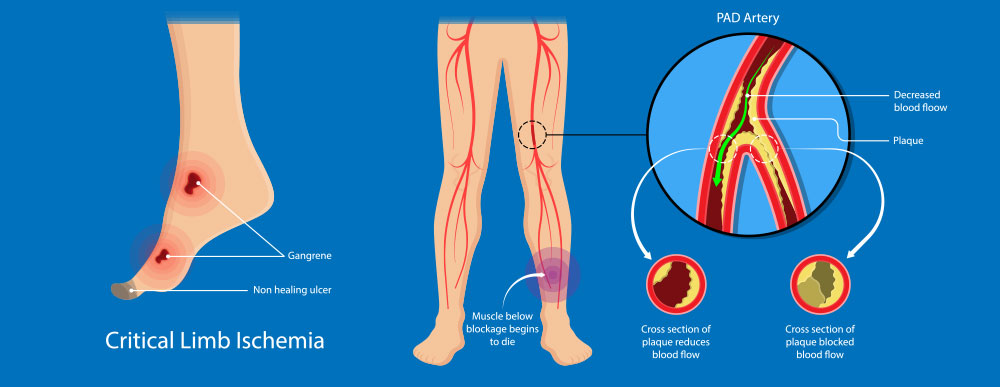
Peripheral Artery Disease, commonly called PAD, is a circulation problem in which arteries outside the heart become narrowed or blocked, most often because of atherosclerosis. It most commonly affects the arteries supplying the legs and feet, although the arms can also be involved.
In Hyderabad, PAD evaluation is important for people who develop repeated calf, thigh, or buttock discomfort while walking, coldness in one foot, reduced pulses, colour changes, or wounds that heal slowly. PAD is not only a limb problem. Because the same atherosclerosis can affect the coronary and carotid arteries, people with PAD also have a higher risk of heart attack and stroke.
What Is Peripheral Artery Disease?
Healthy arteries carry oxygen-rich blood from the heart to the tissues. In PAD, fatty deposits made up of cholesterol and other substances build up within the arterial wall. Over time, this plaque can narrow the artery and reduce blood flow. A blood clot can sometimes form on diseased plaque and suddenly worsen or completely stop circulation.
Lower-extremity PAD is the most common form and affects blood flow to the legs and feet. Upper-extremity PAD involving the arms, hands, or fingers is much less common. Atherosclerosis can also affect arteries supplying organs in the abdomen, such as renal or mesenteric arteries, but these conditions are usually described according to the specific artery involved rather than simply as leg PAD.
Why Does PAD Cause Leg Pain While Walking?
The classic symptom of lower-extremity PAD is intermittent claudication. This usually feels like cramping, aching, heaviness, burning, or fatigue in the calf, thigh, or buttock that develops during walking or climbing stairs and improves after a few minutes of rest.
At rest, a narrowed artery may still deliver enough blood for the muscles. During walking, the muscles need more oxygen-rich blood, but the narrowed artery cannot increase flow sufficiently. The discomfort therefore appears with activity and settles when demand falls.
Not every patient has classic claudication. Others have atypical leg fatigue, weakness, numbness, or slow walking rather than pain.
Who Is at Risk of PAD?
Atherosclerosis is the most common cause of PAD. Smoking and diabetes are particularly important risk factors. Risk also rises with increasing age, high blood pressure, high cholesterol, chronic kidney disease, obesity, and a personal or family history of cardiovascular disease.
Diabetes deserves special attention because it can damage both large and small blood vessels and can occur together with neuropathy. Regular foot examination is especially important in people with diabetes and PAD.
What Are the Warning Signs of Severe PAD?
As PAD becomes more advanced, blood flow may become inadequate even while the patient is resting. Pain can occur in the foot or toes at night or while lying down. Some patients feel temporary relief when they sit up or lower the leg because gravity slightly improves blood flow.
Non-healing wounds, ulcers on the toes or feet, blackened tissue, or gangrene are more serious signs. This stage is often referred to as chronic limb-threatening ischemia and requires prompt specialist assessment because the limb may be at risk.
A sudden onset of severe leg pain, coldness, paleness, numbness, weakness, or loss of pulse can suggest acute limb ischemia, which is an emergency. Sudden loss of arterial blood flow can permanently damage tissue if circulation is not restored quickly.
How Is Peripheral Artery Disease Diagnosed?
Evaluation begins with symptoms, medical history, and examination of the legs and feet. Blood tests may be used to assess cholesterol, blood sugar, kidney function, and other cardiovascular risk factors.
The ankle-brachial index, or ABI, is one of the most useful initial tests for suspected lower-extremity PAD. It compares blood pressure measured at the ankle with blood pressure in the arm. A lower ankle pressure can indicate reduced arterial blood flow.
Doppler ultrasound can show the direction and speed of blood flow and help identify narrowed or blocked arterial segments. When more detailed anatomical mapping is required, CT angiography, MR angiography, or catheter angiography may be considered. Catheter angiography is especially useful when an endovascular procedure is being planned because diagnosis and treatment may sometimes be combined.
How Is PAD Treated?
Treatment has two major goals: improving limb symptoms and reducing the overall cardiovascular risk associated with atherosclerosis. PAD therefore requires more than treating leg pain alone.
Stopping smoking is one of the most important steps because continued tobacco exposure accelerates arterial disease and increases cardiovascular and limb risk. Cholesterol, blood pressure, and diabetes should be managed carefully. Statin therapy and antiplatelet treatment are commonly used in appropriate patients to reduce cardiovascular events, but the exact medicines should be individualized by the treating doctor.
Structured exercise is a core part of treatment for patients with walking symptoms. Regular walking programs can improve the distance a person can walk before claudication develops and can improve overall functional ability. Exercise should be prescribed according to the patient’s cardiovascular and limb condition rather than abandoned because walking produces mild, predictable claudication.
Foot care is particularly important in people with diabetes or reduced sensation. Small cuts, pressure areas, or footwear injuries can become serious when blood flow is poor, so wounds should be assessed early.
When Are Angioplasty, Stenting, or Surgery Needed?
Not every narrowing seen on a scan requires a procedure. Revascularization is considered when symptoms remain significantly lifestyle-limiting despite appropriate medical therapy and structured exercise, or when blood flow is so poor that the limb is threatened.
Endovascular treatment may include balloon angioplasty, stent placement, or other catheter-based techniques depending on the artery and pattern of disease. In other patients, surgical bypass may provide a better option.
In chronic limb-threatening ischemia, restoring blood flow may be essential to help wounds heal, relieve ischemic rest pain, and reduce the risk of amputation.
Why PAD Is Also a Heart and Stroke Warning
PAD is a manifestation of systemic atherosclerosis. A patient with narrowed leg arteries may also have plaque in the arteries supplying the heart or brain, even if there are no symptoms from those areas.
Managing cholesterol, blood pressure, diabetes, smoking, exercise, body weight, and prescribed antithrombotic therapy can help reduce the broader risk of heart attack and stroke as well as protect the limbs.
Frequently Asked Questions:-
Can PAD affect both legs?
Yes. PAD may affect one or both legs, and the severity can differ between sides. Symptoms depend on which arteries are narrowed and how much blood flow is reduced.
Can PAD cause non-healing foot wounds?
Yes. Reduced arterial blood flow can prevent wounds from receiving enough oxygen and nutrients for normal healing. Persistent foot or toe ulcers require medical assessment, especially in people with diabetes.
Is leg pain always caused by PAD?
No. Arthritis, nerve compression, spinal disease, muscle problems, venous disease, and other conditions can also cause leg pain. The pattern of symptoms, examination, ABI, and vascular imaging help distinguish PAD from other causes.
Can PAD be cured with medicines alone?
Medicines and lifestyle treatment can significantly reduce cardiovascular risk and improve symptoms, but they do not simply remove existing plaque. Some patients with severe symptoms or limb-threatening disease require angioplasty, stenting, or bypass surgery.
Does PAD affect the arms?
Yes, but upper-extremity PAD is less common than PAD of the legs. It can cause arm fatigue, pain with activity, coolness, or differences in pulses or blood pressure between the arms.
When should PAD symptoms be treated urgently?
Sudden severe limb pain, a cold or pale foot, sudden numbness or weakness, or rapidly worsening tissue changes require urgent evaluation. Non-healing ulcers, gangrene, and rest pain also need prompt vascular assessment.
Peripheral Artery Disease Treatment in Hyderabad
If you experience recurring leg pain while walking, coldness or colour changes in a foot, weak pulses, non-healing wounds, or symptoms suggesting reduced circulation, evaluation can help determine whether Peripheral Artery Disease is present and how severe it is.
Dr. Kiran Lakkireddy’s cardiovascular practice in Hyderabad provides assessment of atherosclerotic vascular disease and guidance on appropriate testing and treatment. PAD management should address both limb circulation and the patient’s wider risk of heart attack and stroke. Patients with sudden loss of circulation, severe rest pain, gangrene, or rapidly worsening wounds require urgent specialist care.