● Lifestyle & Prevention
7 Life-Saving Facts About the TAVI Procedure: Benefits & Recovery
Table of Contents
- Introduction
- 1. What Exactly is the TAVI Procedure?
- 2. Major Benefits of the TAVI Procedure
- 3. Understanding the TAVI Procedure Treatment Process
- 4. Potential Risks of the TAVI Procedure
- 5. TAVI Procedure Recovery: What to Expect
- 6. Why Choose the Best Heart and Brain Clinic in Hyderabad?
- FAQs
Book a Consultation
Prevention is better than cure. Talk to our specialists today.
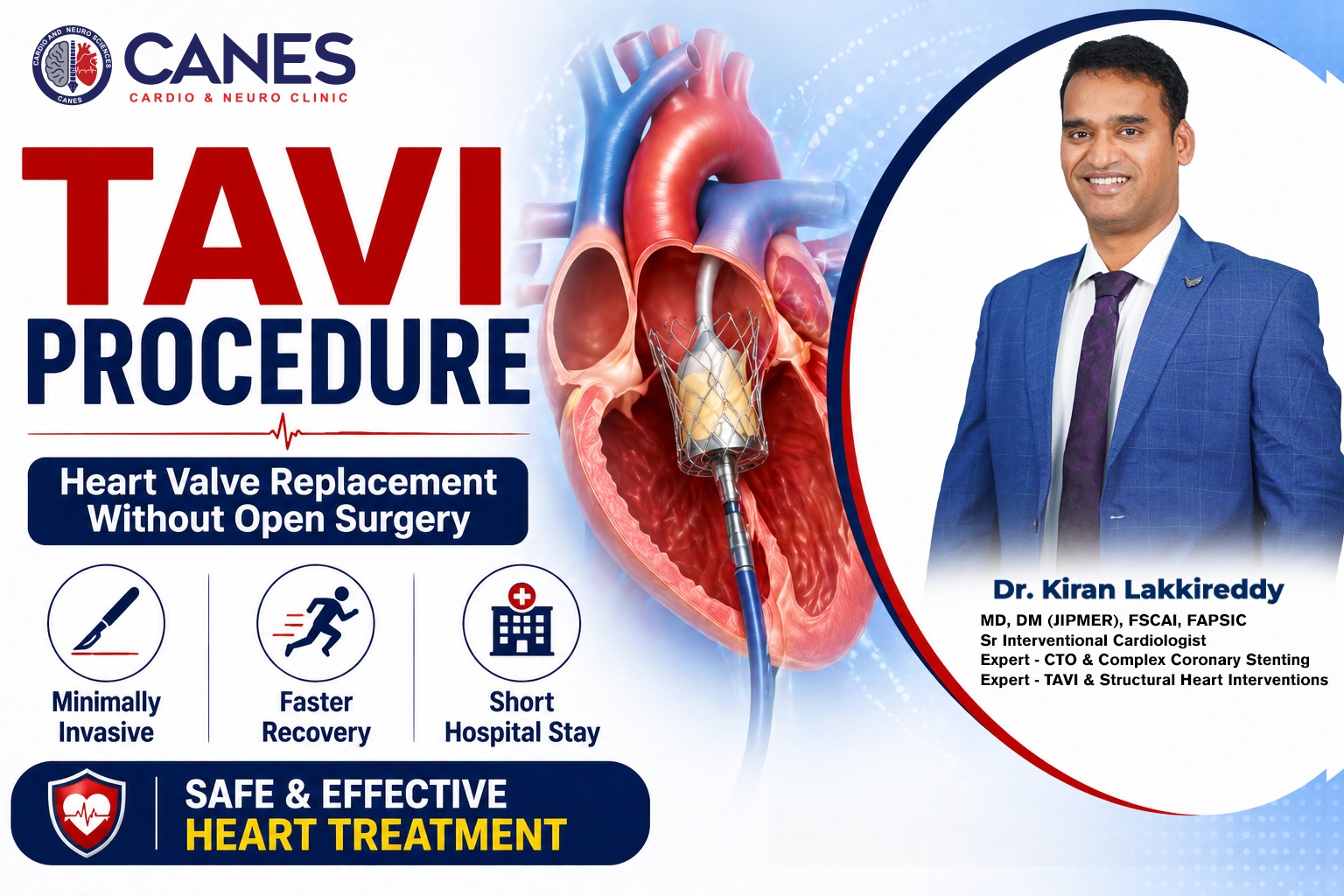
For many years, patients suffering from severe aortic valve stenosis had only one major option: traditional open-heart surgery. However, modern cardiovascular medicine has been completely transformed by the TAVI Procedure (Transcatheter Aortic Valve Implantation). This revolutionary, minimally invasive treatment allows doctors to replace a diseased heart valve without the need for a large chest incision or a grueling recovery period.
When facing complex heart conditions, finding the right medical expertise is crucial. Dr. Kiran Lakkireddy, widely regarded as the best cardiologist in Hyderabad, utilizes this advanced technology to help high-risk patients regain their energy, mobility, and longevity. At CANES Cardio & Neuro Clinic recognized as the best heart and brain clinic in Hyderabad we are dedicated to providing world-class, minimally invasive solutions.
In this master guide, we explain everything you need to know about the TAVI Procedure, from how the treatment works to your final stages of recovery.
1. What Exactly is the TAVI Procedure?
The TAVI Procedure is an advanced catheter-based technique used to treat aortic valve stenosis. This dangerous condition occurs when the heart’s aortic valve becomes rigid and narrows, preventing oxygen-rich blood from flowing properly to the rest of the body.
Instead of opening the chest cavity, an interventional cardiologist inserts a thin, flexible tube (catheter) through an artery, typically in the groin, and guides it directly to the heart. A replacement valve is then wedged into the old, damaged valve’s place. Once the new valve is expanded, it takes over the job of regulating blood flow immediately. Because it is vastly less invasive, the TAVI Procedure has become a preferred choice for older adults and those with multiple health complications.
2. Major Benefits of the TAVI Procedure
Choosing the TAVI Procedure over traditional open-heart surgery offers several life-changing benefits for patients:
1. Minimally Invasive: There is no need to crack the breastbone (sternotomy), which significantly reduces physical trauma to the body.
2. Faster Recovery Times: Most patients are back on their feet within days rather than the months required for open-heart surgery.
3. Shorter Hospital Stays: Many patients are safely discharged to go home within 24 to 48 hours after the treatment.
4. Immediate Symptom Relief: Patients frequently report instant relief from debilitating symptoms like chest pain, chronic fatigue, and shortness of breath.
5. Lower Surgical Risk: For those who cannot survive the severe stress of a major operation, this procedure offers a safe, highly effective alternative.
3. Understanding the TAVI Procedure Treatment Process
The journey through a TAVI Procedure is streamlined and highly technical. Here is exactly what you can expect during the treatment phase:
Pre-Procedure Screening
Before the treatment, you will undergo a comprehensive series of tests, including a 3D CT scan and an echocardiogram. These precise images help Dr. Kiran Lakkireddy determine the exact size of the replacement valve needed and the safest entry point for the catheter.
The Intervention
The TAVI Procedure is usually performed under general anesthesia or conscious sedation. The cardiologist makes a small puncture in the femoral artery. Using advanced real-time X-ray imaging, the new biological valve is guided up into the heart. Once positioned precisely inside the diseased valve, a balloon is inflated to lock the new valve into place securely.
Immediate Cardiac Results
As soon as the delivery catheter is removed, the new valve begins functioning. Your heart no longer has to struggle to push blood through a calcified, narrowed opening, which instantly reduces cardiac strain and improves blood pressure.
4. Potential Risks of the TAVI Procedure
While the TAVI Procedure is fundamentally safer than open surgery for high-risk individuals, every medical intervention carries some level of risk. It is important to discuss these openly with your specialist:
1. Vascular Complications: Minor damage or bleeding at the artery where the catheter was initially inserted.
2. Rhythm Disturbances: Some patients may require a permanent pacemaker if the new valve presses against the heart’s electrical pathways.
3. Stroke: There is a minimal risk of calcium debris or blood clots traveling to the brain during the procedure.
At CANES Clinic, we use the latest generation of protective devices and imaging technology to minimize these risks to the lowest possible clinical levels.
5. TAVI Procedure Recovery: What to Expect
The accelerated recovery timeline for the TAVI Procedure is one of its most attractive features. Unlike the grueling 6-to-12-week recovery associated with open-heart surgery, this minimally invasive approach allows for a rapid return to normalcy.
1. The First 24 Hours: You will be closely monitored in an intensive recovery room. Most patients are encouraged to sit up and even walk a few steps by the evening.
2. Returning Home: Most patients are discharged within two days. You will be given specific, easy-to-follow instructions on caring for the small puncture site in your groin.
3. The First Week: You must avoid heavy lifting, but light, consistent walking is highly encouraged to promote healthy circulation.
4. Follow-up Care: You will visit the clinic for a follow-up echocardiogram to ensure the new valve is seated perfectly and functioning at optimal capacity.
6. Why Choose the Best Heart and Brain Clinic in Hyderabad?
When it comes to the structural integrity of your heart, medical expertise matters above all else. Finding the best cardiologist in Hyderabad ensures that your procedure is handled with precision and care.
At CANES Cardio & Neuro Clinic, we pride ourselves on being the best heart and brain clinic in Hyderabad. We provide a holistic environment where top-tier cardiology and neurology experts work collaboratively to ensure your overall vascular and nervous system health is protected. From initial diagnostic imaging to structured post-procedure cardiac rehabilitation, we provide end-to-end support.
Don’t let a failing heart valve hold you back from living a full life.  Location: 3rd Floor, Tapasavi Commercial Complex, Hi-Tension Rd, Kondapur, Hyderabad
  Call Us: +91 9014944654
  Book an Appointment: https://canesclinic.com/
Frequently Asked Questions (FAQs)
Q: How long does a replacement valve from a TAVI procedure last?
A: Most modern TAVI valves are engineered to last between 7 and 10 years, depending on the patient’s age and daily activity level. Ongoing clinical studies continue to demonstrate excellent long-term durability for these high-tech replacement valves.
Q: Is the TAVI procedure performed under full general anesthesia?
A: While many procedures are done under general anesthesia, an increasing number can be performed with local anesthesia and conscious sedation. This “minimalist” approach allows for even faster recovery times and less postoperative grogginess.
Q: Can I drive after having a TAVI procedure?
A: Most patients are strictly advised to wait at least one week before returning to driving to ensure the vascular entry site has fully healed. Your cardiologist will provide specific medical clearance based on your individual healing progress during your follow-up.
Q: Who is the best candidate for a TAVI procedure today?
A: Individuals with severe symptomatic aortic stenosis who are at intermediate or high risk for traditional open-heart surgery are the ideal candidates. However, due to its excellent success rates, it is increasingly being offered to younger, low-risk patients as well.
Expert Care
Hyderabad's leading Cardio & Neuro specialists.