● Lifestyle & Prevention
How Caffeine Affects Your Heart: Warning Signs & Risks
Table of Contents
- Introduction
- 1. The Science: How Caffeine Affects Your Heart
- 2. Coffee vs. Energy Drinks: Understanding the Hidden Risks
- 3. Warning Signs: When Is Caffeine Too Much?
- 4. Who Should Avoid High Caffeine Intake?
- 5. Tips for Heart-Healthy Caffeine Consumption
- FAQs
Book a Consultation
Prevention is better than cure. Talk to our specialists today.
If you are like most people, your morning doesn’t officially start until you’ve had your first cup of coffee. Whether it is a strong coffee, a comforting cup of green tea, or a midday energy drink, caffeine is the fuel that keeps our busy lives moving. But have you ever paused to wonder exactly how caffeine affects your heart?
While moderate caffeine consumption is generally considered safe for most healthy adults, crossing that fine line into excessive intake can put unnecessary stress on your cardiovascular system. At CANES Cardio & Neuro Clinic in Kondapur, Hyderabad, we frequently see patients experiencing unsettling symptoms simply because of their daily caffeine habits.
In this post, Dr. Kiran Lakkireddy, Senior Interventional Cardiologist, breaks down the science behind caffeine, the warning signs you shouldn’t ignore, and how to enjoy your favorite brew safely.
1. The Science: How Caffeine Affects Your Heart
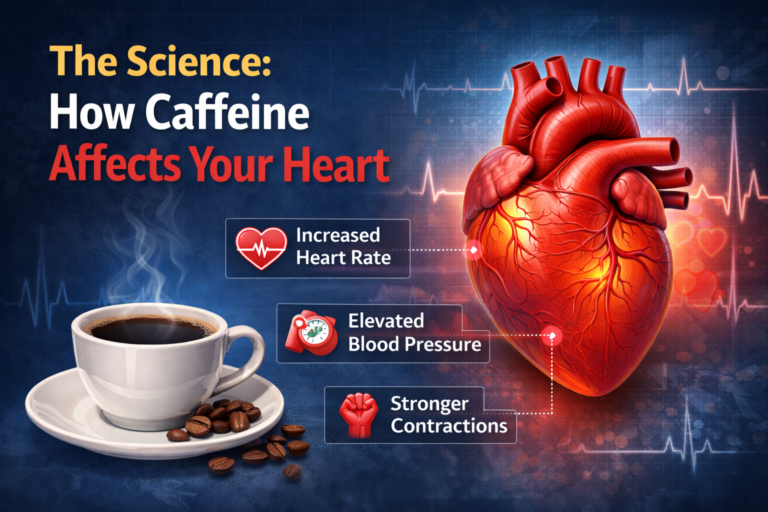
When you consume caffeine, it is rapidly absorbed into your bloodstream. It works primarily by blocking adenosine, a chemical in your brain that promotes relaxation and sleepiness. In response, your body triggers a mild “fight-or-flight” response, prompting the release of adrenaline.
This sudden adrenaline surge has a direct and measurable impact on your cardiovascular system:
- Increased Heart Rate: You might notice your pulse quickening, a condition clinically known as tachycardia.
- Elevated Blood Pressure: Caffeine causes your blood vessels to constrict temporarily, which can lead to a short-term spike in blood pressure.
- Stronger Contractions: Your heart may begin to beat with a bit more force than usual.
For a healthy individual, these effects are usually harmless, peaking within 30 to 60 minutes and fading within a few hours. However, if you consume massive doses or have an underlying heart condition, the impact can be much more severe.
2. Coffee vs. Energy Drinks: Understanding the Hidden Risks
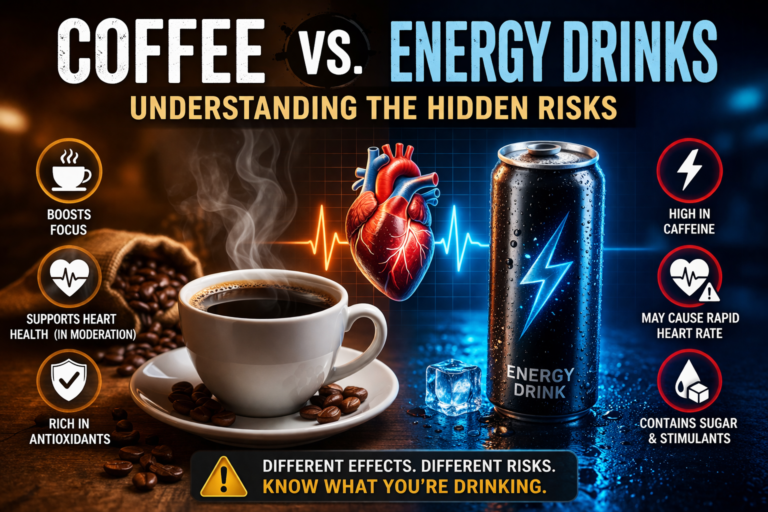
It is crucial to distinguish between a standard cup of coffee and commercial energy drinks when discussing heart health.
A standard cup of brewed coffee contains about 80–100 mg of caffeine. General cardiology guidelines suggest that up to 400 mg of caffeine per day is perfectly safe for the average healthy adult.
Energy drinks, on the other hand, are a different story. They often pack 150–300 mg of caffeine into a single can, along with massive amounts of sugar and additional stimulants like taurine and guarana. This cocktail amplifies the stimulation of your nervous system, leading to a much higher risk of sudden blood pressure spikes and dangerous heart rhythm disturbances (arrhythmias).
3. Warning Signs: When Is Caffeine Too Much?
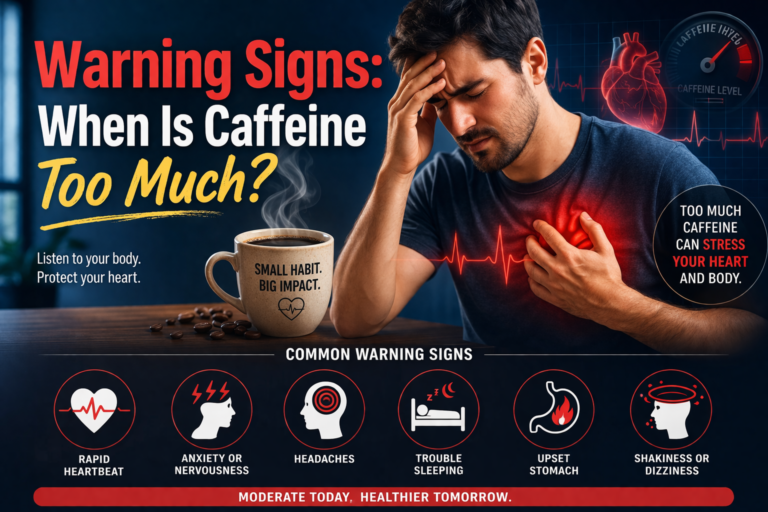
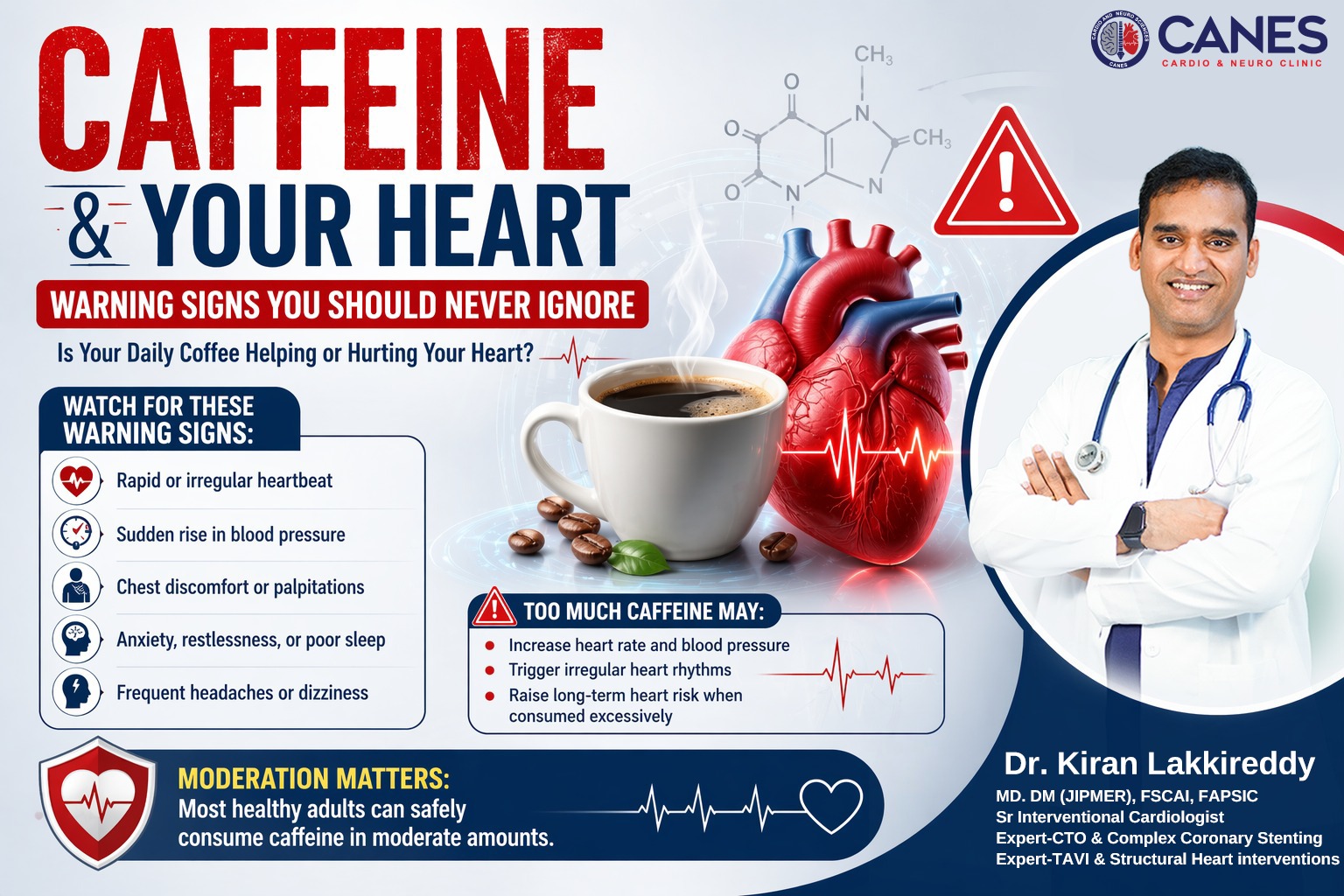
Listening to your body is the best way to protect your heart health. If you are consuming too much caffeine, your body will send you warning signals. Watch out for these common symptoms:
- Heart Palpitations: A sensation that your heart is fluttering, pounding, or skipping a beat (often caused by Premature Ventricular Contractions, or PVCs).
- Racing Heartbeat: A resting heart rate that stays unusually high long after you’ve finished your drink.
- Dizziness or Lightheadedness: Often a result of sudden blood pressure fluctuations or dehydration, as caffeine acts as a mild diuretic.
- Chest Discomfort: A heavy, tight, or aching feeling in your chest.
- Severe Anxiety and Jitters: Feeling wired, nervous, or physically unable to sit still.
Note: If you ever experience severe chest pain, extreme shortness of breath, or fainting spells after consuming stimulants, seek emergency medical care immediately.
4. Who Should Avoid High Caffeine Intake?
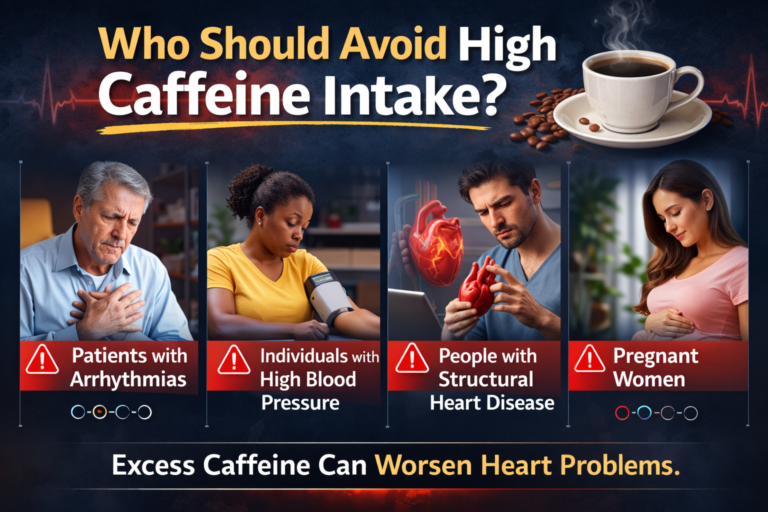
While a morning latte is fine for most, certain individuals should heavily limit or entirely avoid highly caffeinated beverages:
- Patients with Arrhythmias: If you have a history of irregular heartbeats, such as Atrial Fibrillation, stimulants can easily trigger episodes.
- Individuals with High Blood Pressure: Chronic overconsumption can make hypertension much harder to manage and control.
- People with Structural Heart Disease: Extra strain on a weakened heart muscle can be dangerous.
- Pregnant Women: Medical guidelines suggest limiting intake to under 200 mg per day.
5. Tips for Heart-Healthy Caffeine Consumption
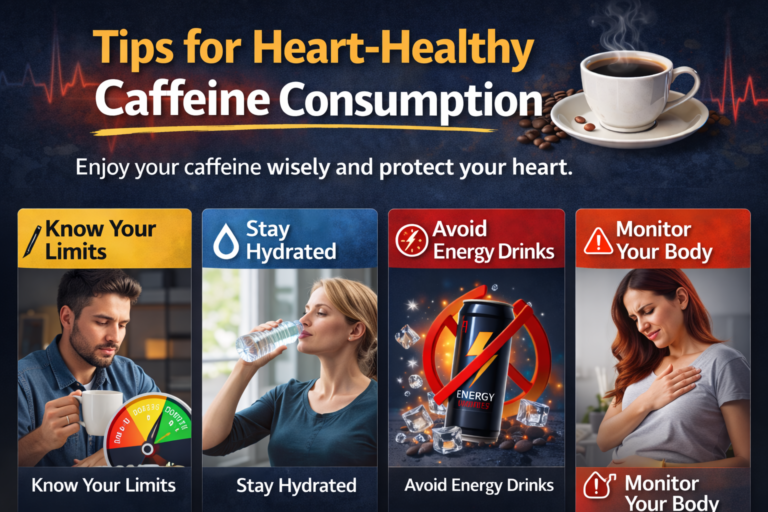
You don’t necessarily have to give up your favorite beverages to keep your heart healthy. Follow these simple tips:
- Know Your Limits: Try to stick to the recommended 400 mg daily limit.
- Stay Hydrated: Drink plenty of water throughout the day to counteract caffeine’s diuretic effect.
- Avoid Energy Drinks: Opt for natural sources of caffeine like black coffee or tea instead of sugary, stimulant-heavy energy drinks.
- Monitor Your Body: If you feel jittery or notice palpitations, cut back on your intake the next day.
Consult the Experts at CANES Cardio & Neuro Clinic
If you frequently experience heart flutters, a racing pulse, or unexplained dizziness even on days when you haven’t had a cup of coffee, it’s time to get a professional evaluation. Ignoring these warning signs can lead to more severe cardiovascular complications down the road.
Dr. Kiran Lakkireddy and the expert team at CANES Cardio & Neuro Clinic offer comprehensive cardiac evaluations, including ECGs, Holter monitoring, and advanced structural heart care.
Take charge of your heart health today.
📍 Location: 3rd Floor, Tapasavi Commercial Complex, Hi-Tension Rd, Kondapur, Hyderabad
📞 Call Us: +91 9014944654
🌐 Book an Appointment: Visit our website or call our clinic directly to schedule your consultation.
Frequently Asked Questions (FAQs)
Q: Can caffeine cause a heart attack?
A: Moderate caffeine won’t cause a heart attack in healthy people, but extreme doses can dangerously spike blood pressure. Those with underlying heart conditions should strictly monitor their intake to avoid severe complications.
Q: How long does caffeine affect your heart rate?
A: Caffeine’s effects usually peak within 30 to 60 minutes, keeping your heart rate slightly elevated for up to 5 hours. However, it can take up to 10 hours for the stimulant to completely leave your bloodstream.
Q: Is a skipped heartbeat after drinking coffee normal?
A: A mild flutter or palpitation happens occasionally due to adrenaline and is usually harmless for healthy adults. However, if this happens frequently, you should schedule an evaluation with Dr. Kiran Lakkireddy to be safe.
Q: Does decaf coffee still affect your heart?
A: Decaf coffee contains only trace amounts of caffeine, making it a much safer cardiovascular choice. It won’t cause the rapid adrenaline spikes that regular coffee does, making it ideal for patients with high blood pressure.
Q: How do you calm your heart down from too much caffeine?
A: Drinking plenty of water helps flush the caffeine through your system and eases its dehydrating effects. Doing some light movement, like a slow walk, can also help burn off the excess adrenaline safely.
Expert Care
Hyderabad's leading Cardio & Neuro specialists.