+91 9014944654

lakki.reddy.63@gmail.com

+91 9014944654

lakki.reddy.63@gmail.com

Supervised Exercise Cardiac Testing

Treadmill Stress Test (TMT)

A monitored exercise test that records the heart’s electrical activity, heart rate, blood pressure and symptoms while treadmill intensity increases gradually.

Exercise ECG assessment Graded treadmill exercise Same-day outpatient test
Treadmill Stress Test TMT in Hyderabad
Test typeSupervised exercise ECG
Exercise methodGraded treadmill protocol
MonitoringECG, heart rate, BP and symptoms
RadiationNo ionising radiation
Understanding the test

What is a Treadmill Stress Test?

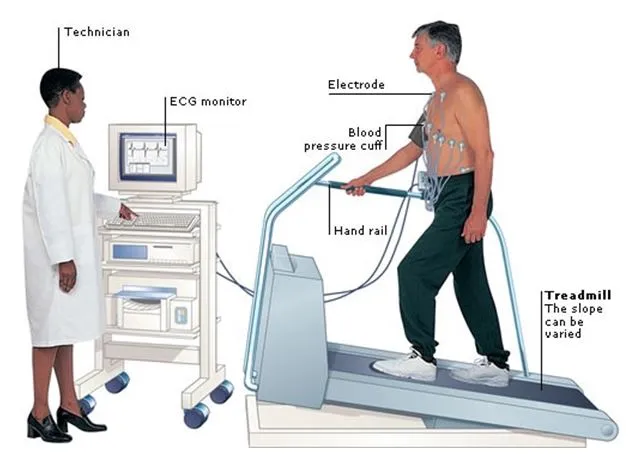
A Treadmill Stress Test, also called an exercise stress test, exercise ECG or TMT, evaluates how the heart responds when the body is physically active. Small electrodes placed on the chest record the electrocardiogram while you walk on a treadmill. The speed and incline are increased in controlled stages so the heart gradually works harder.

At rest, some heart-related problems may not produce symptoms or ECG changes. Exercise increases the heart’s need for oxygen-rich blood and can reveal chest discomfort, breathlessness, rhythm disturbances, an unusual blood-pressure response or ECG changes that were not present before activity.

01 Resting assessment

Symptoms, medical history, resting ECG, heart rate and blood pressure are reviewed before exercise begins.

02 Graded exercise

Treadmill speed and incline increase step by step according to the selected protocol and your ability.

03 Recovery monitoring

ECG, heart rate, blood pressure and symptoms continue to be checked after exercise stops.

A TMT does not directly photograph the coronary arteries. It looks for exercise-related symptoms and ECG changes that may suggest reduced blood supply or another cardiac problem. CT coronary angiography, stress imaging or catheter angiography may be needed when more detailed assessment is required.
Clinical information

What can a Treadmill Stress Test evaluate?

The test combines ECG findings with exercise duration, symptoms, heart rate, blood pressure and recovery. No single number is interpreted in isolation.

Possible exercise-induced ischemia

Looks for characteristic ECG changes or symptoms that may occur when the heart muscle needs more blood during exercise.

Exercise-related symptoms

Helps determine whether chest discomfort, breathlessness, dizziness, unusual fatigue or palpitations occur with a reproducible workload.

Functional capacity

Measures how long and how intensely you can exercise, supporting assessment of overall cardiovascular fitness and prognosis.

Heart-rate response

Assesses whether heart rate rises appropriately with exercise and slows during recovery, while considering medicines and fitness.

Blood-pressure response

Shows whether blood pressure increases normally, rises excessively or falls unexpectedly during exercise.

Exercise-related arrhythmias

May identify abnormal rhythms triggered by physical activity or appearing during the recovery period.

Why it may be advised

When may a doctor recommend TMT?

TMT is selected after reviewing symptoms, age, risk factors, exercise ability, resting ECG and the specific clinical question.

Chest discomfort brought on by activity
Unexplained breathlessness during exertion
Palpitations or dizziness with exercise
Assessment of suspected coronary disease
Evaluation of exercise capacity
Exercise-related blood-pressure response
Selected assessment after cardiac treatment
Exercise-induced rhythm evaluation
Guidance before a supervised activity plan
Selected heart-valve disease assessment
Occupational or fitness assessment when indicated
Risk assessment in selected clinical situations
TMT is not automatically required for every person without symptoms. Routine testing in low-risk, symptom-free individuals may lead to false alarms and unnecessary investigations. The decision should be based on clinical assessment.
Choosing the right test

When might another stress test be more suitable?

A standard exercise ECG is not the best option for every patient. The cardiologist may recommend stress imaging or medicine-based testing instead.

Unable to exercise adequately

Severe arthritis, neurological problems, limb disease, frailty, poor balance or significant breathing limitations may prevent an adequate treadmill workload.

Resting ECG is difficult to interpret

Bundle-branch block, paced rhythm, pre-excitation, significant baseline ST changes or certain medicines may reduce the accuracy of exercise ECG interpretation.

Need for imaging information

Stress Echo, myocardial perfusion imaging, cardiac MRI or CT coronary angiography may provide more useful anatomical or functional detail in selected patients.

Before your appointment

How to prepare for a Treadmill Stress Test

Follow the instructions given by the testing centre because preparation may differ according to your condition and medicines.

What to bring and wear

  • Comfortable, loose-fitting exercise clothing
  • Walking or running shoes with a secure grip
  • Current prescription and medicine list
  • Previous ECG, Echo, angiography and stress-test reports
  • Inhaler or glucose supplies when medically required

Food, smoking and medicines

  • Avoid a heavy meal shortly before the test
  • The centre may advise no food for about two to four hours
  • Do not smoke or use tobacco before the test
  • Take or withhold medicines only as specifically instructed
  • Ask whether caffeine should be limited under the local protocol
Do not stop beta blockers, calcium-channel blockers, nitrates or any heart medicine on your own. These medicines may influence the test, but stopping them can also be unsafe. Follow the cardiologist’s written instructions.
Step-by-step

What happens during the TMT procedure?

The test is supervised, and the workload is adjusted according to the protocol, your symptoms and your ability to continue safely.

1

Clinical review and consent

The team confirms symptoms, medical history, medicines, fasting status and whether exercise testing is suitable that day.

2

Electrodes and baseline readings

The chest is prepared, ECG electrodes are attached, and resting ECG, heart rate and blood pressure are recorded.

3

Walking begins slowly

You start at a manageable speed while holding the treadmill rail only as needed for balance.

4

Workload increases in stages

The speed, incline or both increase at planned intervals. A commonly used Bruce protocol changes stages every three minutes, although modified protocols may be selected.

5

Continuous monitoring

The team watches your ECG and asks about chest discomfort, breathlessness, fatigue, dizziness, leg symptoms and palpitations. Blood pressure is measured repeatedly.

6

Test completion and recovery

Exercise stops when adequate information is obtained, you reach your safe limit, symptoms develop or the supervising team identifies a reason to stop. Monitoring continues during recovery.

During exercise

What might you feel, and when is the test stopped?

It is normal to breathe faster, sweat and feel your heart beating more strongly. Tell the team immediately about any unusual or concerning symptom.

Expected exercise effects

Faster breathing, a rising pulse, sweating, warm skin and leg tiredness are common as workload increases.

Report symptoms promptly

Chest pressure, severe breathlessness, dizziness, faintness, marked weakness, leg pain or unusual palpitations should be reported immediately.

Reasons to stop

The test may stop because of symptoms, significant ECG changes, abnormal blood pressure, an arrhythmia, severe fatigue, poor coordination or the patient’s request.

Safety and supervision

Is the Treadmill Stress Test safe?

TMT is generally safe when appropriately selected and supervised. The purpose of monitoring is to identify warning signs early and stop exercise when necessary.

Common temporary effects

  • Fatigue or muscle tiredness
  • Shortness of breath from exercise
  • Sweating and a fast heartbeat
  • Temporary light-headedness
  • Minor skin irritation from ECG electrodes

Uncommon but important risks

  • Sustained abnormal heart rhythm
  • Marked rise or fall in blood pressure
  • Severe chest pain or fainting
  • Heart attack or another serious cardiac event
  • Fall or injury on the treadmill
The test may be postponed or avoided in people with an acute heart attack, unstable chest pain, uncontrolled serious arrhythmia, severe symptomatic aortic stenosis, acute inflammation of the heart, acute aortic disease or another condition in which exercise would be unsafe. The supervising clinician makes this decision.
Understanding the report

What may the TMT result include?

The cardiologist interprets the complete pattern rather than labelling the test only “positive” or “negative.”

Exercise time and protocol stage reached
Estimated workload in metabolic equivalents
Maximum and percentage-predicted heart rate
Heart-rate recovery after exercise
Blood-pressure response
Exercise-limiting symptoms
ST-segment or other ECG changes
Exercise-induced arrhythmias
Reason the test was stopped
Overall exercise capacity
Clinical risk assessment
Recommended next step
A normal TMT does not exclude every coronary problem, and an abnormal ECG response does not always prove a blockage. Accuracy depends on the patient’s ability to exercise, the resting ECG, workload achieved, medicines, symptoms and underlying clinical probability.
After the report

Will another investigation be needed?

Further evaluation depends on the TMT result, image quality requirements, symptoms and overall cardiac risk.

Resting 2D Echocardiography
Exercise Stress Echocardiography
Dobutamine Stress Echocardiography
CT Coronary Angiography
Myocardial Perfusion Imaging
Holter or event monitoring
Cardiac MRI
Coronary Angiography
Cardiologist-led care

Dr. Kiran Lakkireddy

MBBS, MD, DM (Cardiology – JIPMER), FSCAI, FAPSIC
Senior Interventional Cardiologist

Dr. Kiran Lakkireddy provides evidence-based cardiac evaluation with a focus on accurate diagnosis, transparent communication and individualised treatment planning. His clinical practice includes complex coronary intervention, congenital cardiac intervention and advanced structural-heart therapies.

Apollo Hospitals, Jubilee Hills CANES Cardio & Neuro Clinic, Kondapur
Patient questions

Frequently asked questions

Clear answers to common questions about the Treadmill Stress Test.

What is the difference between TMT and a normal ECG?
A normal ECG records the heart at rest for a brief period. TMT records ECG continuously while exercise increases the heart’s workload, allowing the team to assess exercise-related changes, symptoms, heart rate and blood pressure.
Can a TMT confirm a coronary artery blockage?
TMT may show functional evidence suggesting reduced blood supply during exercise, but it does not directly display the coronary arteries or measure the exact percentage of narrowing.
How long does a Treadmill Stress Test take?
Actual exercise often lasts several minutes, depending on fitness and the protocol. Allow additional time for preparation, baseline readings and monitored recovery; the complete visit commonly takes around 30 to 45 minutes.
Do I need to fast before TMT?
The testing centre may advise avoiding food for about two to four hours and avoiding a heavy meal before the test. Water and medicine instructions depend on the local protocol and your health condition.
Should I stop heart medicines before the test?
Only if the cardiologist or testing centre specifically instructs you. Some medicines affect heart rate or ECG response, but stopping them without medical supervision can be unsafe.
What should I wear for TMT?
Wear loose, comfortable clothing and secure walking or running shoes. Avoid sandals, slippers and restrictive clothes that make treadmill walking difficult.
Can I stop if I feel tired?
Yes. Tell the team how you feel throughout the test. You may ask to stop, and the supervising clinician may stop the test at any time for symptoms, ECG changes, blood-pressure changes or safety concerns.
What heart rate must I reach?
Age-based target heart rate is one part of interpretation, but it is not the only goal. Symptoms, workload, ECG findings, blood pressure and medicines also matter. The team will not force exercise beyond a safe level simply to reach a number.
Is TMT safe for older adults?
Age alone does not decide suitability. The clinician considers balance, walking ability, symptoms and medical conditions. A modified protocol or another form of stress testing may be safer for some older adults.
Can TMT detect an abnormal heartbeat?
It can identify some arrhythmias triggered by exercise or recovery. If episodes occur unpredictably during daily life, Holter monitoring or a longer event monitor may provide more useful information.
What does a positive TMT mean?
It usually means the complete exercise pattern raises concern for ischemia, but false-positive results can occur. The cardiologist interprets the ECG, symptoms, exercise capacity and risk factors before recommending further testing.
Can I return to normal activities after TMT?
Most patients leave after a short recovery period and resume routine activities. Follow any specific advice given if symptoms occurred, the result was abnormal or the supervising team recommends additional observation.
Appointments in Hyderabad

Has your doctor advised a Treadmill Stress Test?

Book a cardiac consultation to review your symptoms, medicines, exercise ability, previous reports and the most appropriate stress-test option.

This page provides general patient education and does not replace medical consultation. The indication, preparation, medication plan, exercise protocol, risks and interpretation of a Treadmill Stress Test depend on individual clinical assessment and hospital protocol.
Shopping Basket