

Peripheral Artery Intervention
Home > Services > Peripheral Artery Intervention
Angioplasty and Stenting of Peripheral, Carotid, Renal and Limb Arteries
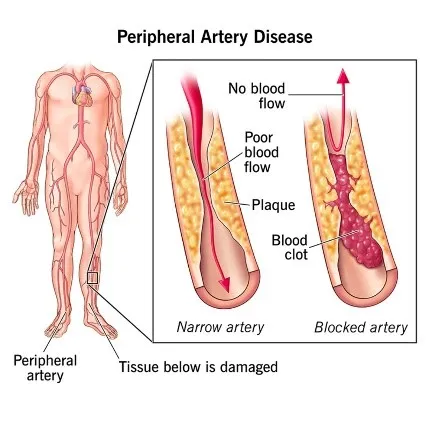
Peripheral artery intervention is a minimally invasive catheter-based procedure used to treat narrowing or blockage in arteries outside the heart. These arteries supply blood to the brain, kidneys, legs, and other parts of the body. When these arteries become narrowed due to atherosclerosis (cholesterol plaque), blood flow decreases and may cause pain, stroke, uncontrolled blood pressure, non-healing ulcers, or even risk of limb loss. Peripheral angioplasty and stenting help restore normal blood circulation without the need for major surgery and allow faster recovery.
1. Indications:
Peripheral artery angioplasty is recommended in patients with symptoms or test results showing reduced blood flow. Common indications include:
•Leg pain while walking (intermittent claudication)
•Pain in legs at rest due to poor circulation
•Non-healing wounds or diabetic foot ulcers
•Critical limb ischemia
•Carotid artery stenosis with risk of stroke
•Renal artery stenosis causing uncontrolled hypertension
•Aorto-iliac artery disease
•Femoral or popliteal artery blockage
•Reduced pulses in limbs
•Abnormal Doppler, CT angiogram, or MR angiogram
Early treatment helps prevent stroke, kidney damage, or limb amputation.
2. Procedure:
Peripheral artery intervention is performed in a cath lab under local anesthesia with strict sterile precautions. A small puncture is made in the artery, usually in the groin (femoral artery) or sometimes wrist depending on the artery being treated. Through this puncture, a thin catheter is inserted and guided to the site of blockage using X-ray imaging.
A guidewire is passed across the narrowed or blocked segment. Balloon angioplasty is then performed to widen the artery. In many cases, a stent is placed to keep the artery open and maintain proper blood flow.
Different techniques are used depending on the artery involved:
•Carotid artery stenting – performed with embolic protection device to prevent stroke
•Renal artery stenting – helps control high blood pressure due to renal artery narrowing
•Iliac / femoral artery angioplasty – improves blood flow to legs
•Below-knee angioplasty – done in diabetic foot or critical limb ischemia
•Drug-coated balloons / peripheral stents – used in long or calcified lesions
•Atherectomy devices – used in heavily calcified arteries to remove plaque
The procedure usually takes 30 minutes to 2 hours depending on complexity.
3. Safety:
Peripheral artery interventions are safe and effective when performed by experienced interventional specialists in a well-equipped cath lab. Continuous monitoring of heart rate, blood pressure, and oxygen levels is done throughout the procedure.
Possible but uncommon risks include:
•Bleeding or hematoma at puncture site
•Vessel injury or dissection
•Contrast allergy
•Kidney function changes
•Clot formation or embolism
•Stroke (rare in carotid procedures due to protection devices)
Use of modern imaging systems, embolic protection devices, drug-coated balloons, and advanced stents has greatly improved safety and long-term success. Most patients recover quickly, can walk within a few hours, and experience significant improvement in symptoms and quality of life.
Use of modern imaging systems, embolic protection devices, drug-coated balloons, and advanced stents has greatly improved safety and long-term success. Most patients recover quickly, can walk within a few hours, and experience significant improvement in symptoms and quality of life.