+91 9014944654

lakki.reddy.63@gmail.com

+91 9014944654

lakki.reddy.63@gmail.com

Non-Invasive Cardiac Stress Imaging

Dobutamine Stress Echocardiography (DSE)

A monitored heart ultrasound that uses intravenous dobutamine to make the heart work harder, helping assess blood flow, heart-muscle response and selected valve conditions when exercise testing is not suitable.

Monitored cardiac stress test Assesses heart-muscle response Usually completed the same day
Dobutamine Stress Echocardiography DSE test in Hyderabad
Real-time heart imaging under carefully controlled stress
Test typePharmacological stress Echo
Stress methodDobutamine through an IV
MonitoringECG, blood pressure and Echo
RadiationNo ionising radiation
Understanding the test

What is Dobutamine Stress Echocardiography?

Dobutamine Stress Echocardiography, commonly called DSE, combines an echocardiogram with a carefully controlled medicine-based stress test. Dobutamine is given gradually through an intravenous line. It increases the strength and rate of the heartbeat, producing an effect similar to exercise while ultrasound images are recorded.

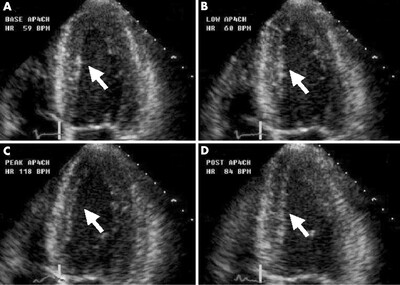
The cardiology team compares images taken at rest with images captured at increasing levels of stress. A healthy heart muscle normally contracts more strongly as workload rises. A region supplied by a significantly narrowed coronary artery may not increase its contraction normally and may develop a new wall-motion abnormality during stress.

01 Baseline assessment

Resting heart images, ECG, heart rate and blood pressure are recorded before medicine is started.

02 Controlled cardiac stress

Dobutamine is increased in stages while the team continuously watches your response.

03 Image comparison

The cardiologist compares heart-muscle movement at rest and during stress.

DSE does not directly show the inside of the coronary arteries. It looks for changes in heart-muscle contraction that may suggest reduced blood supply during stress. Coronary angiography or CT coronary angiography may be needed when direct artery imaging is required.
Clinical information

What can a Dobutamine Stress Echo evaluate?

The test protocol and interpretation depend on the exact clinical question, resting heart function and the patient’s ability to exercise.

Inducible ischemia

Looks for new or worsening regional wall-motion abnormalities that may occur when part of the heart receives insufficient blood during stress.

Known coronary disease

May help assess the functional importance of suspected or known coronary artery disease and support further treatment planning.

Myocardial viability

Low-dose dobutamine may identify heart muscle with contractile reserve that could potentially improve after restoration of blood flow.

Low-flow aortic stenosis

A specialised low-dose protocol may help distinguish true severe from pseudo-severe aortic stenosis in selected patients with reduced left-ventricular function.

Pre-procedure risk assessment

May be considered before selected non-cardiac operations when the result is expected to influence management and exercise testing is unsuitable.

Overall heart response

Assesses heart rate, blood-pressure response, global pumping function and symptoms together with real-time ultrasound findings.

Clinical indications

When may a doctor recommend DSE?

Dobutamine stress testing is generally selected when stress imaging is needed but adequate exercise is not possible or an exercise-based study is unlikely to answer the clinical question.

01Chest discomfort or breathlessness requiring ischemia assessment
02Inability to walk safely or exercise enough on a treadmill
03An inconclusive or unsuitable exercise stress test
04Known coronary artery disease with a new clinical question
05Assessment of viable heart muscle after previous myocardial damage
06Selected low-flow, low-gradient aortic stenosis evaluation
07Risk assessment before selected major surgery
08Need for stress imaging without exposure to ionising radiation
A DSE is not a routine screening test for everyone. The cardiologist first considers symptoms, resting ECG, previous cardiac tests, exercise capacity, medical history and whether the result is likely to change treatment.
Purpose-specific protocols

Different DSE protocols answer different questions

The medication dose, target response and measurements are selected according to the purpose of the test. These protocols are not interchangeable.

Ischemia

Higher-dose stress protocol

The dose is increased in stages to raise the heart rate and workload. Images are reviewed for new wall-motion abnormalities that may indicate inducible ischemia.

  • Suspected coronary artery disease
  • Known disease with changing symptoms
  • When adequate exercise is not possible
  • Selected preoperative assessment
Viability

Low-dose viability protocol

Small doses are used to see whether weakened heart-muscle segments improve their contraction, suggesting preserved contractile reserve.

  • Reduced heart pumping function
  • Previous myocardial infarction
  • Assessment before revascularisation
  • Distinguishing scar from viable muscle
Valve

Low-flow aortic stenosis protocol

A carefully controlled low-dose study measures valve gradients, valve area, stroke volume and contractile reserve in selected patients.

  • Reduced ejection fraction
  • Low flow across the aortic valve
  • Low measured valve gradient
  • Clarification of stenosis severity
Before your appointment

How to prepare for a Dobutamine Stress Echo

Preparation instructions can vary according to the hospital protocol, your medicines and the reason for testing. Follow the instructions given specifically for your appointment.

Before arriving

  • Follow the eating and drinking restrictions provided by the testing centre.
  • Wear comfortable, loose clothing that allows access to the chest.
  • Bring previous ECG, Echo, angiography, CT and hospital reports.
  • Carry a complete list of medicines, doses and allergies.
  • Reach early enough for registration, consent and baseline assessment.

Discuss medicines in advance

  • Ask whether beta blockers or other heart medicines should be withheld.
  • Do not stop any prescribed medicine without the doctor’s instruction.
  • Tell the team about insulin, diabetes tablets and blood-thinning medicines.
  • Report inhalers, glaucoma medicines or previous reactions to atropine.
  • Inform the doctor if you are pregnant or may be pregnant.
Medication instructions are individual. Some heart-rate-lowering medicines can reduce the ability to reach the target heart rate, but stopping them may be unsafe in certain patients. Follow only the cardiology team’s written or verbal instructions.
Step-by-step

What happens during the DSE procedure?

The test is performed in a monitored setting with staff and medicines available to treat symptoms or rhythm changes if they occur.

Clinical and safety review

The team checks symptoms, medical history, medicines, allergies, previous test results and whether any condition makes stress testing unsuitable that day.

Baseline monitoring

ECG electrodes and a blood-pressure cuff are applied. Resting heart rate, rhythm, blood pressure and echocardiographic images are recorded.

Intravenous access

A small IV cannula is inserted, usually in the arm. Dobutamine is delivered through an infusion pump in carefully controlled stages.

Gradual increase in stress

The dose is increased according to the protocol. Atropine may be added in selected patients if the heart rate response remains insufficient.

Repeated Echo imaging

Ultrasound images are captured at different stress stages while symptoms, ECG, blood pressure, heart rate and wall motion are continuously assessed.

Stopping and recovery

The infusion is stopped after the required endpoint or earlier for symptoms, diagnostic findings or safety reasons. Monitoring continues until you are stable.

During and after the test

What might you feel during DSE?

Dobutamine is intended to make the heart work harder. Temporary sensations are therefore common and usually settle after the infusion is stopped.

Awareness of heartbeat

You may notice a faster or stronger heartbeat, palpitations or a pounding sensation as the medication dose increases.

Temporary body sensations

Warmth, flushing, headache, tremor, nausea, anxiety or mild shortness of breath can occur during the infusion.

Symptoms must be reported

Tell the team immediately about chest pain, marked breathlessness, dizziness, weakness or any unusual symptom. Do not wait for the test to finish.

Dobutamine has a short action. Heart rate and symptoms usually begin settling soon after the infusion ends, but you remain under observation until the clinical team confirms that recovery is satisfactory.
Safety information

Is Dobutamine Stress Echocardiography safe?

DSE is widely used and is generally safe when appropriately prescribed and performed with continuous monitoring. It intentionally stresses the heart, so careful screening and supervision are essential.

More common temporary effects

  • Fast or forceful heartbeat and palpitations.
  • Flushing, headache, tremor, nausea or anxiety.
  • Temporary chest discomfort or shortness of breath.
  • Minor discomfort or bruising at the IV site.

Less common or rare complications

  • Significant changes in blood pressure.
  • Prolonged or serious abnormal heart rhythm.
  • Severe angina or acute coronary event.
  • Heart attack and other major complications are rare.
The test may be postponed or avoided in certain situations, including unstable cardiac symptoms, uncontrolled blood pressure, significant active arrhythmia or other conditions in which pharmacological stress could be unsafe. The final decision is made by the treating team.
Understanding the report

What may the DSE result show?

The cardiologist interprets wall motion together with symptoms, ECG changes, blood-pressure response, heart rate and the purpose-specific measurements.

Resting left-ventricular function
Heart rate achieved during stress
Normal increase in wall contraction
New regional wall-motion abnormality
Evidence suggesting inducible ischemia
Extent and location of abnormal response
Contractile reserve or myocardial viability
Aortic valve response in selected protocols
A negative DSE lowers the likelihood of significant inducible ischemia under the conditions achieved, but no test excludes every possible coronary problem. Image quality, target heart rate, symptoms and overall clinical probability all affect interpretation.
After the report

Will another investigation be needed?

The next step depends on whether the result is normal, abnormal, inconclusive or performed for valve or viability assessment.

Resting 2D Echocardiography
Exercise Stress Echocardiography
Treadmill Test
CT Coronary Angiography
Myocardial Perfusion Imaging
Cardiac MRI
Coronary Angiography
Valve or heart-team evaluation
Cardiologist-led care

Dr. Kiran Lakkireddy

MBBS, MD, DM (Cardiology – JIPMER), FSCAI, FAPSIC
Senior Interventional Cardiologist

Dr. Kiran Lakkireddy provides evidence-based cardiac evaluation with a focus on accurate diagnosis, transparent communication and individualised treatment planning. His clinical practice includes complex coronary intervention, congenital cardiac intervention and advanced structural-heart therapies.

Apollo Hospitals, Jubilee Hills CANES Cardio & Neuro Clinic, Kondapur
Patient questions

Frequently asked questions

Clear answers to common questions about Dobutamine Stress Echocardiography.

What is the difference between a DSE and a treadmill test?
A treadmill test uses physical exercise and primarily monitors ECG, symptoms and blood pressure. DSE uses intravenous dobutamine to increase heart workload while ultrasound images directly assess heart-wall movement.
Why has DSE been advised instead of exercise?
It may be selected when joint, neurological, vascular, respiratory or general health limitations prevent adequate exercise, or when medicine-based imaging better suits the clinical question.
Does Dobutamine Stress Echo use radiation?
No. The images are produced with ultrasound, so DSE does not use X-rays or ionising radiation. It does require an IV medicine and continuous monitoring.
Is DSE painful?
The Echo itself is non-invasive, though probe pressure on the chest and insertion of the IV can cause brief discomfort. The medicine can make the heartbeat feel fast or forceful.
How long does the test take?
The complete appointment commonly takes about an hour, but timing varies with preparation, the protocol, heart-rate response, image acquisition and recovery monitoring.
Will I receive an injection?
Yes. An IV cannula is placed so dobutamine can be delivered by an infusion pump. Atropine may also be used in selected patients when additional heart-rate increase is needed.
Should I stop my beta blocker before DSE?
Only when the cardiology team specifically instructs you to do so. Beta blockers can affect the heart-rate response, but stopping them without medical advice may be unsafe.
Can DSE detect coronary artery blockage?
DSE can show functional evidence that part of the heart may not receive enough blood during stress. It does not directly display the coronary artery lumen or state the exact percentage of narrowing.
What happens if chest pain occurs during the test?
Tell the team immediately. The infusion may be stopped, monitoring and imaging are reviewed, and appropriate medicines or emergency treatment are available if needed.
Can DSE evaluate aortic stenosis?
A specialised low-dose DSE may help assess selected patients with low-flow, low-gradient aortic stenosis and reduced pumping function. This is different from a standard ischemia protocol.
Can I drive after the test?
Many patients can leave after recovery without sedation, but follow the testing centre’s instructions. Arrange help if you feel unwell or if the team advises against driving.
What if the DSE result is inconclusive?
The cardiologist may recommend another test, such as CT coronary angiography, myocardial perfusion imaging, cardiac MRI or coronary angiography, depending on symptoms and clinical risk.
Appointments in Hyderabad

Has your doctor advised a Dobutamine Stress Echo?

Book a cardiac consultation to review the indication, medication instructions, previous reports and the safest next step in your evaluation.

This page provides general patient education and does not replace medical consultation. The indication, preparation, medication plan, risks and interpretation of Dobutamine Stress Echocardiography depend on individual clinical assessment and hospital protocol.
Shopping Basket