
Coronary Angiogram
Home > Services > Coronary Angiogram
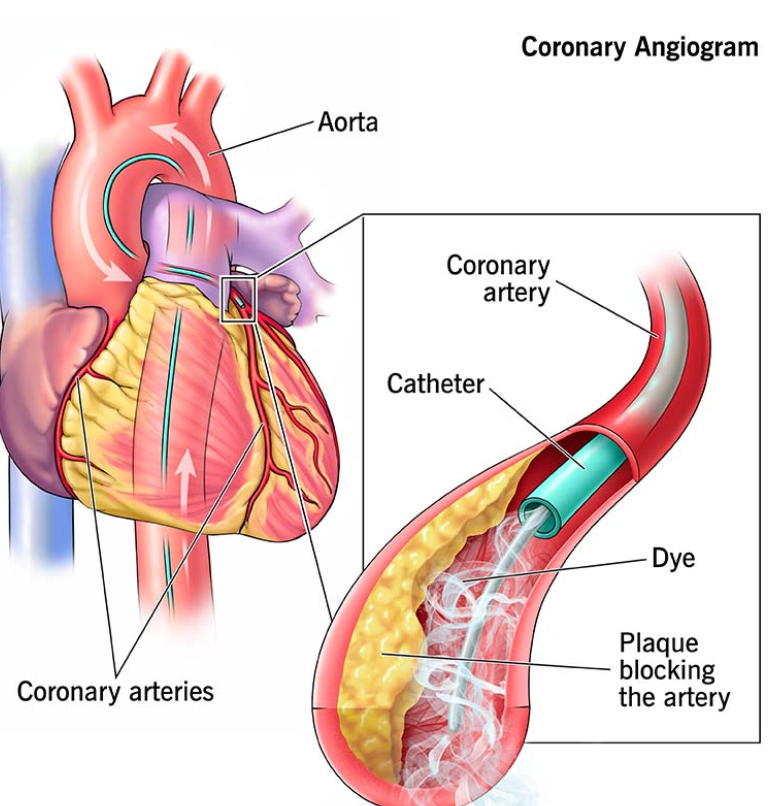
Coronary angiogram is a minimally invasive procedure used to diagnose and assess the severity of blockages or narrowing in the coronary arteries, which supply blood to the heart. It involves injecting a contrast dye into the arteries and using X-ray imaging to visualize the blood flow and identify any abnormalities.
While coronary angiogram is primarily a diagnostic tool, it can also be used as a treatment option in certain situations. Here are a few scenarios where angiogram can be part of the treatment process:
A Coronary Angiogram is a specialized diagnostic procedure used to visualize the blood vessels supplying the heart (coronary arteries). It is considered the gold standard test for detecting blockages, narrowing, or abnormalities in the heart arteries.
1.Indications :
Coronary angiography is recommended in patients with:
•Chest pain suggestive of angina
•Positive TMT / abnormal CT coronary angiogram
•Heart attack (Myocardial infarction)
•Unstable angina
•Heart failure suspected due to coronary artery disease
•Before valve surgery or major cardiac surgery
•High-risk patients with diabetes, hypertension, or strong family history
During the angiogram procedure, if a significant blockage is detected, an angioplasty may be performed immediately. Angioplasty involves inserting a small balloon catheter into the blocked artery and inflating it to widen the narrowed area. In some cases, a stent (a small mesh tube) may also be placed to help keep the artery open and improve blood flow.
2. Procedure:
The procedure is performed in a Cardiac Cath Lab under local anesthesia.
•A small tube (catheter) is inserted through the wrist (radial artery) or groin (femoral artery)
•The catheter is guided to the heart arteries
•Contrast dye is injected
•X-ray imaging shows blood flow in the coronary arteries
The test usually takes 10–20 minutes and most patients go home the same day.
3. Benefits:
•Accurate diagnosis of heart artery blockages
•Helps decide need for angioplasty, stenting, or bypass surgery
•Safe and minimally invasive
•Performed through wrist in most patients (no bed rest required)
4. Safety:
Coronary angiogram is a very safe procedure when done by experienced cardiologists.
Possible but rare risks:
•Bleeding at puncture site
•Allergy to contrast dye
•Kidney function change (temporary)
•Very rare risk of stroke or heart attack
At our center, angiograms are performed using latest digital imaging, radial approach, and low contrast techniques for maximum safety.
At our center, angiograms are performed using latest digital imaging, radial approach, and low contrast techniques for maximum safety.