Confirming hypertension
Repeated out-of-clinic readings can help confirm whether blood pressure is consistently elevated rather than relying on one or two office measurements.


A portable blood pressure test that automatically records readings during your usual daytime activities and while you sleep, providing a fuller picture than a single clinic measurement.
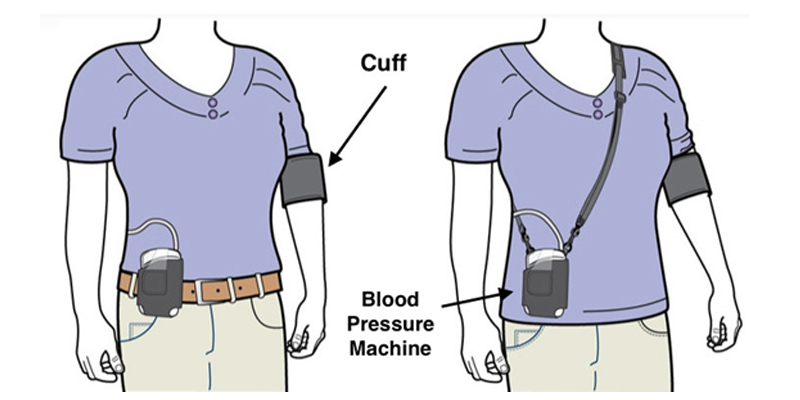
Ambulatory Blood Pressure Monitoring, commonly called ABPM, measures blood pressure repeatedly while you continue your normal routine outside the clinic.
A correctly sized cuff is placed around the upper arm and connected to a compact recorder worn on a belt or shoulder strap. The device inflates automatically at programmed intervals during the day and night. These multiple readings show how blood pressure changes with activity, work, rest, stress, medication timing and sleep.
A clinic blood pressure reading is useful, but it represents only one moment. Some people record higher readings in a medical setting because of anxiety, while others may have normal clinic readings but elevated blood pressure at home, at work or during sleep. ABPM helps the cardiologist identify these patterns and make a more informed diagnosis or treatment decision.
The test is especially useful when clinic readings do not provide a clear or complete picture of your blood pressure.
Repeated out-of-clinic readings can help confirm whether blood pressure is consistently elevated rather than relying on one or two office measurements.
This describes high readings in the clinic with lower readings during daily life. ABPM helps identify whether the office environment is affecting the measurement.
Some people have acceptable clinic readings but higher pressure during work, home activities or sleep. This pattern may otherwise remain undetected.
ABPM records pressure during sleep and can show whether it falls as expected, remains elevated or rises at night.
The recording may help determine whether prescribed medicines control blood pressure throughout the full day and night, including before the next dose.
ABPM may be considered when readings fluctuate widely or when dizziness, weakness or faintness raises concern about episodes of low blood pressure.
The value of ABPM comes from the pattern of many readings, not from one isolated measurement.
The fitting is simple, and most patients return home or continue their usual work after the monitor is attached.
Your blood pressure and arm size are assessed so that an appropriate cuff can be selected.
The cuff is secured around the upper arm and connected by tubing to a small portable recorder.
The monitor is programmed to inflate automatically at intervals during waking hours and sleep.
You leave the clinic, continue most usual activities and note important events, symptoms and sleep times.
After the prescribed recording period, the cuff and recorder are returned to the clinic.
The stored readings are downloaded and assessed for averages, patterns, symptoms and treatment response.
Good preparation and careful device handling help produce enough valid readings for reliable interpretation.
The cuff will tighten repeatedly. This is expected, but a few practical steps can improve comfort and recording quality.
Most ordinary desk work, walking and household activities can continue. Try not to plan unusually intense exercise unless your doctor specifically wants it included.
Pause briefly, straighten and relax the monitored arm, and avoid talking or moving until inflation and deflation are complete.
Sleep at your usual time and position where possible. Place the recorder safely so the tubing is not pulled, twisted or trapped.
The device may automatically retry if movement or arm position prevented a valid measurement. Remain still during the repeat inflation.
Follow the clinic’s instructions. Do not repeatedly refit or reposition the cuff unless you were shown how, as incorrect placement can affect readings.
Note the exact time of headache, dizziness, palpitations, chest discomfort, stress, exercise, meals, medicines and sleep so these can be compared with the recording.
The cardiologist reviews the overall recording rather than judging your blood pressure from the highest or lowest isolated value.
The average of valid readings recorded across the entire monitoring period.
The average during the hours you were awake and carrying out normal activities.
The average during the sleep period recorded in your diary or programmed by the device.
The degree to which blood pressure falls during sleep compared with daytime values.
The number and percentage of successful measurements available for analysis.
How often readings are above or below the range considered appropriate for your situation.
ABPM captures multiple real-life readings, includes sleep measurements, helps distinguish white-coat and masked hypertension, and can assess whether treatment provides all-day control.
Movement, incorrect cuff size or position, disturbed sleep, missed readings and some irregular heart rhythms can reduce measurement quality. One recording may not represent every day of your life.
ABPM is non-invasive and does not use radiation. Most people complete the test without serious problems.
Repeated cuff inflation can feel tight and may briefly interrupt activity or sleep.
Temporary redness, irritation or mild bruising may occur, particularly when the cuff inflates frequently.
Seek advice if there is severe arm pain, numbness, increasing swelling, skin injury, device malfunction or inability to tolerate the cuff.
Both methods provide useful out-of-clinic information, but they answer slightly different questions.
Automatically records frequent readings during one full day and night, including sleep. It is particularly useful for diagnosis, white-coat or masked patterns, nighttime pressure and short-term treatment assessment.
Uses a validated home device to take planned readings over several days or weeks. It is often useful for ongoing long-term monitoring and supporting treatment decisions.
ABPM findings are most useful when they are connected to the whole clinical picture. Dr. Kiran Lakkireddy evaluates the recording alongside clinic blood pressure, symptoms, medicines, cardiovascular risk factors and relevant investigations to guide an individual treatment plan.
Common questions about wearing the monitor, preparation and understanding the result.
Book 24-Hour Ambulatory Blood Pressure Monitoring and receive cardiologist-led interpretation of your daytime, nighttime and treatment-related blood pressure patterns.